
What Is a Servo Motor – Types, Working Principle & Uses

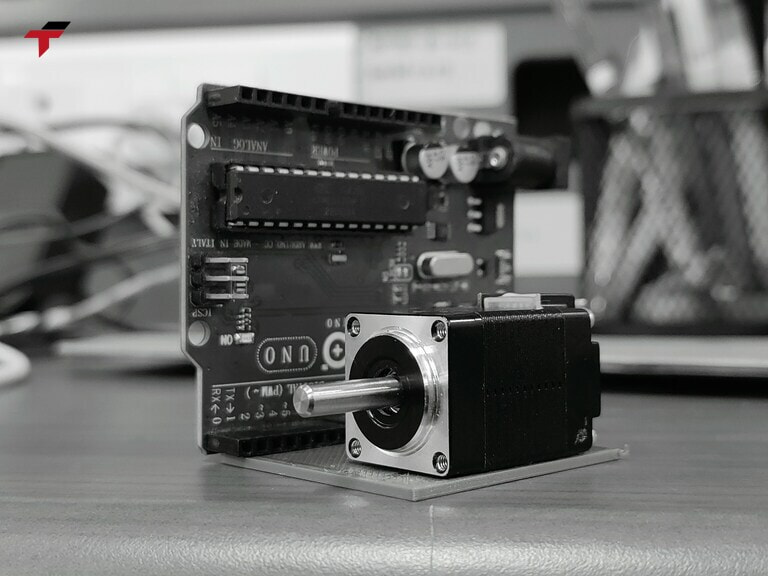
A servo motor is a closed-loop actuator that delivers precise, repeatable control of position, speed, and torque by continuously measuring its own output and correcting any deviation from the commanded value. Unlike a standard induction motor that runs at a speed determined by supply frequency, a servo motor knows exactly where its shaft is at every moment – and corrects its position in real time if a load disturbance pushes it off target. The consequence of this distinction is direct: an engineer who specifies a standard motor where a servo motor is required will find that positioning errors accumulate, repeatability degrades, and the automation system cannot hold tolerances under varying load.
The closed-loop mechanism that defines servo motor operation depends on three elements working together: the motor body, an encoder that measures shaft position, and a servo drive that processes the feedback and controls the motor power. This guide covers the working principle behind that closed-loop system, the core components inside the motor body, AC versus DC and brushed versus brushless type classifications, industrial applications, a comparison against stepper motors, and a selection framework for Malaysian manufacturing operations. It is written for system integrators, maintenance engineers, and procurement managers specifying motion control systems.
What Is a Servo Motor – Definition and Closed-Loop Function
A servo motor is a rotary or linear actuator that uses feedback from a position sensor to continuously compare its actual shaft position with the commanded position and apply corrective power until the two values match. The defining characteristic is not precision alone – it is self-correction. A servo motor that is disturbed by an external force during operation drives itself back to the commanded position. A standard motor under the same disturbance simply runs at a different speed or holds a different position, with no mechanism to recover.
The term “servo” derives from the Latin servus, meaning servant or slave. Historically, servo mechanisms were support or auxiliary drives – used to assist primary actuators rather than drive machines directly. Advances in power electronics and encoder technology through the latter half of the 20th century transformed servo motors into primary drives capable of handling the full motion demands of CNC machine tools, robotics, and high-speed packaging – roles that open-loop motors cannot fill with equivalent precision.
The term “servo motor” always implies a system. The motor body alone – even with a built-in encoder – does not operate as a servo motor. A matched servo drive (amplifier) is required to interpret commands from the controller, process encoder feedback, and run the closed-loop control algorithm. Understanding this system architecture is the starting point for both specification and procurement. The mechanism behind this closed-loop precision – how the motor receives, compares, and corrects – is the servo motor working principle that separates servo systems from all other motor technologies.
What Is a Servo Motor – Definition and Closed-Loop Function
How a Servo Motor Works – Closed-Loop Control and Feedback
A servo motor operates on a detect-compare-correct cycle that repeats continuously during operation. The drive receives a command, powers the motor, reads the encoder output, calculates the difference between commanded and actual position, and adjusts power output to eliminate that difference. This cycle runs at high speed – modern servo drives execute the position control loop thousands of times per second.
The five steps in the cycle are:
- Command signal: A PLC or motion controller sends a position, speed, or torque command to the servo drive – typically as a pulse train (for digital position control) or a ±10V analog signal (for speed or torque control).
- Drive output: The servo drive converts the command into the appropriate three-phase voltage and current to energise the motor windings and drive rotor rotation.
- Motor movement: The rotor moves toward the commanded position, driving the mechanical load through the motor shaft.
- Encoder feedback: The encoder measures actual shaft angle and speed and returns this data to the servo drive at high update frequency.
- Error correction: The drive calculates the error (commanded position − actual position). If the error is non-zero, the drive adjusts its output to reduce it. The PID (Proportional-Integral-Derivative) control algorithm inside the drive determines how aggressively and smoothly the correction is applied. The cycle repeats until the error reaches zero.
The Feedback Loop – Encoder, Error Signal, and Shaft Correction
The encoder is the device that makes closed-loop control possible. Two types are used in industrial servo systems, each with distinct operational characteristics:
Incremental encoders count pulses from a reference point (the home position) established at power-up. They provide relative position data – the controller knows how far the shaft has moved from the home position, but not its absolute location. If power is interrupted, the position count is lost and the system must home again before resuming operation. Incremental encoders are the lower-cost option and are acceptable for applications where power interruption is rare and homing is operationally feasible.
Absolute encoders output a unique binary code for every shaft position across a full revolution (single-turn) or multiple revolutions (multi-turn absolute). Position data is retained across power cycles – the drive knows the exact shaft position the instant power is restored, with no homing required. This is the standard specification for multi-axis semiconductor equipment, robotics, and any application where homing after power loss is operationally unacceptable.
Resolvers are electromagnetic position sensors that serve the same function as encoders but use a different operating principle. Resolvers are more robust in high-vibration, high-temperature, and high-contamination environments. They appear in heavy industrial servo applications and military equipment where optical encoder glass discs would fail.
The error signal – the numerical difference between commanded and actual position – drives the entire correction process. A large error produces a large corrective output from the drive; as the shaft approaches the target, the error shrinks and the corrective output reduces proportionally. The PID algorithm prevents overshoot (overshooting the target and oscillating) by factoring in the rate of error change and the accumulated error over time.
Servo Motor vs Servo Drive – Two Components, One System
A common procurement error is ordering a servo motor without a matched servo drive, or specifying only the motor and discovering that the drive is a separate line item. The motor body and servo drive are distinct components with different functions:
| Component | Role | Without It |
| **Servo motor** | Converts electrical energy to mechanical torque and rotation. Contains stator, rotor, windings, shaft, encoder. | Has no power control – cannot operate. |
| **Servo drive** | Interprets commands from PLC/controller, controls power to motor windings, processes encoder feedback, runs PID loop. | Motor cannot receive commands or self-correct. |
| **Encoder** | Measures actual shaft position and speed – returns data to drive. | Closed-loop control is impossible – system becomes open-loop. |
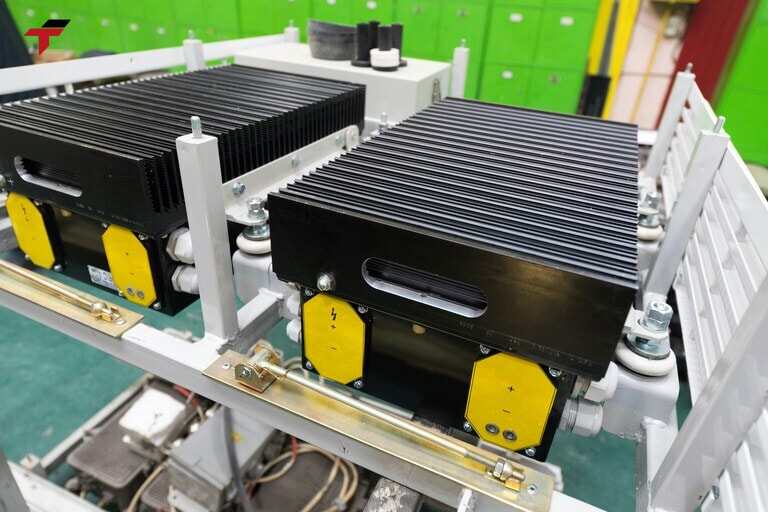
The complete servo system is: Controller (PLC) → Servo Drive → Servo Motor + Encoder → Mechanical Load → back to Drive via feedback.
Mitsubishi Electric’s MELSERVO system pairs MR-J5 series servo drives with HG series servo motors. Panasonic’s MINAS system pairs A6 series drives with MSMF and MDMF motor series. In both cases, the drive and motor are specified and ordered as a matched pair – the encoder communication protocol, power rating, and control interface are designed for the specific drive-motor combination. Ordering motors and drives from different manufacturers requires careful compatibility verification and is generally avoided in new installations. For [servo drive Malaysia](https://www.flextech-industrial.com/product-category/servo-drive/) sourcing, Flextech Industrial stocks matched Mitsubishi and Panasonic servo systems.
Servo Motor vs Servo Drive – Two Components, One System
Core Components of a Servo Motor
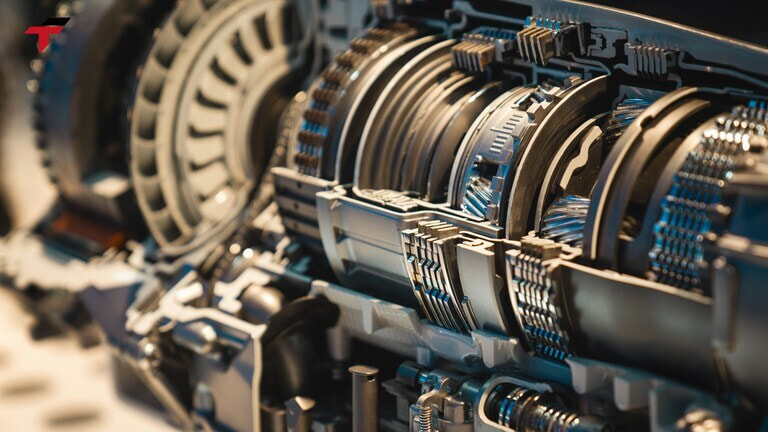
A servo motor body contains six primary components, each with a specific role in converting electrical commands into precise mechanical output.
Stator: The stationary outer structure containing copper windings wound around a laminated steel core. When energised with three-phase AC, the stator windings produce a rotating magnetic field that drives rotor rotation. The stator also forms the primary thermal path – heat generated in the windings conducts through the stator laminations and housing to the environment.
Rotor (permanent magnet): The rotating inner element. In industrial AC servo motors, the rotor carries embedded permanent magnets – no current flows in the rotor, eliminating rotor copper losses and making these motors highly efficient. The permanent magnet rotor is why industrial servo motors are classified as brushless PM (permanent magnet) motors.
Shaft: The output element. Transmits rotational torque from the rotor to the mechanical load – ball screw, timing belt pulley, gearbox input, or direct-coupled conveyor drive. Shaft diameter, keyway, and flange dimensions are standardised to IEC or NEMA frame specifications.
Encoder: Mounted on the non-drive end of the shaft. Measures angular position and rotational speed, returning this data to the servo drive via a dedicated feedback cable. The encoder type (incremental or absolute) is specified at the time of motor selection and determines whether homing is required after power loss.
Windings: Three-phase copper coils wound into the stator slots. Current through the windings produces the electromagnetic force that acts on the permanent magnet rotor. Winding insulation class determines the motor’s maximum operating temperature – Class F (155°C) is standard for industrial servo motors, Class H (180°C) for high-duty-cycle applications.
Cooling arrangement: Standard servo motors rely on convection cooling through the motor frame – the housing acts as a heatsink. High-duty-cycle applications operating at continuous high torque require supplemental cooling: forced-air (external fan mounted on the non-drive end) or liquid cooling (water jacket around the stator housing). Liquid-cooled servo motors allow higher continuous power output in the same frame size, and eliminate the space penalty of external fan housings in tightly packed machine enclosures.
The rotor construction – specifically whether it uses permanent magnets and how current commutation is achieved – defines the different types of servo motors available for industrial applications.
Core Components of a Servo Motor
Types of Servo Motors – AC, DC, Brushed, and Brushless
Servo motors are classified along three axes: power supply type (AC or DC), commutation method (brushed or brushless), and rotor synchronisation (synchronous or asynchronous).
| Type | Power Supply | Commutation | Primary Use |
| AC synchronous PM | 3-phase AC | Brushless (electronic) | Industrial automation, CNC, robotics – current standard |
| AC asynchronous (induction) | 3-phase AC | Brushless | Variable-speed drives – less common in true servo systems |
| DC brushless (BLDC) | DC | Brushless (electronic) | Small robotics, medical, consumer servo |
| DC brushed | DC | Mechanical (brushes) | Legacy equipment, low-cost small-scale positioning |
AC Servo Motors – High Speed, High Power, Industrial Standard
AC servo motors operate on a three-phase AC power supply – typically 200–240V for single-phase compatible drives (up to approximately 750W) and 200–480V three-phase for larger systems. The dominant type in industrial automation is the synchronous AC permanent magnet servo motor: the rotor’s permanent magnets follow the stator’s rotating magnetic field at exactly synchronous speed, producing zero slip and high efficiency across the operating speed range.
AC servo motors dominate industrial automation for three practical reasons: higher power density than DC motors in the same frame size, no brush maintenance (brushless construction), and compatibility with modern vector-control servo drives that deliver precise torque regulation from zero speed to maximum speed. In Malaysia, Mitsubishi HG series and Panasonic MSMF/MDMF series are synchronous AC PM servo motors – the standard specification for semiconductor equipment, CNC machine tools, and precision assembly systems across Selangor and Penang.
DC Servo Motors – Precision Control at Lower Power
DC servo motors operate on a regulated DC supply and were the dominant servo technology before AC brushless drives matured in the 1990s. Speed control is straightforward – motor speed is proportional to supply voltage – making DC servos simple to control with basic electronics. They remain in use in legacy equipment, small-scale precision positioning applications (medical devices, laboratory instruments), and environments where three-phase AC is unavailable.
New industrial installations rarely specify DC servo motors for precision automation. AC brushless servo systems offer superior performance, lower maintenance, and comparable cost at production volumes. DC servo appears in new designs primarily for sub-100W applications where the simplicity and cost advantage of DC control electronics outweighs the performance gap.
Brushed vs Brushless – Maintenance and Efficiency Trade-offs
| Parameter | Brushed | Brushless |
| Commutation method | Mechanical – carbon brushes on rotating commutator | Electronic – drive controls winding sequence via encoder or Hall sensors |
| Maintenance | Periodic brush inspection and replacement required | No brush wear – maintenance-free commutation |
| Electrical noise | Carbon brush arcing generates EMI | No brush arcing – lower electrical noise |
| Carbon contamination | Brush dust contaminates environment | None – suitable for cleanroom and food environments |
| Efficiency | Lower – brush contact resistance + friction losses | Higher – no brush losses |
| Cost | Lower initial cost | Higher initial cost, lower lifetime cost |
Brushless servo motors – both AC PM and DC brushless – are the standard for all modern industrial servo systems from Mitsubishi, Panasonic, Omron, and Siemens. The elimination of brush wear removes a failure mode and eliminates periodic maintenance. In cleanroom semiconductor environments and food processing facilities, the absence of carbon dust from brush wear is a specification requirement, not a preference.
Synchronous vs Asynchronous – Rotor Synchronisation
In a synchronous AC servo motor, the rotor permanent magnets lock to the stator’s rotating magnetic field and rotate at exactly the same speed – zero slip. This is the defining characteristic of synchronous operation and the source of the high efficiency at rated load. Industrial servo motors are synchronous by design.
In an asynchronous (induction) motor, the rotor lags behind the stator rotating magnetic field by a slip percentage. The slip varies with load – as load increases, slip increases and speed decreases. Asynchronous motors are controlled by variable frequency drives (VFDs) for speed variation but are not true servo motors in precision automation applications unless paired with encoder feedback, which adds cost and complexity.
Summary – Servo Motor Types
Industrial servo motors divide into two primary classifications: AC and DC. AC brushless permanent magnet synchronous motors – with a permanent magnet rotor that locks to the stator field at zero slip – are the industry standard for industrial automation. DC servo motors (brushed and brushless) retain application-specific use in legacy systems and lower-voltage robotics. Within the AC classification, the practical operating distinction is between brushed (declining use, higher maintenance) and brushless (standard for Mitsubishi, Panasonic, Omron, and Siemens servo product lines). Synchronous operation is the performance characteristic that gives servo motors their efficiency and speed consistency advantage over asynchronous induction motors.
Servo Motor Applications in Industrial Automation
Servo motors serve applications where precise, repeatable control of position, speed, or torque is required – applications where a conventional induction motor or stepper motor cannot self-correct against load variation or guarantee positional accuracy.
CNC machine tools: Servo motors drive X, Y, and Z linear axes on milling machines, lathes, and grinding machines, as well as rotary axes on turning centres and five-axis machining centres. Axis positioning accuracy depends on encoder resolution, servo drive tuning, and mechanical transmission stiffness. Ball screw-driven axes with absolute encoder servo motors achieve sub-0.01mm positional repeatability in production conditions.
Industrial robots and cobots: Each joint of an articulated robot arm uses an individual servo motor, typically with a precision gearbox (harmonic drive or cycloidal gearbox) between the motor shaft and the joint. Six-axis robot coordination requires synchronised servo systems with deterministic communication – SSCNET III/H for Mitsubishi systems, EtherCAT for many European platforms.
Semiconductor equipment: Wafer handling, die bonding, wire bonding, and SMD pick-and-place machines demand micron-level positioning repeatability. Multi-turn absolute encoders on servo motors eliminate re-homing after power interruption – a critical requirement in cleanroom production where a homing sequence on a fully loaded multi-axis system is not operationally acceptable.
Packaging and labelling machines: High-speed intermittent motion – film advance, label placement, bag forming, heat seal – requires servo-driven axes with programmable motion profiles that control acceleration, constant-speed travel, and deceleration for each machine cycle.
Printing and converting: Register control – maintaining synchronisation between multiple print rollers, cutting units, or laminating nips – relies on servo-driven axes with real-time feedback. Phase offset adjustments between axes correct register errors in real time without stopping the machine.
Conveyor and assembly indexing: Servo-driven conveyors advance parts a defined distance, stop precisely at the work station, and hold position under the pressing, fastening, or dispensing force of the automated operation. Programmable indexing distances allow the same conveyor to accommodate different product sizes without mechanical adjustment.
Servo Motor vs Stepper Motor – Key Differences and Selection Criteria
Both servo and stepper motors provide controlled motion from digital commands, but they operate on fundamentally different principles – the choice between them determines cost, complexity, and suitability for the application.
| Parameter | Servo Motor | Stepper Motor |
| Control type | Closed-loop (continuous feedback) | Open-loop (no feedback standard) |
| Position self-correction | Detects and corrects errors automatically | No self-correction – missed steps accumulate |
| Torque at high speed | Maintains rated torque across speed range | Torque drops significantly at higher speeds |
| Speed range | Wide – high speed with consistent torque | Best suited to low-speed, high-torque applications |
| Response to load disturbance | Returns to commanded position | Position error accumulates – no recovery |
| Cost | Higher (motor + drive + encoder system) | Lower (motor + driver, simpler control) |
| Maintenance | Very low (brushless construction) | Very low (brushless construction) |
| Best application | High speed, precision, variable load, high duty cycle | Low speed, light load, simple positioning, cost-sensitive |
Servo motors are the correct technology for applications requiring high speed, high duty cycle, varying loads, or where a missed step or position error is unacceptable – semiconductor equipment, CNC machines, robots, and high-speed packaging lines. Stepper motors are the cost-effective choice for low-speed, light-load, simple positioning where the consequences of a missed step are manageable – 3D printers, small plotters, basic conveyors, and laboratory positioning stages.
A closed-loop stepper system (stepper motor with encoder feedback) is an intermediate option – lower cost than a full servo system, with self-correction capability. It is suitable for moderate-speed, moderate-precision applications that do not require the full performance envelope of a servo drive.
Summary – Servo Motor System Overview
A servo motor delivers precise closed-loop control of position, speed, and torque through the continuous detect-compare-correct cycle. The motor body (stator, permanent magnet rotor, windings, shaft, encoder) converts electrical energy to mechanical output. The servo drive processes encoder feedback and controls the motor power. Together, they form a servo system – neither component operates as a servo without the other. AC brushless permanent magnet synchronous servo motors are the industrial standard. The choice between servo and stepper motor comes down to speed, precision, load variation, and duty cycle requirements of the application.
Servo Motors in Malaysian Manufacturing
Servo motors in Malaysian manufacturing serve four primary sectors – each with distinct environment and performance requirements that determine motor type, encoder specification, IP rating, and drive compatibility.
Semiconductor manufacturing (Penang, Selangor): Back-end semiconductor processes – die bonding, wire bonding, wafer dicing, and pick-and-place – use servo-driven axes with multi-turn absolute encoders and sub-micron positioning repeatability. Equipment from Japanese and Taiwanese OEMs dominates this sector, typically integrating Mitsubishi or Panasonic servo systems on NPN-compatible PLC interfaces. Power-loss position retention via absolute encoder is mandatory – homing a multi-axis system in a cleanroom environment after each power cycle is not operationally viable. IP67 motor rating is the minimum for equipment with compressed air purging.
Palm oil processing: Automated screw press drives, steriliser tilting systems, and fruit conveyor indexing in palm oil mills use servo drives for controlled torque application and position indexing. These applications prioritise torque control and reliability in humid, high-ambient-temperature environments over ultra-high positioning precision. IP55 motor rating is the standard minimum; exposed outdoor conveyors specify IP65 or higher. Absolute encoder specification is recommended to avoid re-homing after the frequent power cycling typical of palm oil mill operations.
Rubber and glove manufacturing: Servo-driven conveyor systems transport latex-dipped formers through oven dipping and stripping zones on timed indexing cycles. Position repeatability ensures consistent dwell time in each zone, directly affecting glove thickness uniformity and defect rates. Servo systems replacing old geared induction motor drives on conveyor indexing improve energy efficiency through regenerative braking and reduce maintenance cycle frequency by eliminating gearbox oil changes. IP54 minimum rating; high-humidity zones specify IP65.
Food and beverage: Servo-driven filling, capping, and labelling machines use programmable motion profiles – controlled acceleration, constant-speed fill, deceleration, and position hold at the dispensing station. Stainless steel motor housings or IP67 rated motors are specified for environments with regular washdown cleaning. Hygienic servo motor designs with smooth housings and no external fan blades are specified for food-contact zones to prevent contamination accumulation. Flextech Industrial supplies Mitsubishi and Panasonic [servo drive Malaysia](https://www.flextech-industrial.com/product-category/servo-drive/) systems suited to all four sectors, with local technical support in Selangor, Penang, and Johor.
Servo Motors in Malaysian Manufacturing
Selecting a Servo Motor System – Mitsubishi and Panasonic in Malaysia
Selecting a servo motor system requires matching five parameters to the application before specifying a brand or model series.
- Torque and speed requirement: Calculate the load torque – reflected inertia of the load plus friction losses plus acceleration torque required. The motor continuous torque rating must exceed the RMS (root mean square) torque demand of the duty cycle. Peak torque (during acceleration) must not exceed the motor’s peak torque rating, which is typically 2–3× the continuous rating. Motor and drive sizing software from Mitsubishi (MELSERVO Sizing Tool) and Panasonic (MINAS Motor Sizing) accepts load parameters and outputs the appropriate motor and drive series.
- Encoder type – absolute vs incremental: Specify multi-turn absolute encoders for any application with power interruption risk, multi-axis synchronisation requirements, or where homing is operationally impractical. Incremental encoders are acceptable for single-axis positioning with defined home positions and regular homing on power-up.
- Supply voltage and power: Confirm plant power supply before specifying drive series. Mitsubishi and Panasonic servo drives are available in 200V class (single-phase or 3-phase, 200–240V) for motors up to approximately 750W, and 400V class (3-phase, 380–480V) for larger motors. Malaysian industrial facilities typically supply 3-phase 415V – confirm available voltage at the control cabinet before ordering.
- Environmental rating: Standard indoor factory environment – IP55 motor is adequate for most servo applications. Washdown environments (food and beverage, rubber/glove) – specify IP67 as minimum. Outdoor or high-humidity environments – specify IP65 or IP67 with sealed connector. Explosive atmosphere – ATEX/IECEx rated motor and drive required.
- Control interface and PLC compatibility: Mitsubishi MELSERVO MR-J5 drives communicate with Mitsubishi MELSEC PLCs via SSCNET III/H – a dedicated fibre-optic servo network that simplifies multi-axis wiring, provides deterministic communication, and reduces cycle time for coordinated motion. This native integration is a significant engineering advantage for new machine builds on Mitsubishi PLC platforms. Panasonic MINAS A6 drives support EtherCAT, PROFINET, and pulse-train input for compatibility with a wider range of PLC brands.
Flextech Industrial stocks Mitsubishi MELSERVO and Panasonic MINAS servo systems for the Malaysian market. For application-specific servo motor and drive selection, [request a quotation](https://www.flextech-industrial.com/contact-us/) – Flextech’s technical team supports system specification across Selangor, Penang, and Johor.
Frequently Asked Questions
What is the difference between a servo motor and a regular motor?
A regular induction motor runs at a speed determined by supply frequency and load – it has no position feedback and no mechanism to self-correct. A servo motor uses an encoder to continuously measure actual shaft position and a servo drive to correct any deviation from the commanded position in real time. The result is precise, repeatable positioning that a standard induction motor cannot achieve under varying load conditions.
What is the difference between a servo motor and a stepper motor?
A stepper motor moves in fixed steps and operates open-loop – there is no feedback to detect or correct missed steps, and torque falls off significantly at higher speeds. A servo motor uses closed-loop feedback to self-correct position errors and maintains rated torque across a wider speed range. Servo motors are the correct choice for high-speed, high-precision, and variable-load applications; steppers suit low-speed, light-load, cost-sensitive positioning where missed steps are manageable.
Does a servo motor need a servo drive?
Yes. A servo motor does not operate without a matched servo drive (amplifier). The drive processes position commands from the PLC, controls the power to the motor windings, and runs the closed-loop PID algorithm on the encoder feedback. Motor and drive are specified as a matched pair – a Mitsubishi HG series motor requires a Mitsubishi MR-J series drive with the corresponding encoder interface.
What is the servo motor working principle?
A servo motor operates on a closed-loop detect-compare-correct cycle. The servo drive sends power to the motor windings, the encoder measures the actual shaft position, the drive calculates the error between commanded and actual position, and adjusts its output to eliminate the error. This cycle repeats thousands of times per second, producing the precise, self-correcting positioning performance that servo motors deliver.
What are the main types of servo motors used in industrial automation?
Industrial automation predominantly uses AC brushless permanent magnet synchronous servo motors – these offer high efficiency, zero brush maintenance, wide speed range, and high power density. DC servo motors appear in legacy equipment and small-scale applications. The classification extends to brushed/brushless commutation and synchronous/asynchronous rotor design, though synchronous brushless AC PM is the current industrial standard from all major manufacturers.