
What Is a VFD (Variable Frequency Drive)? How It Works & Why It Matters

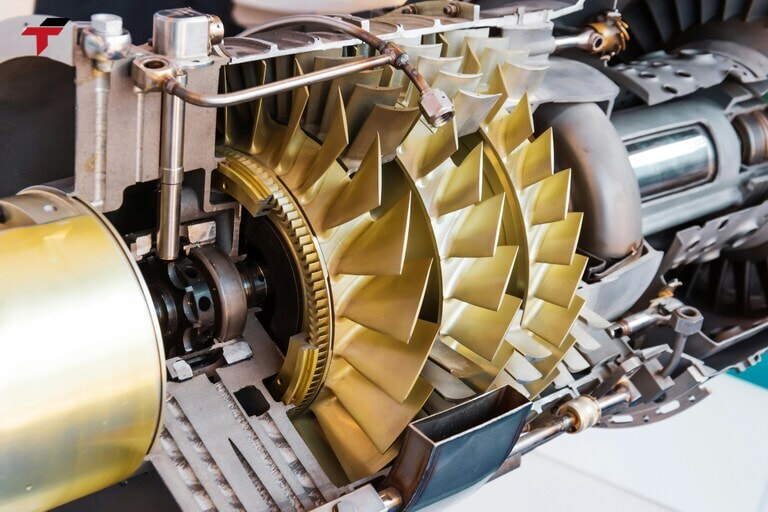
A variable frequency drive (VFD) is a motor controller that adjusts the speed of an AC electric motor by varying the frequency and voltage of the power supplied to it. Instead of running a motor at fixed full speed, a VFD lets the motor run at exactly the speed the process requires – which is why VFDs reduce energy consumption, extend motor life, and improve process control across industrial applications.
In Malaysian industry, VFDs are one of the most widely installed automation components. Pumps, fans, compressors, conveyors, and mixers in sectors from semiconductor manufacturing to halal food processing all use VFDs to match motor output to actual load demand. The 50 Hz grid standard used across Malaysia directly governs how VFDs set motor speed, making frequency control both the mechanism and the practical advantage.
This article covers how a VFD works internally (converter, DC bus, inverter sections), the difference between a VFD and an inverter, the three main control methods, how to select a VFD for a specific application, and which VFD brands are stocked locally in Malaysia.
VFD and Inverter: The Same Device, Two Different Names
A VFD and an inverter refer to the same device in Malaysian and broader Asian industrial contexts. The term “inverter” comes from the internal DC-to-AC conversion stage inside a VFD – and in Japan, Taiwan, and Malaysia, this internal function gave the whole unit its colloquial name. Mitsubishi, Panasonic, and Toshiba all market their VFD product lines under the label “inverter” in regional catalogs, which is why Malaysian engineers often use both terms interchangeably.
In North American and European technical documentation, “inverter” typically refers only to the output stage of the drive, while “variable frequency drive,” “adjustable speed drive (ASD),” or “adjustable frequency drive (AFD)” describes the complete unit. The IEC standard uses “variable speed drive (VSD)” and “frequency converter” as additional synonyms.
For practical purchasing and specification purposes in Malaysia: VFD = inverter. The same applies to the other common synonyms – AC drive, frequency converter, and AFD. When sourcing locally, searching either term returns the same product category.
The distinction matters when reading brand documentation. A Mitsubishi FR-E800 series product is labeled an “inverter” in its datasheet but functions as a complete VFD – rectifier, DC bus, and output inverter stage included.
How a VFD Controls Motor Speed
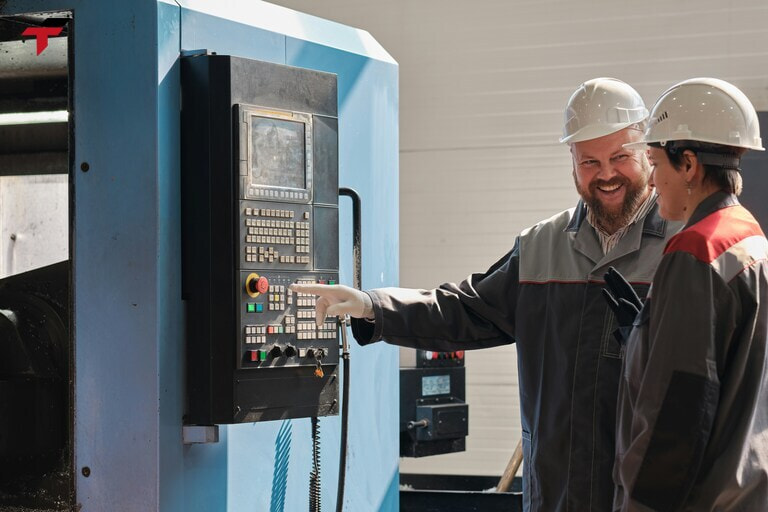
A variable frequency drive controls AC motor speed by changing the frequency of the AC power delivered to the motor. The rotational speed of an AC induction motor is directly determined by the supply frequency and the number of motor poles, expressed as:
Motor speed (RPM) = (120 × frequency) ÷ number of poles
On Malaysia’s 50 Hz grid, a standard 4-pole induction motor runs at approximately 1,500 RPM (25 r/s / 157 rad/s) synchronous speed – settling at 1,450–1,480 RPM under full load. By reducing the output frequency to 25 Hz, the VFD cuts motor speed to roughly half – without mechanical throttling, without valve restriction, and without wasting the energy that throttling dissipates as heat or pressure drop.
Voltage must change proportionally with frequency to maintain the motor’s magnetic flux. VFDs use a constant voltage-to-frequency (V/Hz) ratio – also called the volts-per-hertz ratio – to ensure the motor operates efficiently across the full speed range. Dropping frequency without reducing voltage causes the motor to overheat; raising frequency above rated without raising voltage starves magnetic flux and reduces torque.
The practical result: a pump or fan running at 75% speed via VFD consumes approximately 42% of full-speed power, because centrifugal load power follows the cube of speed ratio. A 10% speed reduction delivers roughly 27% energy savings on variable-torque loads.
How a VFD Controls Motor Speed
The Three Sections Inside a VFD
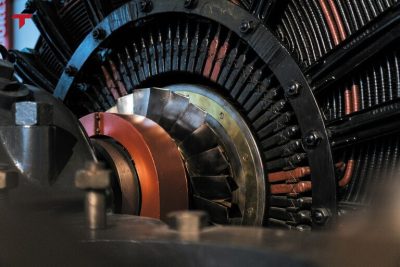
A variable frequency drive processes power in three sequential stages. Understanding each stage clarifies both how a VFD generates variable-frequency AC and why specific problems – harmonics, voltage spikes, bearing currents – arise.
Rectifier (Converter Section)
The rectifier converts incoming AC mains power to DC. In standard low-voltage VFDs (under 1,000 V), six diodes handle this conversion – one diode pair per phase. Each diode conducts when its phase voltage is most positive or most negative, producing six current pulses per mains cycle. This is the origin of the term “six-pulse VFD,” the most common topology in industrial use.
The rectifier output is not smooth DC; it carries an AC ripple riding on a DC offset. For a 415 V three-phase Malaysian supply, the rectified DC bus settles around 600 VDC (0.6 kV / 600000 mV) before capacitor filtering smooths the remaining ripple.
DC Bus
The DC bus stores and filters the rectified power. A bank of electrolytic capacitors absorbs the AC ripple from the rectifier and delivers stable DC to the inverter stage. The capacitor bank acts as a reservoir: it smooths voltage, absorbs regenerated energy during motor deceleration, and decouples the rectifier from the inverter so each stage can operate independently.
DC bus voltage directly reflects the incoming AC supply level. Voltage unbalance, supply sags, or excessive regenerative loads all appear first as DC bus instability – which is why DC bus overvoltage and undervoltage faults are among the most common VFD alarms in practice.
Inverter (Output Stage)
The inverter converts stable DC back to variable-frequency, variable-voltage AC for the motor. It uses six insulated-gate bipolar transistors (IGBTs) – one pair per output phase – switched on and off at high frequency to synthesize an AC waveform. The switching frequency is typically 4 kHz (4000 Hz / 0.004 MHz) to 16 kHz, far above the 50 Hz output, which is why the technique is called pulse width modulation (PWM).
PWM works by varying the width of individual voltage pulses to control both the effective output voltage and the output frequency. The motor’s inductance integrates the rapid pulses into a smooth current waveform, so the motor sees approximately sinusoidal current despite the switched voltage output.
IGBTs replaced older thyristors and GTOs in low-voltage drives because they switch faster, generate less heat, and can be controlled with low gate-drive power. Current-generation drives increasingly use silicon carbide (SiC) MOSFETs, which switch at higher frequencies with lower switching losses – enabling smaller heat sinks and higher carrier frequencies that reduce motor acoustic noise.
The Three Sections Inside a VFD
VFD Control Methods: V/Hz, Vector, and DTC
The control method determines how the VFD manages the relationship between motor voltage, frequency, and flux in real time. Three main methods are in widespread use, each suited to different application requirements.
V/Hz (Volts-per-Hertz) Control
V/Hz control maintains a fixed ratio between output voltage and frequency across the full speed range. It is the simplest control method, requires no motor parameter tuning or feedback device, and works with any standard induction motor. V/Hz drives are the standard choice for pumps, fans, compressors, and other variable-torque loads where high dynamic accuracy is not required.
The limitation of V/Hz: below approximately 10–15 Hz, the motor’s internal resistance becomes significant relative to the low voltage applied, which causes torque drop-off at low speed. Flux compensation settings can partially address this, but V/Hz drives are not suited for loads that need full torque from zero speed.
Vector Control (Field-Oriented Control)
Vector control separates the motor’s magnetizing current component from its torque-producing component, controlling each independently. This requires either a motor speed feedback signal (closed-loop vector) or accurate motor parameter identification via an auto-tune routine (open-loop vector / sensorless vector).
Vector drives maintain accurate torque across the full speed range, including near zero speed. They are specified for conveyors with varying loads, winding machines, hoists, and any application where speed regulation tighter than ±0.5% matters. Closed-loop vector drives used with encoders achieve ±0.01% speed regulation.
Direct Torque Control (DTC)
DTC controls motor torque and flux directly, without a separate PWM modulator. It calculates the required voltage vector directly from measured motor states and applies it within one control cycle. ABB developed and holds the original DTC patent; the method offers very fast torque response (under 2 ms) without a speed encoder.
DTC drives are used in applications requiring fast, precise torque changes – paper mills, steel rolling, crane and hoist control. For standard pump and fan applications in Malaysian manufacturing, V/Hz control is sufficient and reduces drive cost.
Where VFDs Are Used in Malaysian Manufacturing
VFDs serve pump, fan, conveyor, and compressor applications where AC motor speed varies with process demand rather than running at fixed full speed. In Malaysian industrial sectors, four application categories account for the majority of VFD installations.
Pumps and water systems represent the largest VFD application globally, and Malaysia’s manufacturing base reflects this. Cooling water pumps in semiconductor fabs, process water pumps in glove factories, and chilled water pumps in data center HVAC systems all benefit from VFD control. A pump running at 80% speed uses approximately 51% of full-speed power – the savings compound quickly across 24/7 industrial operations.
Fans and blowers in HVAC and process ventilation systems follow the same cubic power law as pumps. Exhaust fans in palm oil mills, air handling units in cleanrooms, and kiln fans in ceramic production are standard VFD applications. Fan noise also drops significantly at reduced speed, which matters for facilities with noise exposure regulations.
Conveyors and material handling use VFDs for controlled start-stop, speed adjustment to match upstream and downstream line rates, and soft start to reduce mechanical shock on belt joints and gearboxes. In halal food processing lines, VFD-controlled conveyors maintain hygienic consistent speed without mechanical variable-speed gearboxes.
Compressors – air compressors, refrigeration compressors, and vacuum pump systems – benefit from VFD control when load demand varies. A 22 kW air compressor running DOL at fixed speed with unloading cycles is typically replaced with a VFD-controlled unit that matches output to compressed air demand, eliminating unloading losses.
Energy Savings from VFD Installation
The affinity laws govern energy savings on variable-torque loads – pumps, fans, and compressors – and the relationship is consistent across all three load types:
| Speed Reduction | Power Reduction |
| 10% speed reduction | ~27% power reduction |
| 20% speed reduction | ~49% power reduction |
| 30% speed reduction | ~66% power reduction |
| 50% speed reduction | ~87% power reduction |
The relationship is cubic: power scales with the cube of speed. This means even modest speed reductions yield disproportionate energy savings – which is why VFD payback periods on pump and fan applications typically fall in the 6–18 month range.
For constant-torque loads – conveyors, positive displacement pumps, extruders – the power-speed relationship is linear. Energy savings are proportional to speed reduction rather than cubic. VFDs on these applications are specified primarily for process control and soft-start benefits rather than energy savings.
Direct-on-line (DOL) motor starters draw 500–700% of rated current at startup. This inrush spike stresses motor windings, causes voltage dips on the supply network, and triggers peak-demand charges from TNB for facilities on maximum demand tariffs. A VFD ramps motor speed from zero at a controlled rate – startup current stays within 100–150% of rated current, eliminating the inrush penalty entirely.
Energy Savings from VFD Installation
How to Select a VFD for Your Application
Selecting the right variable frequency drive requires matching five specification dimensions to the motor and load. Errors in any dimension cause nuisance tripping, premature failure, or inadequate performance.
Motor power and current rating is the primary selection criterion. The VFD’s continuous output current rating must equal or exceed the motor’s full-load ampere (FLA) rating at the motor’s rated frequency and voltage. Selecting by kW alone is insufficient – two motors of the same kW rating can have different FLA values depending on efficiency class and power factor.
Load torque characteristic determines whether a standard (variable torque) or heavy-duty (constant torque) drive frame applies. Variable-torque drives are rated for pumps and fans with cubic load curves. Constant-torque applications – conveyors, hoists, compressors – require drives rated for 150% overload current for 60 seconds, which is the heavy-duty designation used by most drive brands.
Input voltage and phase must match the facility supply. In Malaysia, standard industrial supply is 415 V three-phase 50 Hz. Single-phase 240 V VFDs are available for smaller motors (typically under 2.2 kW) used in HVAC and light industrial equipment.
Environmental protection class matches the installation location. IP20 drives are for clean, dry control panel enclosures. IP55 drives mount directly on the machine in wash-down or dusty environments. Semiconductor cleanrooms and chemical plants may specify corrosion-resistant coatings (conformal coating) on the PCB.
Control and communication interface aligns with the automation architecture. Standalone VFDs with keypad control and analog 0–10 V or 4–20 mA speed reference are sufficient for simple pump and fan applications. Integration with PLCs over Modbus RTU, PROFIBUS, or EtherNet/IP is standard in coordinated multi-drive systems.
Common VFD Problems and How to Address Them
Variable frequency drives introduce three categories of electrical issues that affect both the drive itself and connected equipment. Addressing them requires selecting appropriate mitigation components at system design stage.
Harmonic distortion is generated by the rectifier’s six-pulse switching, which draws current from the mains in non-sinusoidal pulses. These current harmonics propagate back onto the supply network and cause voltage distortion that affects other equipment on the same circuit. TNB’s harmonic limits follow the IEC 61000-3-12 standard for industrial installations. Solutions include line reactors (which attenuate 5th and 7th harmonic by 30–50%), 12-pulse rectifier configurations (which cancel 5th and 7th harmonic entirely), or active front-end (AFE) drives that draw near-sinusoidal supply current.
dV/dt and reflected wave voltage spikes occur when the VFD’s IGBT switches generate fast-rising voltage pulses that travel along the motor cable. At the motor terminals, impedance mismatch causes reflections that can double the pulse amplitude – to 1,100–1,300 V on a 415 V system. Long cable runs above 50 m increase the reflected wave effect. Output reactors or dV/dt filters at the drive output limit the voltage rise rate and protect motor winding insulation.
Bearing currents are induced by the high-frequency common-mode voltages generated by PWM switching. These currents flow through the motor shaft and bearings, causing pitting of the bearing races over time – a failure mode called electrical discharge machining (EDM). Insulated bearings on the non-drive end and shaft grounding rings (SGRs) are the standard mitigation for motors above 90 kW on VFD duty.
Mid-Summary: What Makes a VFD Essential
A variable frequency drive does three things simultaneously: it controls motor speed to match process demand, it reduces energy consumption through the cube-law relationship on variable-torque loads, and it protects motors from inrush current stress at startup. For Malaysian manufacturing operating on TNB supply under 50 Hz, these three functions translate directly into lower electricity bills, reduced peak demand charges, and longer motor service intervals.
The key technical components – six-pulse rectifier, DC bus capacitor bank, IGBT inverter – each have defined failure modes and maintenance requirements. Understanding the three sections allows a maintenance engineer to diagnose faults accurately: DC bus overvoltage points to regenerative load or supply spike; output phase fault points to IGBT or motor cable; rectifier diode failure appears as single-phase loss or DC ripple.

Mid-Summary: What Makes a VFD Essential
VFD Brands Available in Malaysia Through Flextech
Flextech Industrial Supplies stocks variable frequency drives from six brands across the industrial automation spectrum. Each brand serves distinct application segments and control capabilities.
Mitsubishi Electric FR series (FR-D700, FR-E800, FR-F800) covers the full range from fractional-kW general-purpose drives to high-performance vector drives with integrated PLC function. The FR-F800 series includes built-in energy monitoring and harmonic suppression functions for HVAC applications. Mitsubishi inverters are among the most widely supported in Malaysia with local technical resources.
Panasonic MINAS and M-drive series targets compact machinery and servo-adjacent applications. Panasonic drives are commonly specified in packaging equipment, labeling machines, and light material handling where compact DIN-rail mounting and precise speed control are priorities.
Siemens SINAMICS G series (G120, G180) is the standard drive platform in Siemens-heavy process plants and facilities following IEC automation standards. SINAMICS drives integrate directly with SIMATIC S7 PLCs via PROFINET or PROFIBUS with minimal configuration. The G120 modular design allows power module replacement without changing control module wiring.
Toshiba VFS series and Xinje VFD series provide cost-effective options for standard pump, fan, and conveyor applications where V/Hz control is sufficient and drive cost is the primary selection criterion. Xinje VFDs are increasingly specified in Malaysian SME factories as a local-brand alternative with competitive pricing.
NAIS (Panasonic Industrial Devices) covers specific embedded OEM applications where compact size and long production run availability matter.
Flextech maintains stock of common frame sizes for each brand, enabling same-day collection for urgent replacements. For drives above 75 kW or non-standard specifications, lead times vary by brand and frame size.
For the full range of inverters and variable frequency drives stocked in Malaysia, visit Flextech’s.
Frequently Asked Questions
What is a variable frequency drive used for?
A variable frequency drive controls the speed of AC electric motors by varying the output frequency and voltage. The primary uses are energy savings on pump, fan, and compressor applications (where motor speed can be matched to actual demand rather than running at full speed), process speed control on conveyors and production lines, and soft-start protection to eliminate motor inrush current at startup.
What is the difference between a VFD and an inverter?
In Malaysian and Asian industrial contexts, VFD and inverter refer to the same device. The term “inverter” comes from the DC-to-AC conversion stage inside a VFD; Japanese and Taiwanese drive manufacturers – Mitsubishi, Panasonic, Fuji, Toshiba – have historically marketed their complete drives under the “inverter” label. North American documentation typically reserves “inverter” for the output stage only and uses “VFD” or “adjustable speed drive” for the complete unit. For purchasing purposes in Malaysia, the two terms are interchangeable.
What is the difference between a VFD and a soft starter?
A soft starter ramps motor voltage at startup to limit inrush current, then steps aside once the motor reaches full speed – the motor runs at fixed full speed during operation. A VFD controls motor speed continuously throughout operation, not just at startup. VFDs cost more and are specified when speed control or energy savings during normal operation are required. Soft starters are specified when the only requirement is inrush reduction at start.
Can a VFD damage a motor?
A VFD can damage a motor if the motor is not rated for inverter duty. Standard motors can experience insulation stress from PWM voltage spikes (dV/dt), and shaft bearing damage from induced currents in drives above 90 kW. Inverter-duty motors (IEC IE3+, NEMA MG1 Part 31) have reinforced winding insulation rated for VFD use. For drives on long cable runs or above 90 kW, output reactors and shaft grounding rings are additional protective measures.
What is the difference between VFD and VSD?
VFD (variable frequency drive) and VSD (variable speed drive) are synonyms for the same class of device when applied to AC induction motors. “VSD” is the IEC-preferred term and is used in European and international standards. “VFD” is more common in North American and Malaysian industrial practice. Both terms appear in technical specifications for the same product category.
How do I select the right VFD for my application?
Match the VFD’s continuous output current rating to the motor’s full-load ampere (FLA) rating, not just the kW rating. Specify heavy-duty duty class for constant-torque loads (conveyors, positive displacement pumps, hoists). Match the input voltage and phase to the facility supply (415 V three-phase 50 Hz for Malaysian industrial). Select IP55 enclosure class for outdoor or wash-down environments. Specify the communications protocol required for PLC integration (Modbus RTU, PROFIBUS, EtherNet/IP).
What maintenance does a VFD require?
VFD maintenance covers four areas: cooling fan inspection and replacement (typically every 3–5 years); DC bus capacitor inspection (capacitors age regardless of use, with rated life of 5–8 years under normal thermal conditions); heat sink cleaning to prevent thermal derating; and firmware updates for drives in networked automation systems. Fan and capacitor replacement are the most common scheduled maintenance tasks on drives that have been in service for more than five years.