
Ultrasonic Sensors in Industry: Level, Distance and Presence Detection

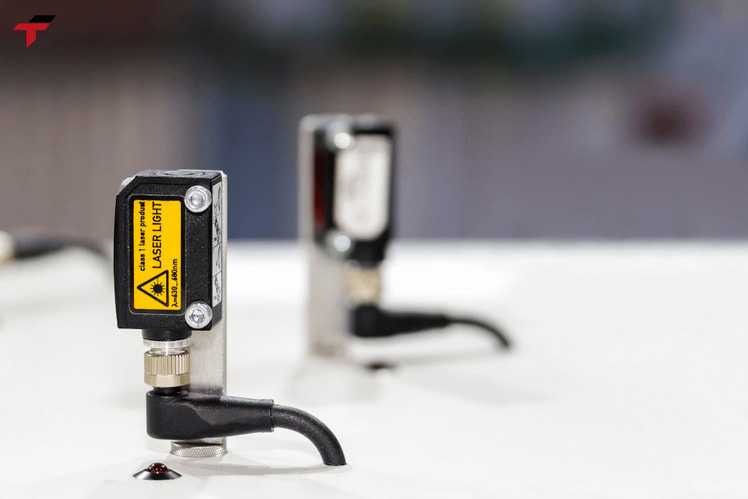
An ultrasonic sensor detects and measures distance to an object by emitting a high-frequency sound pulse and measuring how long the echo takes to return. Malaysian manufacturing lines in semiconductor assembly, palm oil processing, food and beverage, and rubber and glove production use ultrasonic sensors for three related jobs: measuring liquid or solid level inside a tank or hopper, confirming an object’s presence without touching it, and measuring distance to a target that other sensing methods cannot reach reliably. Autonics is one of the sensor brands Flextech Industrial Supplies stocks for the Malaysian market, alongside Omron, and Autonics’ cylindrical UTR series is a representative industrial ultrasonic sensor used across production facilities in Selangor, Penang, and Johor.
This guide covers how an ultrasonic sensor functions, how far it can detect, the difference between ultrasonic level sensing and ultrasonic proximity (presence) sensing, what an industrial ultrasonic level sensor adds over a basic module, and how to choose one for a Malaysian production line.
Function of an Ultrasonic Sensor
The function of an ultrasonic sensor follows one core sequence: emit a sound pulse, listen for its echo, and convert the elapsed time into a distance value. A trigger signal of at least 10 microseconds starts each measurement cycle; the sensor then emits a short burst of sound — commonly eight pulses at 40kHz, a frequency well above human hearing — and switches an output high for the exact duration between sending that burst and detecting its return.
That duration is not itself the distance. It is the round-trip time — how long the pulse takes to travel from the sensor to the target AND back — so the sensor divides the time-times-velocity product by two to convert round-trip travel into one-way distance: distance equals echo time multiplied by the speed of sound in air — approximately 340m (1,115ft / 0.34km per second) — divided by two. A 4-pin interface — power, trigger input, echo output, and ground — is the standard wiring pattern for this class of sensor, making it a simple digital I/O device to integrate into a control circuit rather than an analogue or networked one.
Because the calculation depends directly on the speed of sound, and the speed of sound in air changes with ambient temperature, a fixed velocity constant introduces measurement error as temperature drifts — an error that grows more significant over longer distances. That is the practical reason industrial ultrasonic sensors add temperature compensation, covered further below, while a basic short-range module typically does not.
Industrial Ultrasonic Level Sensor and the Autonics UTR Series
Sensing distance for an ultrasonic sensor varies by model class, and the feature set built around a given sensor generally scales with the range it is rated for.
| Sensor Class | Typical Sensing Distance | Feature Set |
| Basic module (HC-SR04 type) | 2cm to 4m (0.75in / 13ft); reliable precision typically to around 2m (6.5ft / 78.7in) | Fixed 40kHz burst, 3mm resolution, no temperature compensation |
| General industrial ultrasonic sensor | 20mm to 6m (0.8in / 19.7ft) | Switched or analogue output, standard sensing electronics |
| Long-range industrial sensor (e.g., Autonics UTR series) | Up to 8m (26.2ft / 314.9in) | Auto/manual temperature-tracking compensation, detection-width conversion |
A basic module rated to roughly 4m suits short-range object detection at prototype or benchtop scale. An industrial cylindrical sensor rated closer to 8m, with detection-width conversion for narrowing or widening the sensing cone, is built for tank-level and longer-range presence applications where mounting height and vessel geometry vary — a higher-range sensor is not the same sensor turned up; it carries the compensation logic that longer ranges require to stay accurate.
Summary So Far
An ultrasonic sensor measures distance by timing a sound pulse’s round trip to a target and dividing by two, using a speed-of-sound constant that industrial models compensate for as temperature changes. Sensing distance runs from roughly 4m on basic modules to 6-8m on industrial-grade sensors, with feature sets — temperature compensation, detection-width conversion — scaling alongside that range. What that range measurement is used FOR, on a production line, is covered next.
Ultrasonic Level Sensor
An ultrasonic level sensor uses the same echo-timing mechanism described above to measure how far the surface of a liquid, powder, or solid sits below the sensor, rather than confirming a single fixed-distance object. Mounted above a tank or hopper, the sensor’s echo timing is read as a continuous distance value — that value is subtracted from the tank’s known height to give the current fill level.
Because the sensing method reflects sound off whatever surface is present, rather than requiring the surface to be metallic or optically stable, an ultrasonic level sensor detects liquids, granular solids, and powders through the same working principle — a material-independence that inductive sensing (metal-only) and some optical sensing methods do not share. This is why ultrasonic sensing is a standard choice for liquid level, powder level, and solid-material level measurement in tanks and hoppers across food and beverage, chemical, and general processing lines.
Ultrasonic Proximity Sensor
An ultrasonic proximity sensor applies the identical hardware operation used for level measurement to a different question: instead of reading a continuous distance value, it checks whether a returned echo falls within a fixed threshold window, and switches an output when it does. Presence detection and level measurement are the same mechanism read two ways — one interprets echo timing as a continuous number, the other interprets it as a yes/no threshold check.
Ultrasonic proximity sensing detects an object regardless of its colour or transparency, a limitation optical proximity sensors do not overcome as reliably, and it senses through fog, dust, or light contamination in the sensing path where those conditions would otherwise degrade an optical or capacitive reading. This makes ultrasonic proximity sensors a fit for presence detection on production lines where the target material varies, is transparent, or is otherwise inconsistent for other sensing types.
Industrial Ultrasonic Level Sensor and the Autonics UTR Series
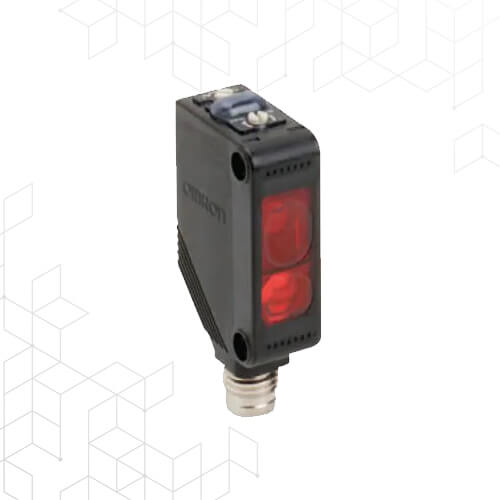
An industrial ultrasonic level sensor adds two capabilities a basic module lacks: temperature-tracking compensation and detection-width conversion. Autonics’ UTR series — cylindrical ultrasonic sensors physically carried by Flextech Industrial for the Malaysian market — reaches a maximum detection distance of up to 8m and includes a temperature-tracking algorithm, switchable between automatic and manual compensation, specifically to hold the distance calculation’s speed-of-sound constant accurate as ambient temperature shifts.
Detection-width conversion, the second UTR-series feature, adjusts how wide or narrow the sensor’s effective sensing cone is — a function that matters for tank-level measurement, where the sensor needs to read the surface directly below it without picking up an echo off the tank’s inner wall. Combined, these two functions are what let an industrial ultrasonic level sensor hold accuracy over the longer ranges and more variable thermal environments a hobbyist-grade module is not built to handle — Malaysian palm oil processing and chemical plant environments, where ambient temperature at a sensor’s mounting point can run well above general industrial norms, are a direct case for this compensation.
Industrial Ultrasonic Level Sensor and the Autonics UTR Series
Choosing an Ultrasonic Sensor for Malaysian Production Lines
Choosing between a basic ultrasonic module and an industrial ultrasonic sensor starts with two questions: how far does the sensor need to reach, and how much does the mounting environment’s temperature vary? A short indoor range under roughly 2-4m, in a temperature-stable setting, is within reach of a basic module’s specification. A tank-level, hopper-level, or longer-range presence application — especially one exposed to Malaysian ambient temperature swings around processing equipment — points toward an industrial-grade sensor with temperature compensation built in.
Autonics and Omron are the two sensor brands Flextech Industrial carries for industrial sensors Malaysia sourcing, and an Autonics ultrasonic sensor such as the UTR series is a frequent specification choice where longer detection range and stable accuracy across a variable thermal environment both matter — food and beverage, palm oil processing, and general manufacturing lines across Selangor, Penang, and Johor among them. Where the application calls for a different sensing mechanism entirely — a metal target at close range, for example — an inductive or capacitive proximity sensor may be the better fit than ultrasonic, and sourcing whichever type applies locally avoids the import lead time that can otherwise stall a line commissioning schedule.
Frequently Asked Questions
Working principle and industrial sensor questions are covered above; these address distinctions that come up most often once an ultrasonic sensor is already being specified for a project.
What is the function of an ultrasonic sensor?
An ultrasonic sensor’s function is to detect an object or surface and measure distance to it by emitting a high-frequency sound pulse, timing the echo’s return, and converting that round-trip time into a one-way distance value using the speed of sound.
What is the difference between an ultrasonic level sensor and an ultrasonic proximity sensor?
An ultrasonic level sensor and an ultrasonic proximity sensor use the identical echo-timing mechanism, interpreted two ways. The ultrasonic level sensor reads echo timing as a continuous distance value to track liquid, powder, or solid level in a tank or hopper. The ultrasonic proximity sensor reads the same echo timing against a fixed threshold and switches an output on or off — same hardware operation, different interpretation.
How far can an ultrasonic sensor detect?
Sensing distance depends on the sensor class: basic modules typically reach around 4m, general industrial ultrasonic sensors reach roughly 6m, and long-range industrial sensors such as Autonics’ UTR series reach up to 8m. Longer-range industrial sensors also add temperature compensation to hold that distance accuracy stable.
Can an ultrasonic sensor measure liquid level?
An ultrasonic sensor measures liquid level by reflecting sound off the liquid surface rather than depending on the target being metallic or optically stable, and the same mechanism reads a powder or solid material surface, which is why ultrasonic sensors are a standard choice for tank and hopper level measurement.

Can an ultrasonic sensor measure liquid level?