
How to Choose a PLC: Selection Guide for Industrial Applications

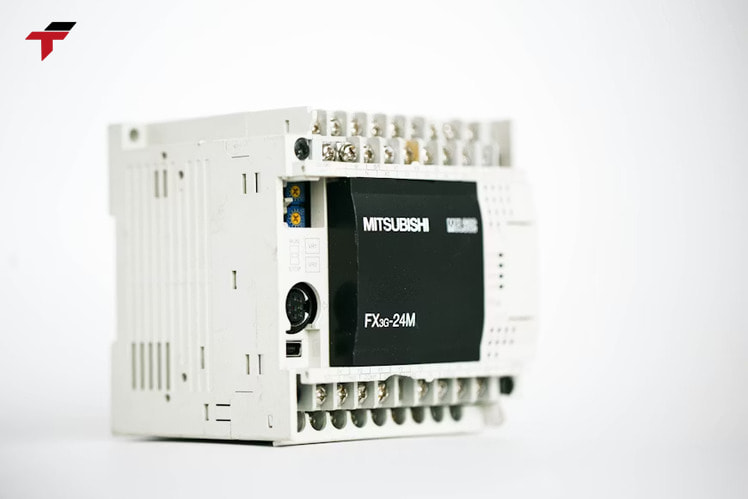
Selecting the right Programmable Logic Controller (PLC) determines whether a machine runs reliably for twenty years or becomes a maintenance problem within the first twelve months. The challenge is not a shortage of options – Mitsubishi, Omron, Siemens, Panasonic, and dozens of other manufacturers offer hundreds of PLC models covering everything from eight-point micro units to rack-mounted modular systems with thousands of I/O points. The challenge is matching the right PLC to the specific demands of your application: I/O count, communication protocols, scan time requirements, environmental conditions, programming language, and total cost of ownership. This guide works through eight selection criteria in the order that matters – starting with application requirements, not brand preference or datasheet comparison. Engineers specifying a new machine, system integrators recommending a control platform, and procurement managers evaluating supplier quotes will each find criteria relevant to their decision.
Defining your application requirements before evaluating specifications
Every PLC selection decision starts with a documented set of application requirements – not a product catalogue. The most common selection error is opening a product catalogue before documenting the control requirements: how many signals are read, what actions are triggered, how fast the control loop runs, and what the operating environment looks like. A PLC that suits a simple conveyor starter – eight digital inputs, four digital outputs, Modbus connection to an inverter – is a different product category from the PLC running a multi-axis servo press with fifty analog channels and real-time EtherNet/IP synchronisation.
Start with a one-page application summary covering process type (discrete, process, motion, or mixed), criticality level, estimated I/O count, network requirements, and physical environment. Every specification decision that follows should be traceable back to this summary. If a specification cannot be justified by the application requirements, it should not drive the selection. With that baseline documented, I/O count and signal type are the first concrete numbers to work out.
I/O count and signal type: the foundation of every PLC decision
I/O count and signal type together determine which PLC models are physically capable of running your system. Document every device that sends a signal to the PLC (inputs) and every device the PLC controls (outputs) – across the production machine, any manipulator or robot, and all accessories including pneumatic valves, ionisers, vacuum generators, and indicator lights. Add 15–20% spare capacity to the final count; under-specifying I/O at purchase creates retrofit problems when the machine configuration changes.
Digital inputs and outputs
Digital inputs receive on/off signals from switches, pushbuttons, proximity sensors, and photoelectric sensors. Digital outputs send on/off commands to contactors, relay coils, solenoid valves, and indicator lights. For most discrete manufacturing applications – assembly, packaging, material handling – digital I/O represents the majority of the point count.
Analog inputs and outputs
Analog inputs read continuous variable signals from devices measuring temperature, pressure, flow, fill level, or position. Common analog input types include 4–20 mA current signals, 0–10 V DC voltage signals, thermocouple inputs, and RTD (resistance temperature detector) inputs. Analog outputs send variable control signals to proportional valves, variable-speed inverters, and heating elements. Process applications – chemical dosing, water treatment, palm oil processing – carry significantly higher analog I/O ratios than discrete applications.
Analog inputs and outputs
NPN vs PNP input wiring
NPN (sinking) inputs expect the sensor to switch to ground – current flows into the PLC input terminal. PNP (sourcing) inputs expect the sensor to switch to +24 V DC – current flows out from the sensor toward the PLC. The input type of the PLC must match the output type of the connected sensors. Most European and Asian automation equipment uses PNP outputs; older North American equipment often uses NPN. Confirm sensor output type before finalising a PLC, particularly when integrating equipment from multiple origins on the same production line.
Transistor vs relay output type
Transistor (solid-state) outputs switch DC loads – typically 24 V DC – at speeds under 1 ms and support virtually unlimited switching cycles. Relay outputs switch both AC and DC loads up to 240 V AC and handle higher inrush currents, but their mechanical lifespan runs in the range of 100,000–1,000,000 operations, and switching speed is 10–30 ms (0.01–0.03 seconds). Use transistor outputs for high-speed DC switching; use relay outputs for AC loads or where complete galvanic isolation is required. For lines driving a mix of 24 V DC solenoid valves and AC motor starters, transistor outputs with external interposing relays covers both requirements without compromising switching speed on the DC side. I/O requirements directly shape the communication architecture the PLC must support.
Communication protocols and system integration
Communication protocols define which devices a PLC integrates with and at what speed – verifying compatibility before purchase prevents integration delays on new machine projects. A PLC operates as one node in a larger system: it reads sensor data, executes control logic, and passes information to inverters, HMIs, SCADA systems, and peer PLCs – but only through protocols that all connected devices share. Specifying a PLC without confirming protocol compatibility against existing equipment is a common source of integration delays on new machine projects.
Serial protocols: Modbus RTU and RS-485
Modbus RTU over RS-485 is the most widely deployed serial protocol in Malaysian industrial automation. It connects PLCs to inverters, temperature controllers, power meters, and weighing systems at distances up to 1,200 m (3,937 ft) without repeaters, with multi-drop wiring supporting up to 32 devices per bus segment. Virtually every PLC from Mitsubishi, Omron, Siemens, and Panasonic supports Modbus RTU either natively or via a communication module.
Ethernet-based protocols: Modbus TCP and EtherNet/IP
Modbus TCP wraps Modbus protocol over standard Ethernet, enabling higher-speed communication with HMIs, SCADA servers, and smart instruments on the same network infrastructure. EtherNet/IP is the standard for Allen-Bradley (Rockwell Automation) systems and is increasingly supported across other brands for cross-device communication. Profibus and Profinet are common in Siemens-heavy installations and in European-origin equipment imported into Malaysian factories; confirm which protocol variant the equipment uses – Profibus DP (serial) versus Profinet (Ethernet) – before specifying the corresponding PLC communication module.
HMI and SCADA connectivity
If the application includes an HMI Malaysia – which most modern panel installations do – confirm that the PLC and HMI share at least one common protocol and that the HMI programming software supports the PLC brand natively. Delta and Xinje HMIs communicate with a wide range of PLC brands via Modbus; Mitsubishi GT series HMIs are optimised for Mitsubishi PLCs. SCADA integration typically requires Ethernet connectivity with OPC UA or Modbus TCP support. With protocol requirements confirmed, the next constraint is how fast the PLC needs to process incoming data.
Processing speed and scan time
Scan time is the duration of one complete PLC cycle: reading all inputs, executing the control programme, and updating all outputs. Standard scan times on mid-range PLCs run between 10 ms and 50 ms per cycle (0.01–0.05 seconds) – sufficient for the majority of discrete manufacturing applications. A conveyor sequencing 80 I/O points with ladder logic typically runs well within 20 ms scan time; a machine triggering pneumatic valves at 2-second intervals has no meaningful scan time constraint at all.
Scan time becomes a critical specification in three situations: high-speed counting applications where encoder pulses arrive faster than the standard scan can capture; motion control applications where servo axis synchronisation requires sub-millisecond response; and process control loops where PID (proportional-integral-derivative) calculations must execute at high frequency to maintain tight temperature or pressure setpoints. For these applications, dedicated high-speed counter inputs, hardware interrupt routines, and processors rated for faster base scan times are necessary specifications to verify before purchase.
Several factors increase scan time as a programme matures: complex ladder logic, large analog I/O point counts, extensive data logging, and communication overhead from multiple active protocols. Choosing a PLC with a faster processor and sufficient memory accommodates programme growth over the machine’s lifecycle without degrading control response. Physical architecture – fixed or expandable – determines how that capacity can be extended.
Fixed vs expandable PLC architecture
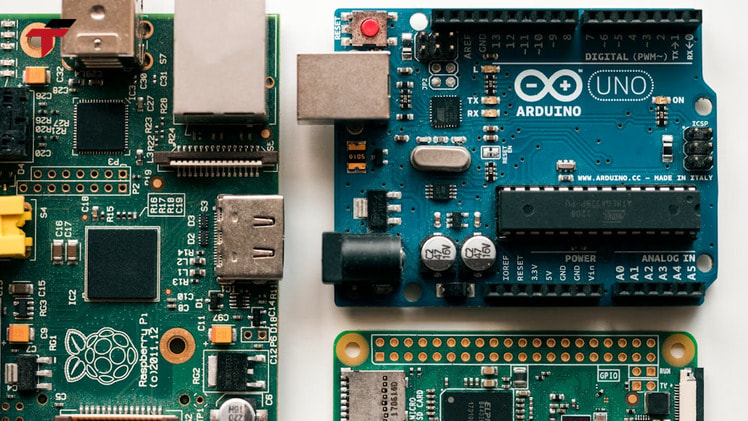
Fixed PLCs integrate the CPU, I/O, power supply, and communication interfaces into a single unit; expandable (modular) PLCs allow additional I/O modules, communication cards, and specialty modules to be added to a base unit. The distinction has direct implications for initial cost, enclosure space, and future flexibility.
Fixed PLCs are appropriate for applications with a stable, well-defined I/O count – typically under 64 points – where the machine design is final and future expansion is unlikely. The Mitsubishi FX3S, Omron CP1E, and Panasonic FP-X0 are compact fixed-architecture units suited to standalone machines and simple panel builds. Expandable PLCs are appropriate when I/O requirements are still being refined during machine design, the application involves multiple machine sections with distinct I/O clusters, or the production line is expected to grow. The Mitsubishi FX5U, Omron CJ2M, and Siemens S7-1200 support modular I/O expansion, allowing the same base CPU to scale from 16 points to over 500 points as requirements grow. The threshold above which modular architecture becomes more cost-effective than buying a larger fixed unit generally falls in the range of 64–128 I/O points. The programming environment used to develop and maintain the control logic is the next selection criterion.
Fixed vs expandable PLC architecture
Programming language and software environment
The programming language and software environment determine how control logic is written, maintained, and modified – selecting one that fits the team’s existing expertise reduces long-term maintenance cost. All five IEC 61131-3 standard languages – Ladder Logic Diagram, Instruction List, Function Block Diagram, Structured Text, and Sequential Function Charts – are supported to varying degrees across PLC brands and models.
Ladder Logic Diagram
Ladder Logic is the dominant programming language in Malaysian manufacturing and across most of Asia-Pacific. Its graphical representation of relay contact logic is directly readable by electrical engineers with relay panel experience, requires no software programming background to interpret, and is supported by every major PLC brand’s native software. For discrete applications – sequencing, interlocking, conveyor control, machine safety circuits – Ladder Logic is the practical default and the language most locally available engineers can maintain.
Function Block Diagram
Function Block Diagram (FBD) uses interconnected graphical blocks – timers, counters, PID controllers, mathematical functions – to represent control logic as a data-flow diagram. It suits applications with significant process control content: continuous variable control, multi-loop PID, and motion coordination. Engineers with a process control or instrumentation background typically find FBD more intuitive than Ladder Logic for analog-intensive applications such as temperature profiling or pressure regulation.
Structured Text
Structured Text (ST) is a high-level textual language resembling Pascal or C, appropriate for complex algorithms, data manipulation, and calculations that are cumbersome to represent graphically. Recipe management, batch sequencing, and mathematical optimisation routines are areas where Structured Text offers a productivity advantage. It requires a software engineering background to write and maintain, making it less common in general manufacturing but increasingly used in advanced machine designs integrating production data systems.
Selection summary: hardware and software criteria
At this midpoint, four criteria require confirmation: I/O count and signal type (digital/analog, NPN/PNP, transistor/relay); communication protocols (Modbus RTU, Modbus TCP, EtherNet/IP, Profinet) matched against all connected devices; processing speed adequate for the fastest control loop; and fixed or expandable architecture matched to I/O growth expectations. Programming language is the fifth criterion – confirmed by the technical background of the engineers who will maintain the system. The remaining three criteria – environmental ratings, budget, and local support – determine whether the technically suitable shortlist is also operationally and commercially viable.
The operating environment where the PLC will be physically installed imposes the next set of constraints.
Environmental ratings and safety certifications
A PLC specified for standard office-grade conditions will fail prematurely on a foundry floor, a cold-store conveyor line, or a palm oil processing plant with high ambient moisture and airborne particulates. Matching the PLC’s environmental ratings to the actual operating conditions is a non-negotiable step before any brand or model comparison.
IP ingress protection
IP (Ingress Protection) ratings classify the level of protection against solid objects and liquids using a two-digit code. IP20 – the standard for PLCs mounted inside sealed control panels – provides protection against fingers and solid objects above 12 mm but no liquid protection. IP65 and IP67 provide complete dust exclusion and protection against water jets or temporary immersion respectively, and are appropriate for washdown environments in food and beverage or pharmaceutical manufacturing. Most PLC CPUs and I/O modules are rated IP20 for panel mounting; remote I/O modules with higher IP ratings are available from Mitsubishi, Omron, and Siemens for applications requiring field-mounted I/O outside the main control cabinet.
Operating temperature range
Standard industrial PLCs operate reliably in ambient temperatures from 0°C (32°F) to 55°C (131°F). Extended-temperature variants rated to –20°C are required for cold chain applications; high-temperature variants rated to 60°C and above are available for furnace or foundry environments. In Malaysia’s high-ambient-temperature production floors – particularly in non-air-conditioned facilities in Selangor and Penang – heat management inside control panels requires careful calculation. The combined heat load of the PLC, drives, transformers, and power supplies inside the enclosure must not exceed the PLC’s rated ambient temperature when assessed against the enclosure’s thermal dissipation capacity.
Hazardous location certifications
Applications in zones with explosive gases, vapours, or combustible dust – chemical plants, solvent-based coating lines, gas processing – require PLCs certified for hazardous locations. ATEX (European hazardous area directive) and UL Class I Division 2 are the primary certifications for explosion-protected equipment. CE marking confirms compliance with European Union safety directives for machinery and low-voltage equipment. UL certification covers North American safety standards. RoHS compliance restricts hazardous substances in electronic components and is increasingly required by export-oriented manufacturers specifying their production equipment. Budget is the final filter that narrows a technically sound shortlist to a procurement decision.
Programming language and software environment
Budget framework: PLC cost ranges for Malaysian manufacturing
PLC cost in Malaysia extends beyond the CPU purchase price – software licences, expansion modules, communication cards, spare-parts holding, and support agreements all contribute to total cost of ownership. Understanding cost structure across PLC form factors prevents the common error of specifying a modular PLC for a small machine out of brand habit when a compact fixed PLC delivers the same functionality at a fraction of the price.
In the Malaysian market, micro and nano PLCs with 8–32 I/O points – suited to simple standalone machines and relay panel retrofits – typically fall in the RM 600–RM 2,500 range for the CPU unit. Compact PLCs covering 32–256 I/O points with Ethernet communication and multi-protocol support typically fall in the RM 2,500–RM 15,000 range. Modular PLCs for applications above 128 I/O points, or requiring redundant CPUs and specialty modules, range from RM 15,000 to RM 80,000 and above depending on I/O count and module configuration.
Programming software costs vary significantly by brand. Mitsubishi GX Works3 and Panasonic FPWIN Pro7 are bundled with the PLC purchase at no additional licence cost. Siemens TIA Portal and some Omron Sysmac Studio configurations carry separate licence fees that can run from RM 2,000 to RM 8,000 per seat. For facilities managing multiple PLC brands across the plant, standardising on one or two brands reduces software overhead and training investment across the engineering team. With cost structure clear, brand selection can be matched to industry requirements and existing infrastructure.
PLC brand selection by industry and application in Malaysia
No single PLC brand suits every application – the right choice depends on the specific industry, I/O requirements, communication protocol, and the depth of local technical support available. Flextech Industrial supplies PLC Malaysia from Mitsubishi, Omron, Siemens, Panasonic, Xinje, and Allen-Bradley precisely because different industry segments in Malaysia have distinct requirements and existing installed infrastructure.
Mitsubishi FX and iQ-R series
Mitsubishi is the most widely deployed PLC brand in Malaysian food and beverage, packaging, and rubber and glove manufacturing. The FX series – particularly the FX3U and FX5U – has deep penetration in Malaysian SME manufacturing due to a large installed base of GX Works-trained engineers, strong Modbus RTU support for inverter communication, and robust local distributor networks. The iQ-R series serves high-speed and multi-axis motion applications in semiconductor and precision manufacturing concentrated in Penang. Units from the Mitsubishi PLC range carry strong spare-parts availability locally, reducing unplanned downtime caused by extended replacement lead times.
Omron CP and NX series
Omron’s CP series – CP1E, CP1H, CP1L – covers the compact-to-mid-range market with strong analog I/O performance and EtherNet/IP connectivity. The CP1H is a common choice for applications requiring simultaneous Modbus communication, high-speed counting, and PID control within a compact housing. The NX series targets semiconductor and electronics manufacturing, where Sysmac Studio integration with Omron PLC hardware, servo drives, and machine vision systems creates a tightly integrated automation architecture. Omron is the dominant PLC brand in Malaysian semiconductor and precision electronics manufacturing.
Siemens S7-1200 and S7-1500
The Siemens S7-1200 is the standard compact PLC in automotive assembly, heavy industry, and European-owned manufacturing facilities in Malaysia. TIA Portal programming software integrates the S7-1200 and S7-1500 with Siemens HMI panels, drives, and SCADA platforms, reducing integration engineering time on complex multi-device systems. Profinet communication is native to S7 systems, enabling device-level networking with Siemens ET 200 distributed I/O racks. The S7-1500 supports Safety Integrated (SIL 2/3) certified safety PLC configurations for applications requiring functional safety compliance. S7 hardware carries a higher unit price than equivalent Mitsubishi or Omron units, but TIA Portal reduces total project engineering cost on larger integrated systems.
Panasonic FP series
The Panasonic PLC FP series – FP-X0, FP-XH, FP0H, FP0R, FP7 – occupies the compact and mid-range segment with competitive unit pricing, FPWIN Pro7 programming software bundled at no additional licence cost, and strong Modbus and CC-Link communication support. FP series units are common in machinery built by Japanese OEMs supplying Malaysian semiconductor and hard-disk-drive manufacturing, where Panasonic PLCs and sensors arrive as an integrated package with the machine. Local stock availability in Malaysia is lower than Mitsubishi or Omron, making lead time management more important for FP series installations. Availability of local stock and support determines whether the specification decision holds up over the machine’s operational life.
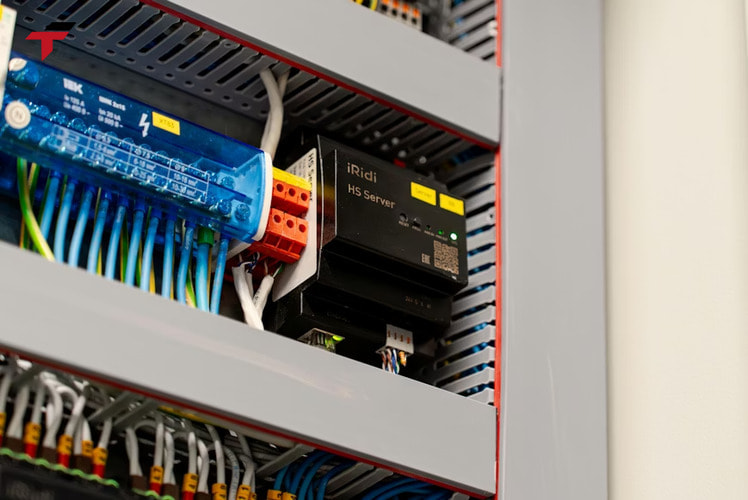
Budget framework: PLC cost ranges for Malaysian manufacturing
Local stock availability and distributor support
Local stock availability determines whether a failed PLC is replaced in hours or weeks – a distinction that carries significant cost for Malaysian manufacturers on lean production schedules. Malaysian manufacturers operating on lean production schedules – automotive suppliers, semiconductor fabs, food processors – cannot absorb the import lead times associated with direct overseas procurement. Replacement lead times for PLCs sourced directly from Japan, Europe, or the United States run 4–12 weeks under normal conditions, and longer during component shortages.
Local stocking distributors – those carrying physical inventory in Malaysia rather than operating as order-forwarding agents – reduce replacement lead time from weeks to days for common models. When evaluating local support depth, confirm the following: whether the distributor carries physical stock of the specific model series rather than just the brand; whether technical support is reachable by phone during production hours; whether expansion modules and communication cards are stocked alongside the base CPU; and whether the distributor’s warranty coverage applies to locally sourced units. A local distributor relationship also provides access to pre-sales technical support, application engineering input, and training resources that shorten commissioning time on new installations. With all eight criteria evaluated, a structured checklist consolidates the decision.
Local stock availability and distributor support
PLC selection checklist: eight criteria to confirm before purchase
A structured pre-purchase review prevents the most common selection errors. The eight criteria below include every critical decision point in the PLC selection process:
- Have all I/O points been documented – digital and analog, inputs and outputs – with 15–20% spare capacity included in the count?
- Is the signal type confirmed – NPN or PNP for inputs, transistor or relay for outputs – for every device that connects to the PLC?
- Are all required communication protocols – Modbus RTU, Modbus TCP, EtherNet/IP, Profinet – natively supported or available via expansion module on the selected unit?
- Is the scan time specification adequate for the fastest control loop in the application, including any high-speed counting or motion control requirements?
- Does the form factor – fixed or expandable – match both the current I/O count and the expected growth over the machine’s operational life?
- Can the engineering team programme and maintain the chosen programming language without requiring retraining on an unfamiliar platform?
- Do the environmental ratings – IP class, operating temperature range, and hazardous-location certifications – match the factory floor conditions where the PLC will be installed?
- Is local stock confirmed for the specific model, and what is the documented replacement lead time for both the CPU and the most common I/O modules?
A PLC that satisfies all eight criteria is a technically sound choice. Where the answer to any question is uncertain – particularly on I/O count, communication protocol compatibility, or local stock availability – resolve the uncertainty before purchase, not after installation.