
Best Industrial Inverter Brands in Malaysia: VFD Comparison for Factory Engineers

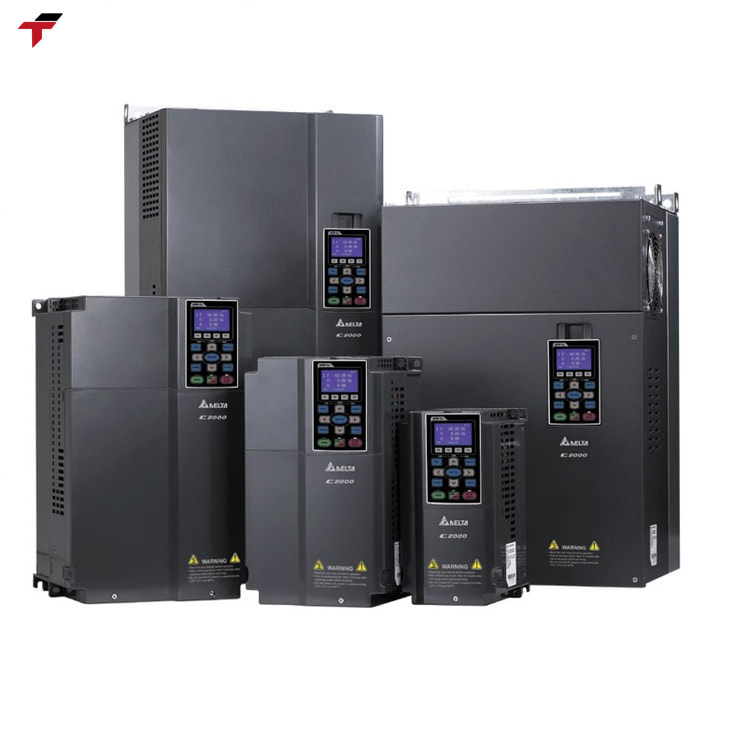
Industrial inverter brands serving Malaysian manufacturing facilities cover six major suppliers – Mitsubishi, Siemens, Panasonic, Toshiba, Xinje, and NAIS – each engineered for distinct factory automation requirements. Variable frequency drives (VFDs) from these manufacturers control AC motor speed by adjusting output frequency and voltage, delivering 20–40% energy savings compared to fixed-speed motor operation across documented industrial applications. Malaysian factories in food and beverage, semiconductor fabrication, palm oil processing, rubber and glove manufacturing, and HVAC installations use VFDs to achieve precise speed control, reduced mechanical stress on motor systems, and measurable process efficiency gains. Brand selection depends on application load type, control depth requirement, communication protocol compatibility with the existing PLC network, and local stock availability. Mitsubishi FR series holds the strongest installed base in Malaysian F&B and packaging lines. Siemens SINAMICS addresses automotive and heavy manufacturing specifications. Xinje DS5 series serves cost-constrained SME procurement requirements. Each brand occupies a distinct position in the Malaysian industrial automation supply chain based on performance tier, support infrastructure, and sector-specific adoption patterns.
Industrial Inverters vs Solar Inverters – The Malaysian Market Distinction
Industrial inverters and solar inverters share a naming convention but serve incompatible functions in the Malaysian automation market. A solar inverter converts DC electricity from photovoltaic panels into AC power for grid export or building consumption. An industrial inverter – more precisely, a variable frequency drive – controls the rotational speed of an AC motor by varying output frequency and voltage. Engineers sourcing VFDs for factory motor control, conveyor systems, pump stations, or HVAC equipment operate in an entirely separate product category from the residential and commercial solar sector. The Malaysian SERP for “inverter brands” returns predominantly solar content, leaving engineers without a direct comparison resource for industrial VFD selection. This guide addresses the industrial VFD market: brands, specifications, applications, and sourcing considerations for Malaysian manufacturing environments.
The technical distinction between inverter types connects to how VFDs achieve motor speed control at the power electronics level – the mechanism covered in the following section.
VFD Speed Regulation Mechanism in Malaysian Factory Conditions
VFD speed regulation mechanism operates at the power conversion level – the stage that creates the functional boundary between industrial drives and every other motor control device.
Variable frequency drives regulate AC motor speed through a three-stage power conversion process: rectification, DC bus conditioning, and inverter output. Incoming AC supply is first rectified to DC by a diode bridge or active front end. A capacitor bank in the DC bus smooths voltage ripple and holds energy for dynamic load responses. The IGBT inverter stage then generates a pulse-width-modulated AC output at precisely controlled frequency and voltage, delivered to the motor terminals. By adjusting output frequency, the drive directly controls motor speed – lower frequency reduces speed, higher frequency increases it – allowing motors to match actual process demand rather than running at fixed speed with wasted energy output.
Industrial inverter drives split into three control architecture types, each suited to a different application class:
Standard V/F (voltage-to-frequency) control suits most conveyor, fan, and pump applications where approximate speed regulation is acceptable. Sensorless vector control provides higher torque accuracy at low speeds without a motor encoder, applied in mixers, winders, and general-purpose machinery. Closed-loop vector control combines a rotor speed encoder with the VFD for precise torque and positioning where load variation cannot be absorbed by approximate speed holding.
The control architecture of each drive type directly determines which brand and product series applies to a given Malaysian factory installation – and before brand comparison, the prior decision is whether a VFD or a soft starter is the correct motor control device for the application.
VFD vs Soft Starter – 5 Criteria That Determine the Right Motor Control Method
The three-stage power conversion mechanism that gives VFDs their speed regulation capability is also what separates them operationally from soft starters – two devices that control the same motors through fundamentally different means. VFD selection and soft starter selection address fundamentally different motor control requirements, and choosing the wrong device category costs more than the price difference between brands. Soft starters limit inrush current by ramping supply voltage to the motor over 2 to 5 seconds using SCR or thyristor switching. After the startup ramp, the soft starter disengages: the motor runs at its rated fixed speed with no further speed regulation. Variable frequency drives regulate motor speed continuously throughout the operating cycle, adjusting output frequency in real time to match process demand.
Five criteria determine which device applies to a given Malaysian factory application:
Load type is the primary discriminator. Constant-speed loads – conveyors after startup, centrifuges, extruders, positive displacement pumps – need inrush current protection but not variable speed; a soft starter delivers this at lower cost and a smaller panel footprint. Variable-speed loads – centrifugal fans, centrifugal pumps, air compressors, variable-batch mixers – require continuous speed adjustment that only a VFD provides.
Energy savings potential applies to VFDs only. Fixed-speed operation with a soft starter consumes full rated power at all times. VFD speed reduction cuts energy consumption at the cube of the speed ratio for variable-torque loads: running a centrifugal fan at 80% speed consumes approximately 51% of the rated power. Industry data from process engineering applications indicates pump energy represents up to 85% of the total lifecycle cost of a centrifugal pump installation. VFD speed control is a high-return efficiency measure in pump-intensive processes: palm oil mill operations, water treatment, and F&B liquid handling.
Process control requirements determine whether PID feedback is needed. Applications controlling flow, pressure, or temperature via continuous motor speed adjustment require a VFD – a soft starter cannot execute PID speed regulation after startup.
Initial cost and panel space favour soft starters for constant-speed applications. Soft starters are smaller and lower in cost than equivalent-rated VFDs; specifying a VFD for a genuinely constant-speed load adds capital cost with no operational return.
Communication protocol requirements increasingly favour VFDs in Malaysian factories adopting Industry 4.0 monitoring. Remote diagnostics, predictive maintenance data streams, and SCADA connectivity are built into VFD firmware; soft starters provide limited diagnostic output by comparison.
Once the VFD vs soft starter decision resolves in favour of variable speed control, brand selection narrows to the specific application requirements of the Malaysian industrial environment.
Mitsubishi FR Series – Dominant VFD Choice for Malaysian Manufacturing
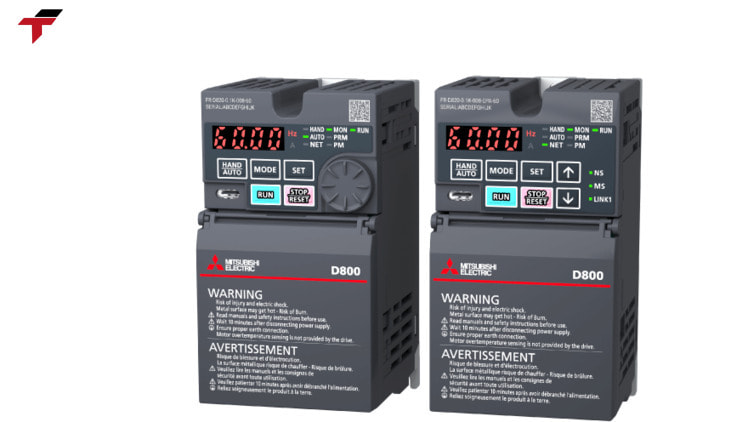
Mitsubishi FR series VFDs hold the broadest installed base among industrial inverter brands in Malaysia, concentrated in food and beverage, packaging, and palm oil processing facilities. The FR series spans compact drives for single-machine control to high-performance drives with sensorless and closed-loop vector modes for multi-axis synchronisation, covering the specification range encountered across Malaysian SME and large-scale manufacturing sites. Mitsubishi Electric’s local technical support infrastructure in Malaysia gives plant maintenance engineers direct access to configuration assistance and replacement parts logistics – a critical factor for facilities running continuous production with minimal tolerance for downtime. FR series drives integrate natively with Mitsubishi MELSEC PLC systems through dedicated CC-Link and CC-Link IE communication protocols, reducing integration engineering effort on lines already standardised on Mitsubishi automation.
Engineers specifying the Mitsubishi FR series for an existing Mitsubishi PLC-controlled line reduce integration complexity by operating both the controller and the drive within a unified Mitsubishi automation framework. Flextech Industrial carries industrial inverter Malaysia stock including Mitsubishi FR series drives with local warranty coverage.
Mitsubishi’s dominance in F&B and packaging connects to the next strongest brand position: Siemens SINAMICS in automotive and heavy manufacturing, where the technical requirements shift from network simplicity to precision motion control.
Mitsubishi FR Series – Dominant VFD Choice for Malaysian Manufacturing
Siemens SINAMICS – Precision Drive for Automotive and Heavy Manufacturing
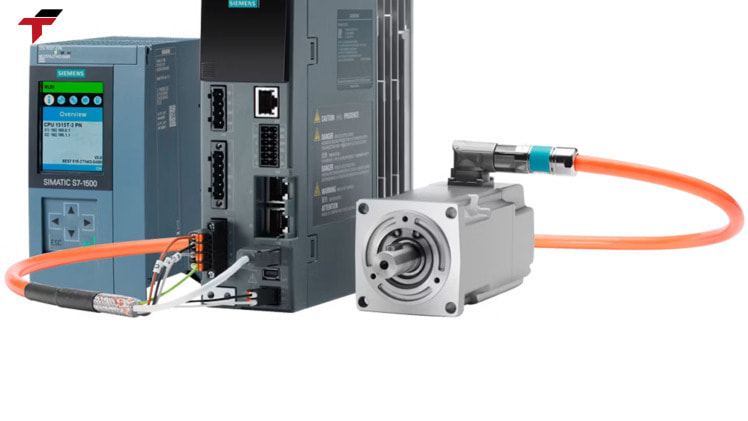
Where Mitsubishi FR series commands the F&B and packaging floor through PLC ecosystem depth and local support breadth, Siemens SINAMICS addresses a different specification environment entirely. Siemens SINAMICS series drives address industrial automation requirements where process precision, multi-axis coordination, and network integration take priority over unit cost. The SINAMICS range covers the V20 for compact general-purpose applications, the G120 for modular system integration in standard machines, and the S120 for coordinated multi-axis drive systems in high-complexity manufacturing equipment. Malaysian automotive assembly facilities, heavy engineering plants, and precision component manufacturers represent the primary sector adoption for SINAMICS drives, where the Siemens S7 PLC and SINAMICS drive system operate under a unified TIA Portal programming environment. This integration reduces commissioning time on complex lines and allows plant engineers to manage drive parameters, diagnostics, and motion sequences from a single software interface.
Siemens SINAMICS drives support PROFINET, PROFIBUS, and EtherNet/IP communication interfaces, providing compatibility with existing factory network infrastructure regardless of automation vendor mix. For Malaysian plants managing multi-vendor control architectures, SINAMICS protocol flexibility reduces the integration cost of retrofitting variable speed control to an existing line.
Panasonic inverter drives serve a different position in the Malaysian market – compact and cost-efficient drives for mid-range SME applications where the Siemens premium is not justified by application complexity.
Siemens SINAMICS – Precision Drive for Automotive and Heavy Manufacturing
Panasonic Inverter Drives – Compact Control for Mid-Range Applications
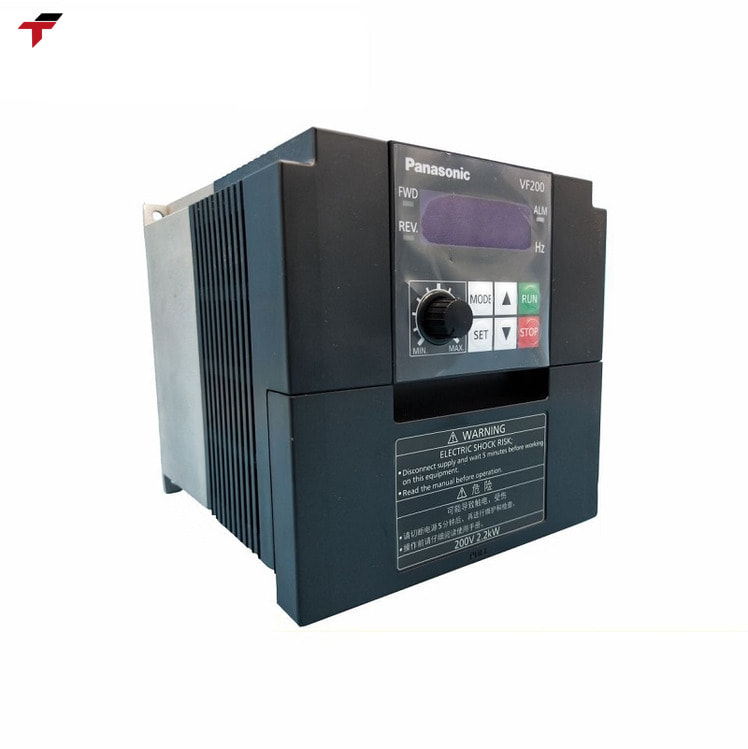
Panasonic inverter drives occupy the mid-range tier in the Malaysian industrial VFD market, targeting applications where compact drive dimensions, straightforward configuration, and cost efficiency are the primary selection criteria. Brand familiarity among Malaysian system integrators already using Panasonic FP series PLCs creates a natural preference for Panasonic drives in co-specified installations, reducing the learning curve for engineers configuring and commissioning both devices. Compact drive formats suit Malaysian SME factories where control panel space constrains component selection. Panasonic inverter drives serve general-purpose motor control in packaging machinery, textile equipment, conveyor systems, and pump control stations within food processing facilities.
At the cost-effective tier of the VFD market, Xinje DS5 drives open industrial inverter access to Malaysian SME facilities with tighter capital budgets – before considering process-industry brands at comparable price levels.
Panasonic Inverter Drives – Compact Control for Mid-Range Applications
Xinje DS5 Series – Cost-Effective VFD Access for Malaysian SMEs
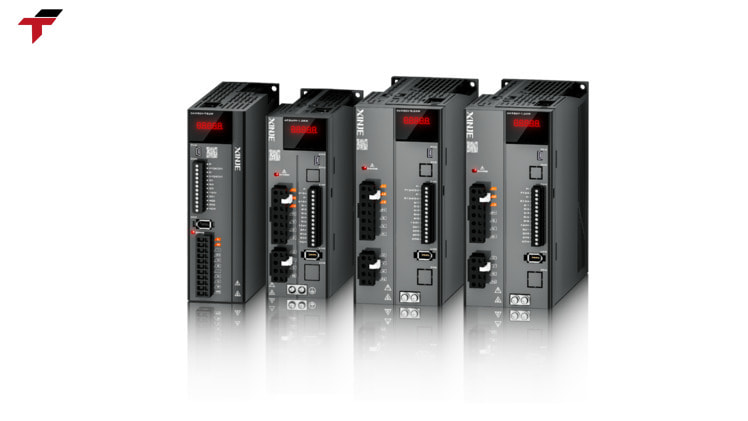
Xinje DS5 series drives give Malaysian small and medium enterprises industrial-grade variable frequency control at a procurement cost meaningfully below the premium-brand tier. The Xinje range spans compact single-phase-input drives for light machinery through three-phase drives for heavier industrial motor applications, covering the power range encountered in typical Malaysian SME manufacturing environments. DS5 drives support V/F control, sensorless vector, and torque control modes, giving system integrators configuration flexibility comparable to higher-priced competitors at a lower capital outlay. Xinje has built distributor and service infrastructure across Malaysia, reducing the technical support gap that limited budget-tier VFD adoption in cost-sensitive manufacturing facilities in earlier years.
Engineers specifying Xinje for new SME installations typically apply DS5 drives to general-purpose conveyor drives, pump control, and HVAC fan speed regulation where speed regulation tolerance requirements are broad and exact positioning accuracy is not a design constraint.
For process-intensive industries with demanding environmental conditions – rubber processing, palm oil operations – Toshiba and NAIS address reliability requirements where procurement cost is secondary to operational durability.
Xinje DS5 Series – Cost-Effective VFD Access for Malaysian SMEs
Toshiba and NAIS Inverters – Reliability in Process-Intensive Industries
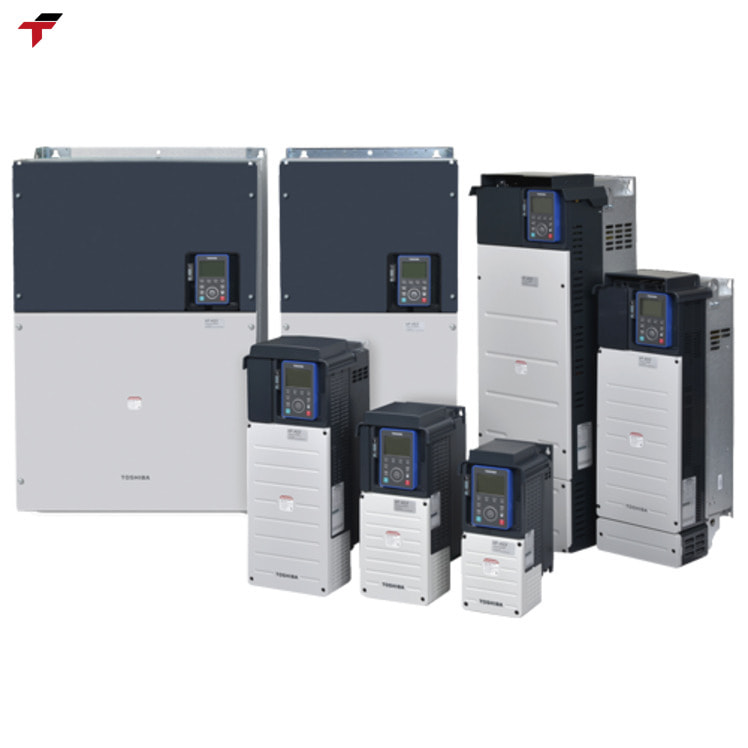
Toshiba VF series inverters and NAIS drives address industrial environments where operational reliability under continuous load, elevated ambient temperature, and humidity variation takes precedence over feature complexity. Rubber glove manufacturing facilities, palm oil processing plants, and water treatment pump stations represent the primary application context for these brands in the Malaysian industrial market. Toshiba’s inverter range covers standard V/F through sensorless vector control modes, with drives designed for high-ambient-temperature operating conditions common on Malaysian factory floors where air conditioning of electrical enclosures is limited. NAIS drives serve applications where the procurement priority is reliable motor speed regulation with a proven operational lifespan over programmability depth. Both brands maintain active use across Malaysian process industries where maintenance staff familiarity and replacement parts availability align with existing equipment specifications.
The decision between these six brands resolves through a comparison summary, followed by six technical selection factors specific to Malaysian factory conditions.
Toshiba and NAIS Inverters – Reliability in Process-Intensive Industries
VFD Brand Comparison Summary – Malaysia Selection Reference
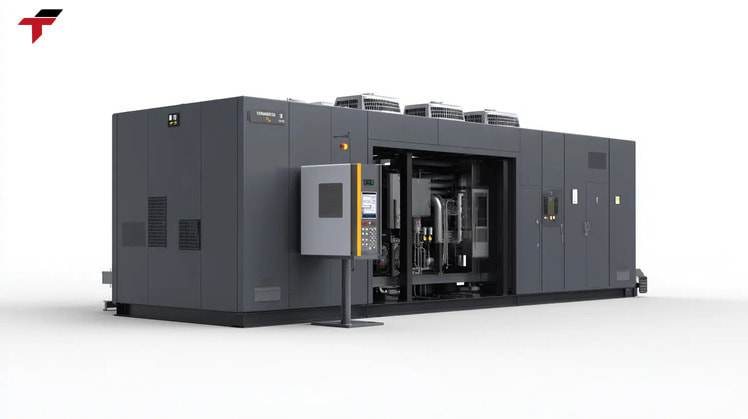
The six industrial inverter brands available in Malaysia each serve a defined sector and application tier. Mitsubishi FR series leads F&B, packaging, and palm oil processing through deep local support and native MELSEC PLC integration. Siemens SINAMICS addresses automotive and heavy manufacturing via TIA Portal unified engineering and multi-protocol network compatibility. Panasonic fills the mid-range SME tier. Xinje DS5 opens VFD access to cost-constrained SME applications. Toshiba VF and NAIS address process-industry reliability requirements. Procurement lead time – 4 to 12 weeks for import-sourced units versus same-week availability through local stocking distributors – is the operational factor that sits outside brand specification but often determines project completion timelines in Malaysian manufacturing.
| Brand | Primary Malaysian Sector | Control Tier | Local Procurement |
| Mitsubishi FR | F&B, packaging, palm oil | V/F → Sensorless → Closed-loop | Strong local stock |
| Siemens SINAMICS | Automotive, heavy manufacturing | G120 / S120 full range | Distributor network |
| Panasonic | General SME, F&B | Compact mid-range | Local distributor |
| Xinje DS5 | Cost-sensitive SME | V/F + Sensorless | Growing coverage |
| Toshiba VF | Process industries, palm oil | Sensorless vector | Process channels |
| NAIS | Niche process applications | Standard V/F | Specialist channels |
Brand and sector matching narrows the selection to six technical factors that determine which drive specification fits a given Malaysian factory application.
VFD Brand Comparison Summary – Malaysia Selection Reference
6 Technical Factors for Industrial VFD Brand Selection in Malaysia
Industrial VFD brand selection for Malaysian factory applications narrows further once sector alignment is established – the summary table identifies the right brand family, while six technical factors determine which specific drive fits the motor, load, and installation conditions. VFD brand selection for Malaysian factory applications resolves to six technical factors, evaluated in sequence from baseline compatibility to procurement logistics.
Motor compatibility is the non-negotiable baseline. The drive must match the motor in voltage class (230V single-phase or 400V three-phase), power rating in kW (0.75 kW / 1 HP, 7.5 kW / 10 HP, 22 kW / 30 HP), and motor type (standard induction, permanent magnet, or synchronous reluctance). Mismatched power ratings between the drive and motor are the most common VFD specification error on Malaysian factory floors.
Control mode requirement determines the product tier within each brand’s range. Standard V/F suits most fan, pump, and conveyor applications. Sensorless vector handles applications requiring torque accuracy at low speeds – winders, mixers, vertical conveyors. Closed-loop vector applies where exact speed holding and torque regulation are required regardless of load fluctuation.
Communication protocol compatibility determines integration cost with the existing PLC and SCADA network. PROFINET-based factories align naturally with Siemens SINAMICS. CC-Link and CC-Link IE factories align with Mitsubishi FR series. Modbus RTU (baud rates 9,600 bps to 115,200 bps) provides basic remote parameter access across all major brands where full fieldbus integration is not required.
IP protection rating determines suitability for Malaysian factory environments. Palm oil mills, glove manufacturing, and food processing introduce moisture, dust, and chemical exposure. Standard IP20 drives require clean, enclosed installations. IP55-rated drives or IP20 drives in appropriately rated enclosures with adequate cooling handle harsh environments. Specifying the wrong IP rating for the installation conditions is the second most common VFD application error encountered on Malaysian factory floors.
Power range and overload capacity determine whether the drive handles the actual motor and load requirements. Conveyor, hoist, and crane applications require drives with high short-term overload capacity – 150% rated current for 60 seconds (equivalent to 1.5× nameplate amps) is a standard specification for constant-torque loads. Fan and pump applications tolerate lower overload ratings because load is inherently variable-torque and inertia during startup is lower.
Local support and warranty access weighs heavily for Malaysian plants operating two or three production shifts with minimal downtime tolerance. Premium brands with established Malaysian technical support teams reduce commissioning risk and maintenance response time. A lower unit price on a budget-tier drive can reverse quickly if commissioning delays or unplanned downtime cost more than the procurement saving.
Local procurement availability directly determines how fast a failed drive can be replaced – the operational risk covered in the final section.
Local Inverter Stock in Malaysia – Lead Time as a Plant Uptime Factor
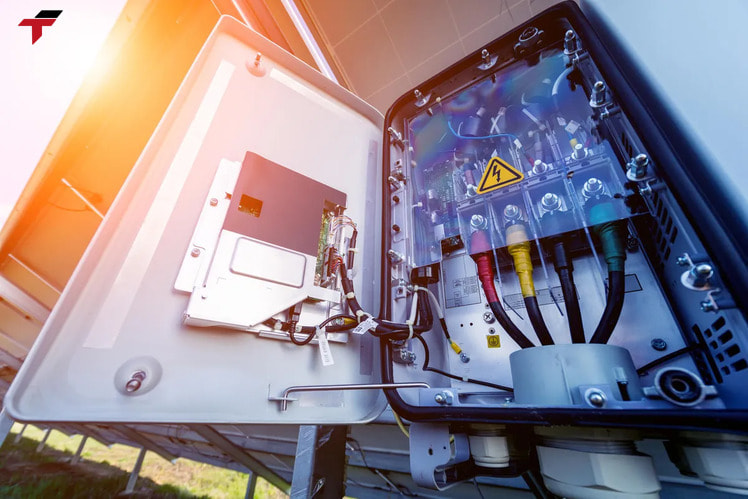
Sourcing industrial inverters through local stocking distributors in Malaysia eliminates procurement lead times that extend 4 to 12 weeks when ordering directly from overseas manufacturers or international trading companies. A failed VFD on a production line converts an electrical component cost into a daily production loss – the financial calculation changes entirely once a line stops waiting for a replacement drive. Flextech Industrial maintains local stock of VFD Malaysia across Mitsubishi, Panasonic, Siemens, Toshiba, Xinje, and NAIS brands, covering the commonly specified power ranges for Malaysian SME and mid-scale manufacturing installations. Local warranty coverage applies to all stocked inverters, addressing the warranty exposure that arises when purchasing through international grey-market channels without manufacturer authorisation.
System integrators and procurement engineers managing multi-brand automation projects can request a quotation through Flextech Industrial for VFD requirements alongside PLC, HMI, and servo drive components, consolidating the automation parts bill of materials through a single Malaysian supplier. Where VFD selection guidance is required before procurement, Flextech’s technical team can recommend brand and specification based on motor rating, load type, and communication protocol requirements specific to the application.
Local Inverter Stock in Malaysia – Lead Time as a Plant Uptime Factor
————————————————————
Frequently Asked Questions
The following questions address the distinctions engineers most commonly encounter when sourcing industrial inverters and VFDs in the Malaysian market.
What is the difference between an industrial inverter and a solar inverter in Malaysia?
An industrial inverter – correctly called a variable frequency drive (VFD) – controls AC motor speed in factory automation systems by adjusting output frequency and voltage. A solar inverter converts DC electricity from photovoltaic panels into AC power for building use or grid export. The two devices serve incompatible functions: engineers sourcing drives for conveyor systems, pumps, fans, or HVAC motor control are selecting from the industrial automation market, not the solar energy market.
Which VFD brand is most widely installed in Malaysian manufacturing facilities?
Mitsubishi FR series VFDs hold the broadest installation base across Malaysian food and beverage, packaging, and palm oil manufacturing sectors. Siemens SINAMICS leads in automotive and heavy manufacturing. Xinje DS5 series serves cost-sensitive SME applications. The dominant brand per facility depends on industry sector, existing PLC brand on-site, communication protocol infrastructure, and the system integrator’s commissioning familiarity with the drive’s programming interface.
Does Flextech Industrial supply VFDs with local warranty in Malaysia?
Flextech Industrial supplies industrial inverters from Mitsubishi, Panasonic, Siemens, Toshiba, Xinje, and NAIS with local warranty coverage across Malaysia. Flextech operates as a stocking distributor, not an OEM-authorised dealer; local warranty terms apply to units purchased through Flextech rather than manufacturer-direct OEM warranties. Engineers requiring specific warranty scope should confirm terms with Flextech before purchase.