
Photoelectric Sensor Guide: Through-Beam, Retroreflective, Diffuse

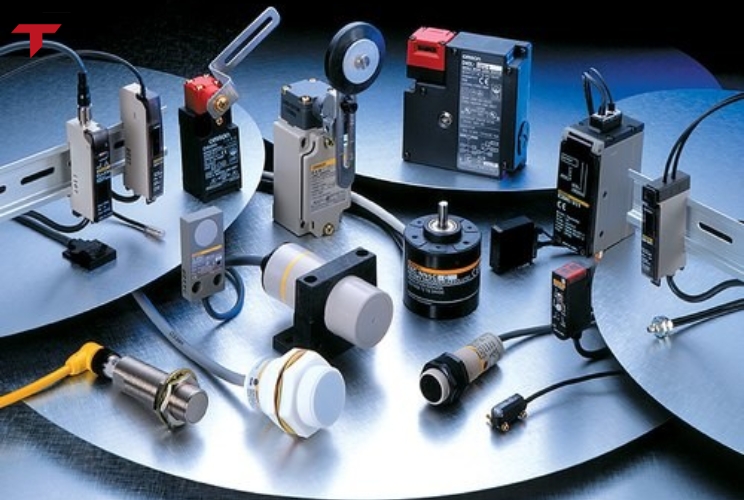
A photoelectric sensor detects the presence, absence, or distance of an object by projecting a light beam from a transmitter and reading what happens to that beam at a receiver. Malaysian manufacturing lines in semiconductor assembly, palm oil processing, food and beverage, and rubber and glove production rely on photoelectric sensors — also called photoelectric light sensors, photoelectric cell sensors, or photo eyes — for non-contact object detection. Three sensing arrangements cover nearly every industrial layout: through-beam, retroreflective, and diffuse, the last of which is also sold as a photoelectric proximity sensor. Omron and Autonics remain two of the most widely specified photoelectric sensor brands in Malaysian system integration work, and Flextech Industrial stocks both within its industrial sensors Malaysia range for local sourcing without an import lead time.
Photoelectric Sensor Definition and Working Principle
A photoelectric sensor detects an object by projecting a light beam — typically infrared, visible red, or laser — from a transmitter and reading what happens to that beam at a receiver. The transmitter and receiver may sit in separate housings facing each other, or share a single housing that both emits and reads the reflected light, depending on the sensing arrangement chosen. Because detection relies on light rather than physical contact, a photoelectric sensor performs the same object-detection role a mechanical limit switch performs, without the wear that repeated contact causes.
“Photoelectric sensor,” “photoelectric light sensor,” “photoelectric cell sensor,” and “photo eye” describe the same underlying device and are used interchangeably across supplier catalogues and technical literature. The variation in naming reflects emphasis rather than a different mechanism: “photoelectric light sensor” stresses that light — not sound, magnetism, or physical pressure — is the detection medium, while “photoelectric cell sensor” points to the photosensitive receiving element inside the housing. This naming distinguishes a photoelectric sensor from an inductive proximity sensor, which detects metal through an electromagnetic field, or an ultrasonic sensor, which detects objects through sound wave reflection.
A photoelectric sensor’s detection range is set by its field of view — the maximum distance from which it retrieves a reliable reading, minus the minimum distance at which readings stay reliable. Field of view differs sharply across the three sensing arrangements, and choosing among them is the first specification decision an engineer makes before any wiring or switch-mode setting matters.
Photoelectric Sensor Types
Photoelectric sensor types divide into three sensing arrangements — through-beam, retroreflective, and diffuse — distinguished by where the transmitter, receiver, and any reflecting surface sit relative to each other. All three interpret the same underlying signal, light reaching or failing to reach a receiver, but the physical layout of each type produces a different trade-off between accuracy, sensing range, and installation complexity. A related variant, the fibre-optic sensor, keeps the same three sensing logics but routes the light through a thin fibre-optic cable to a remote sensing head, which suits installations where the main sensor body cannot fit near the detection point.
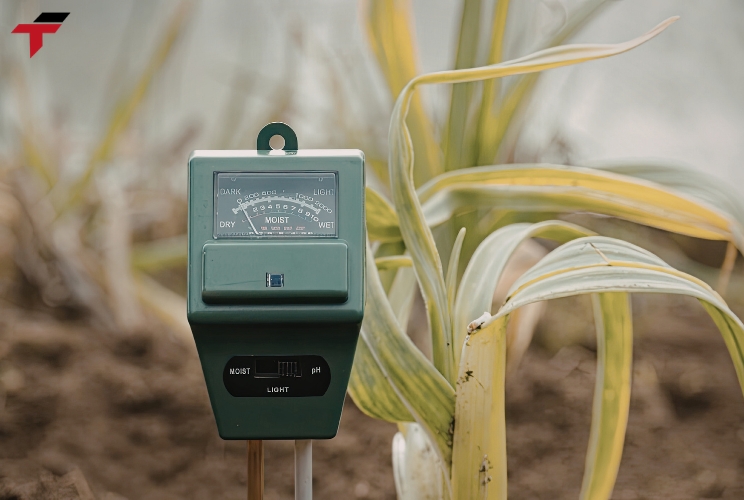
Photoelectric Sensor Types
Photoelectric Sensor Through Beam
A through-beam photoelectric sensor — also written thru beam photoelectric sensor or photoelectric beam sensor — uses two separate units: a transmitter on one side of the detection zone and a receiver on the other. An object is detected the moment it blocks the beam from reaching the receiver, which gives this arrangement the longest detection range of the three types, since the light only travels in one direction. Through-beam sensors tolerate a wide range of target colours, materials, and surface finishes without a corresponding accuracy penalty, because detection depends on beam interruption, not on how much light a target reflects.
The trade-off is cost and installation space: a through-beam sensor needs two cables and two mounting points, positioned in precise alignment, which is why it costs more and takes up more room than a retroreflective or diffuse sensor. Misalignment between the two units causes false triggers, and thin, clear objects may not fully block the beam, which can produce a missed detection. Through-beam remains the standard choice wherever sensing range or reliability matters more than installation convenience — secure-door interruption detection and long-span conveyor object counting are typical examples.
Photoelectric Retro Reflective Sensor
A photoelectric retro reflective sensor houses the transmitter and receiver in a single unit and relies on a separate reflector to bounce the light beam back across the detection zone. An object is detected when it interrupts the beam on its way to or from that reflector. Only one side of the installation needs wiring, since the reflector itself typically requires no power connection — a retroreflective sensor installs and adjusts faster than a through-beam sensor, at a moderate cost premium over a diffuse sensor.
Retroreflective sensors have a shorter detection range than through-beam sensors, because the light has to travel to the reflector and back rather than straight to a receiver. One practical limitation offsets the faster installation: an object with a highly reflective, mirror-like surface can turn the sensor’s output on even without the reflector present, since the object’s own reflection resembles the reflector’s return signal. Adjusting the angle between sensor, reflector, and target usually resolves this.
Photoelectric Proximity Sensor
A photoelectric proximity sensor — the diffuse type — houses the transmitter and receiver together, like a retroreflective sensor, but uses no separate reflector. Instead, the target itself reflects a portion of the emitted beam back to the receiver, and the sensor registers detection once enough reflected light arrives. This single-point installation makes the diffuse type the simplest and lowest-cost of the three arrangements to mount and adjust.
Detection reliability in a photoelectric proximity sensor depends directly on the target’s colour, surface finish, shape, and distance from the sensor — it has the shortest detection range of the three types because a dark, matte, or angled surface may not reflect enough light back to trigger a reading that a light, glossy surface would trigger reliably at the same distance. This sensitivity to surface properties is the direct cost of the diffuse type’s simpler installation, and it is the main reason engineers specify retroreflective or through-beam sensors instead whenever the target surface is inconsistent.
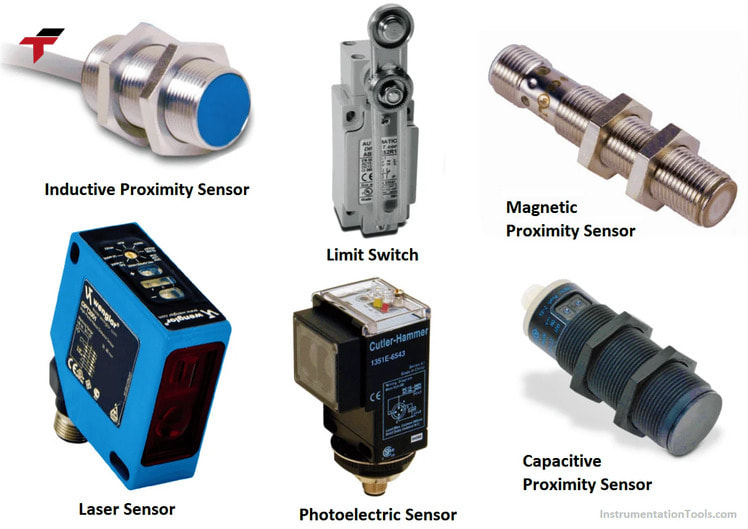
Photoelectric Proximity Sensor
Photoelectric Switch Sensor — Output Logic and Wiring
A photoelectric switch sensor is a photoelectric sensor configured to switch an output signal on or off rather than simply report a light reading. Every photoelectric sensor used for object detection functions as a switch in this sense; “photoelectric switch” describes that circuit role rather than a separate hardware category. Most models let the installer choose between two output logic modes, light-operate and dark-operate, and between two output signal types, PNP and NPN.
Light-operate (light-on) mode turns the output on when the receiver detects the transmitted beam; dark-operate (dark-on) mode turns the output on when the receiver stops detecting the beam. A diffuse sensor typically defaults to light-operate, since a reflected beam reaching the receiver signals an object is present, while a through-beam sensor typically defaults to dark-operate, since beam interruption signals an object blocking the path. Selecting the correct mode for the sensing arrangement in use, rather than assuming factory-default logic applies, prevents a common wiring-stage fault: a sensor that appears to detect objects backwards.
Output signal type is a separate setting from switch mode. A PNP photoelectric sensor produces a positive output signal and connects to a sinking programmable logic controller (PLC) input card; an NPN photoelectric sensor produces a negative output signal and connects to a sourcing PLC input card. Confirming which output type a sensor uses before wiring it to the PLC input card matters as much as confirming light-operate versus dark-operate, since connecting a PNP sensor to a sourcing-only input card — or the reverse — produces no signal at all rather than a partially working one.
Recap: Photoelectric Sensor Type and Switch Logic
Photoelectric sensor type and switch logic together decide which sensor fits an application, matching selection back to the arrangement and output configuration covered above. Through-beam gives the longest range and tolerates any target material at the cost of two-point wiring; retroreflective installs faster from one side but struggles with mirror-like surfaces; diffuse mounts as a single point but depends on the target’s colour and finish. Once the arrangement is chosen, light-operate or dark-operate switch mode and PNP or NPN output type must both match the PLC input card the sensor connects to. How that wiring appears on a schematic, and what the sensor looks like as a drawn symbol, is the next detail to confirm before installation.
Photoelectric Sensor Symbol and Wiring
A photoelectric sensor symbol on an electrical schematic represents the emitter and receiver as angled arrows or light rays pointing toward or away from a small sensor body, which distinguishes it visually from a mechanical limit switch symbol or an inductive proximity sensor symbol on the same drawing. Through-beam symbols typically show two separate bodies with beam arrows crossing the gap between them; retroreflective and diffuse symbols show a single body with the beam arrows looping out and back toward the target or reflector.
Most industrial photoelectric sensors ship as 3-wire DC devices, following the brown-blue-black wiring convention common to DC proximity and photoelectric switches: brown carries the positive supply, blue carries the 0V return, and black carries the switched output signal to the PLC input card. Confirming this wiring convention against the specific sensor’s datasheet matters more than assuming it applies universally, since some models — particularly analogue-output or 4-wire sensors — deviate from the standard 3-wire colour code.
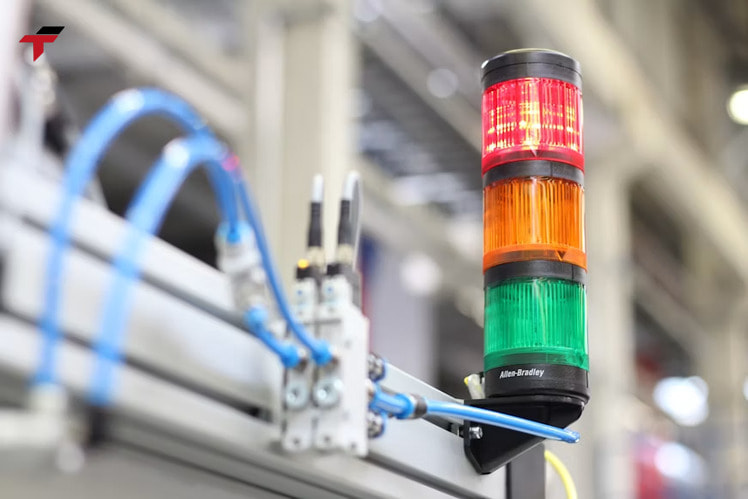
Photoelectric Sensor Symbol and Wiring
Photoelectric Sensor Applications
Photoelectric sensor applications span conveyor and production-line monitoring, packaging and batch production, automatic door and access control, and logistics and warehousing operations. Confirming an item’s presence, position, or count on a moving line, without touching it, is the common thread across every one of these applications.
Conveyor and production-line monitoring depends on photoelectric sensors to confirm the size, shape, and presence of items as they pass a fixed point, raising an alert when a misalignment or missing item breaks the expected pattern. Food production and pharmaceutical packaging lines apply the same detection principle to count and gauge small items as they are sorted into bags or containers, where error detection at high batch volume protects both throughput and product accuracy. Automatic doors — at building entrances, secure access points, and public transport vehicles — use photoelectric sensors to detect an approaching person or an obstruction in the door’s path, while a related configuration detects unauthorised entry through a door or window that is meant to stay closed. Automated warehousing and materials-handling systems extend this same detection logic to robotic trucks and pick-and-place machinery, where accurate sensing supports both throughput and operator safety around moving equipment.
Omron and Autonics Photoelectric Sensors for Malaysian Lines
Omron and Autonics are two of the photoelectric sensor brands most frequently specified by Malaysian system integrators, and both are carried in Flextech Industrial’s industrial sensors Malaysia range for local sourcing. An Omron photoelectric sensor is a common specification choice in semiconductor and precision manufacturing lines, sectors where Omron’s broader automation product line — PLCs, HMIs, and sensors — already forms part of the installed control system, which simplifies integration and spare-parts sourcing under a single brand.
An Autonics photoelectric sensor is a frequent specification choice where cost-competitive procurement matters alongside reliable detection performance, a combination that suits the packaging, F&B, and general manufacturing lines common across Malaysian SME production facilities. Brand selection between the two follows the same application-driven logic that governs PLC and inverter brand choice across Flextech’s product range: the right sensor brand depends on the application, the existing control system, and local support availability, not on a single brand being categorically superior. This guide covers the specification questions to work through before a brand decision; the full current stock — Omron, Autonics, and specification filters by type and sensing distance — sits in Flextech’s automation sensors Malaysia category, the reference point for confirming part numbers and availability once a type and output configuration are settled.

Omron and Autonics Photoelectric Sensors for Malaysian Lines
Choosing a Photoelectric Sensor — Sensing Distance and Environment
Sensing distance is the first specification variable to confirm, and it varies enormously by type. A through-beam photoelectric sensor typically extends from roughly 10mm (~1cm / 0.4in) at the short end up to 100m (about 328ft) or more at the long end, depending on beam intensity, lens design, and target size — long-range through-beam models on the market extend to roughly 60m (197ft) or, in opposed-mode barrel designs, to around 150m (492ft); retroreflective and diffuse types generally cover a shorter working range measured in centimetres to a few metres. At the opposite end of the range spectrum, self-contained laser sensors built for precision positioning can resolve target position changes as small as 0.5mm. Matching the sensing distance to the physical installation gap, rather than defaulting to the longest-range sensor available, keeps detection reliable without paying for range the application never uses.
Operating voltage is a second, more standardised variable: most industrial photoelectric sensors run on a nominal 10–30 VDC supply, a wide enough tolerance band to accommodate typical PLC I/O card output voltage without a separate power conditioning step. Environmental exposure is the third variable, and it is where Malaysian process conditions most often diverge from a sensor’s default industrial rating. Sensors installed at palm oil extraction and clarification stages need a minimum 85°C (185°F) operating temperature rating, since the standard 70°C (158°F) industrial rating that suits general factory floor use falls short of that process environment — some models built for cold-chain or cold-storage duty instead rate down to around -40°C (-40°F) at the opposite extreme. A higher IP rating matters wherever washdown, dust, or oil spray is routine — some photoelectric sensor models carry an IP68/IP69K rating with a stainless steel housing specifically for that kind of environment, illustrating the upper end of what is available when the installation demands it.
Frequently Asked Questions
These frequently asked questions address what comes up most often once a photoelectric sensor is already installed or being wired into a control panel, after the specification questions on type, symbol, and brand covered above.
Does a photoelectric sensor need external power?
Yes — a photoelectric sensor requires an external DC supply, typically in the 10–30 VDC range, to power the transmitter’s light source and the receiver’s signal-processing circuitry. Unlike a purely mechanical limit switch, a photoelectric sensor cannot generate its own detection signal without that supply.
Can a photoelectric sensor detect transparent or translucent objects?
Detection reliability for transparent and translucent targets depends on the sensing type used. Through-beam sensors risk missing a thin, clear object that only partially blocks the beam; retroreflective sensors detect translucent and transparent objects more consistently, since the beam passes through the material twice on its round trip to the reflector. Diffuse sensors generally perform worst on clear or translucent targets, because there is little surface to reflect light back to the receiver.
What is the difference between a photoelectric sensor and an inductive proximity sensor?
A photoelectric sensor detects objects using a projected light beam and works on virtually any material, including plastic, glass, wood, and liquid, while an inductive proximity sensor detects only metal objects through a generated electromagnetic field and has no light-based component at all. The choice between the two depends primarily on target material: metal-only detection favours an inductive sensor, while mixed or non-metallic materials require a photoelectric sensor.
Why does a photoelectric sensor trigger when no object is present?
A photoelectric sensor triggering with no object present usually traces to one of three causes: incorrect light-operate/dark-operate configuration for the sensing type in use, a highly reflective surface near a retroreflective sensor mimicking the reflector’s return signal, or beam misalignment on a through-beam pair following installation or vibration. Checking the switch mode setting first resolves the fault fastest, since it requires no physical realignment or hardware change.