
Autonics, Omron and Keyence Sensors Compared for Malaysian Plants


An Omron proximity sensor is one of three industrial sensor catalogues Malaysian system integrators specify most often, alongside Autonics and Keyence. All three brands cover the same core sensing job — detecting an object without physical contact — but split by sensing technology: Omron’s proximity range centres on inductive detection for metal targets, Autonics spans proximity, photo and area sensing at general-purpose price points, and Keyence leads with laser, fiber optic and flow sensing for higher-precision or non-contact liquid/gas detection. Semiconductor assembly lines in Penang, palm oil processing plants, food and beverage lines, and rubber and glove manufacturing in Malaysia each pull from a different mix of these three catalogues depending on target material, required sensing distance, and budget per point. Flextech Industrial sources Omron and Autonics sensors directly for local Malaysian supply; Keyence is covered here for comparison so a specifier can see where each brand’s strength lies before choosing.
This guide compares the Omron, Autonics and Keyence sensor ranges by sensing technology and sensing distance, then covers Omron switch and Omron slot sensor specifics, the Keyence laser/fiber optic/flow sensor line, and the Autonics photo/area sensor line, before a side-by-side table and sourcing guidance for Malaysian plants.
Omron Proximity Sensor and Omron Sensor Range
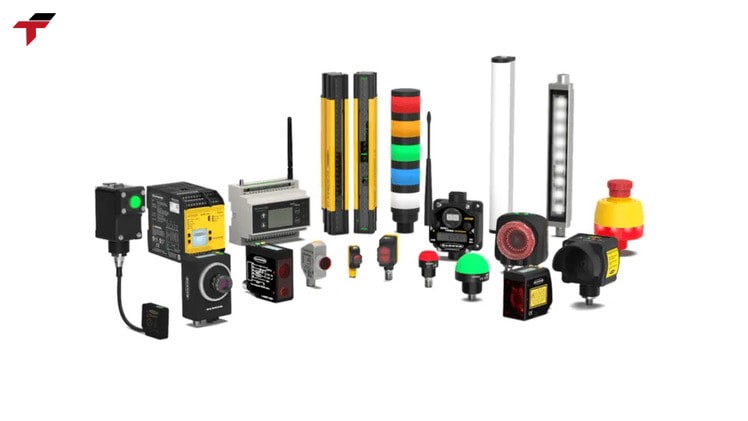
The Omron proximity sensor range is built around inductive sensing — detecting metallic targets through an electromagnetic field rather than physical contact. Omron’s published inductive sensor catalogue spans multiple series by form factor and sensing distance, including the E2E NEXT, E2B, E2EW, E2EQ NEXT, E2A-S, µPROX E2E, TL-W and E2S lines, filtered by housing shape (cylindrical, rectangular, ring-type) and mounting style rather than a single universal model. This breadth is why “Omron sensor” is searched as a broader term than “Omron proximity sensor” specifically — the Omron catalogue extends beyond inductive proximity into photoelectric, fiber, and pressure sensing, with the inductive proximity line being the highest-volume entry point for Malaysian conveyor and machine-position detection.
An inductive Omron sensor follows the standard eddy-current detection mechanism: the sensing face generates an electromagnetic field, a metallic target entering that field induces eddy currents, and the resulting change in the field triggers the switched output. Sensing distance for this class of sensor typically runs from about 1mm to 50mm depending on target material and sensor size — see the comparison table below for the full sensing-distance range across all three brands.
Omron Proximity Sensor and Omron Sensor Range
Omron Switch and Omron Slot Sensor
Omron switch is the term used for the output-side specification of an Omron sensor — normally-open (NO) or normally-closed (NC) contact logic, delivered as a 2-wire or 3-wire NPN/PNP output that a PLC or relay reads directly. Selecting the correct switch output matters as much as selecting the correct sensing technology: an NPN output on a system wired for PNP (or vice versa) will not trigger the controller even though the sensor itself is detecting correctly, which is a common commissioning error on mixed-brand panels.
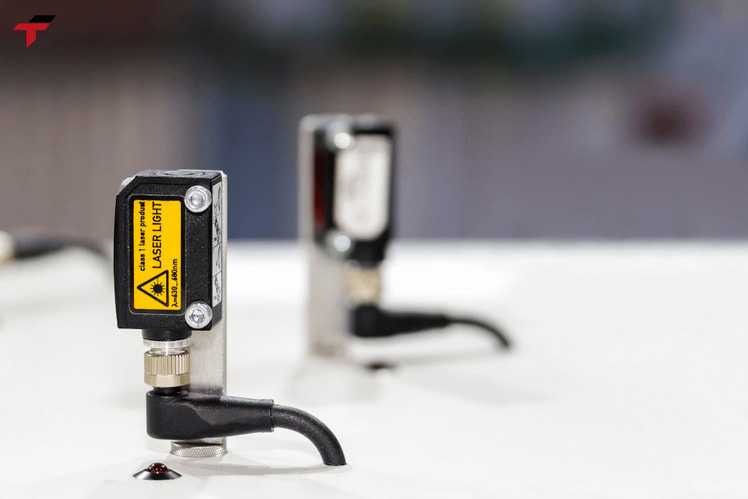
An Omron slot sensor is a photomicro sensor built with the emitter and receiver mounted in a single U-shaped housing, so the target passes directly through the slot rather than reflecting light back to the sensor. This through-beam arrangement gives a slot sensor a short, fixed, highly repeatable sensing gap, which is why it is specified for small-part edge detection, label or tag-end sensing, and position confirmation on compact mechanisms rather than for longer-range object detection.
Omron Switch and Omron Slot Sensor
Keyence Sensor Range: Laser, Fiber Optic, Proximity and Flow Sensing
Keyence sensor is the broader search term covering a catalogue positioned around optical and laser-based sensing rather than inductive proximity as the primary line. A Keyence proximity sensor exists in the catalogue but is a smaller share of what Keyence is specified for in Malaysian plants — the brand’s search volume concentrates instead on laser, fiber optic and flow sensing, where Keyence has built a stronger reputation among integrators for precision optical detection.
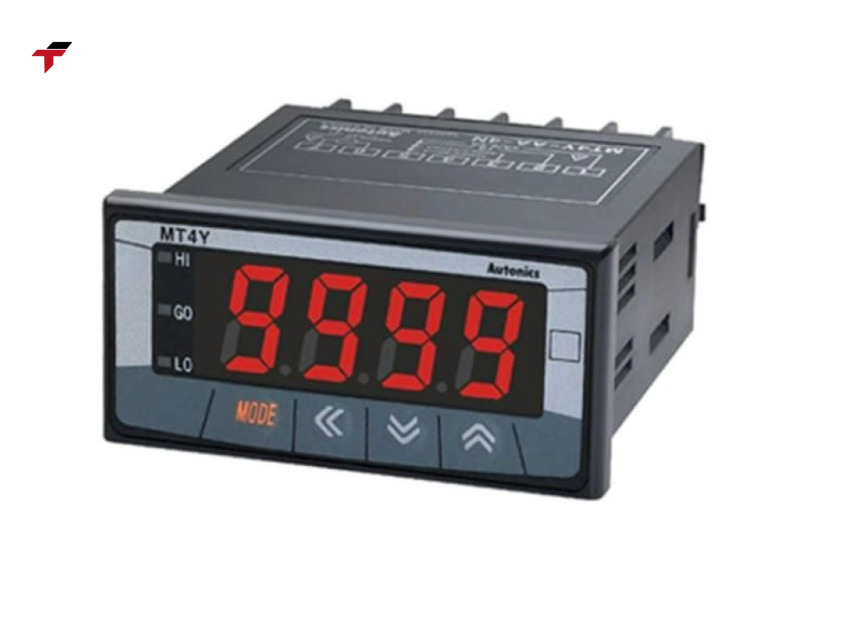
A Keyence laser sensor uses a focused laser beam instead of standard infrared or red LED light, giving tighter beam spot size and more precise triggering on small or fast-moving targets than a general-purpose photoelectric sensor. This precision is the reason laser sensors get specified for applications like edge-position detection on fast material webs or precise part-height measurement, where a wider LED beam spot would blur the detection point.
A Keyence fiber optic sensor separates the amplifier unit from the sensing head, connecting them through a flexible fiber optic cable. This construction lets the sensing head fit into confined mounting spaces that a standard photoelectric sensor housing cannot reach, while keeping the amplifier — and its adjustment controls — accessible outside the constrained area. Fiber optic sensing is a common fit in packaging machinery and small-part assembly where mounting clearance around the detection point is limited.
A Keyence flow sensor detects liquid or gas flow, typically through the pipe wall using a clamp-on non-contact arrangement rather than an inline mechanical flow meter. Non-contact flow sensing avoids introducing a pressure-drop point into the process line, which matters on food and beverage and palm oil processing lines where any in-line obstruction risks contamination or maintenance downtime.
Keyence Sensor Range: Laser, Fiber Optic, Proximity and Flow Sensing
Autonics Sensor Range: Proximity, Photo and Area Sensors
Autonics sensor covers a general-purpose industrial sensing catalogue positioned as a cost-competitive alternative to both Omron and Keyence, spanning proximity, photoelectric and area sensing types. An Autonics proximity sensor follows the same inductive or capacitive detection principle described for Omron above, and is specified in Malaysian plants where the sensing job is standard metal-target detection at typical industrial sensing distances rather than a job requiring Keyence-level optical precision.
An Autonics photo sensor is the brand’s photoelectric line, covering through-beam, retroreflective and diffuse-reflective detection modes for non-metallic and longer-range targets — see the photoelectric sensor guide for how those three detection modes differ. An Autonics area sensor extends photoelectric detection across a defined zone rather than a single point, using a linear array of emitter/receiver pairs to create a detection curtain. This zone-coverage approach is specified for machine-guarding applications — detecting a hand or object entering a hazardous zone across an area rather than at one fixed beam point — and for presence/absence detection across a wider conveyor width than a single-point sensor can cover.
Autonics vs Omron vs Keyence Sensors Compared
The table below lines up sensing technology and sensing distance across the three brands, using sensing-distance figures that hold across brands for each technology type rather than brand-specific model numbers.
| Sensing technology | Typical max sensing distance | Brand strength | Typical Malaysian application |
| Inductive proximity | up to 50mm (1.97in / 0.05m) | Omron (primary catalogue), Autonics (cost-competitive) | Metal part/conveyor position detection |
| Capacitive proximity | up to 20mm (0.79in / 0.02m) | Autonics, Omron | Plastic pellet/granular, liquid-level detection |
| Photoelectric (through-beam) | up to 100m+ (328ft / 3,937in) | Autonics (photo sensor), Omron | Long-range object/pallet detection |
| Laser sensing | Precision-focused, shorter effective range than standard photoelectric | Keyence | Small/fast-moving part edge detection |
| Fiber optic | Constrained-space sensing head | Keyence | Confined-space part detection in packaging |
| Area/curtain sensing | Zone coverage across defined width | Autonics (area sensor) | Machine guarding, wide-conveyor presence detection |
| Flow (clamp-on) | Non-contact through pipe wall | Keyence | Liquid/gas flow in F&B, palm oil processing |
| Ultrasonic | up to 6,000mm (19.7ft / 6m) | Cross-brand | Level detection, transparent/soft-target sensing |
Sensor operating voltage across all three brands typically falls in the 10–30VDC range standard for industrial sensors. Sensors specified at palm oil processing positions need a minimum operating temperature rating above the standard 70°C (158°F / 343K) industrial rating — 85°C or higher — because the extraction and clarification stages run hotter than a typical assembly-line environment.
Autonics vs Omron vs Keyence Sensors Compared
Choosing a Sensor Brand for a Malaysian Plant
The sensing technology required by the target — metal versus non-metal, fixed point versus zone, contact-adjacent versus non-contact liquid flow — narrows the choice to one or two brands before price or lead time becomes the deciding factor. A semiconductor line in Penang detecting small, fast-moving metal or optical targets leans toward Keyence’s laser or fiber optic precision; a palm oil or F&B line needing standard metal-part detection, area/curtain guarding, or clamp-on flow sensing across many points leans toward Omron and Autonics for cost per point across a larger sensor count; rubber and glove manufacturing lines mixing metal-part and non-metal-material detection typically specify a combination of Omron inductive and Autonics photo/area sensors on the same line.
Flextech Industrial’s sensors category covers Omron and Autonics for Malaysian sourcing, alongside PLC, HMI, inverter and servo lines from the same distributor. Flextech is not an authorized distributor for these brands; parts are sourced directly from manufacturers and reputable international agents, with local warranty coverage on items sourced internationally.
Frequently Asked Questions
Brand-level sensing technology and sourcing are covered above; these four questions address the distinctions that come up most often once a sensor is already being specified against an Omron, Autonics, or Keyence catalogue.
Is an Omron proximity sensor the same as an Omron switch?
No. Omron switch refers to the output-side specification (NO/NC contact logic, NPN/PNP wiring) of an Omron sensor, not a separate product line — every Omron proximity sensor has a switch output specification, but “switch” describes how the output connects to a PLC or relay, not the sensing technology itself.
What is the difference between an Omron slot sensor and a standard Omron proximity sensor?
An Omron slot sensor is a through-beam photomicro sensor with the target passing directly through a U-shaped housing, used for small-part or edge detection at a short fixed gap. A standard Omron proximity sensor uses inductive (electromagnetic) detection for metal targets and does not require the target to pass through a housing slot.
Why does Keyence lead in laser and fiber optic sensing rather than proximity sensing?
Keyence’s catalogue is positioned around optical and laser-based precision detection — laser sensors for tight beam-spot accuracy, fiber optic sensors for confined-space mounting, and clamp-on flow sensors for non-contact liquid/gas detection — which is a different specification problem than standard inductive proximity detection, where Omron and Autonics have the deeper catalogue.
Does Flextech Industrial supply Keyence sensors?
Flextech Industrial’s sensor catalogue for Malaysian sourcing covers Autonics and Omron. Keyence is compared here to help specify the correct sensing technology for the application; contact Flextech to confirm current sourcing options for a specific sensor requirement.