
Servo Motor Types and Working Principle: AC, DC, Linear

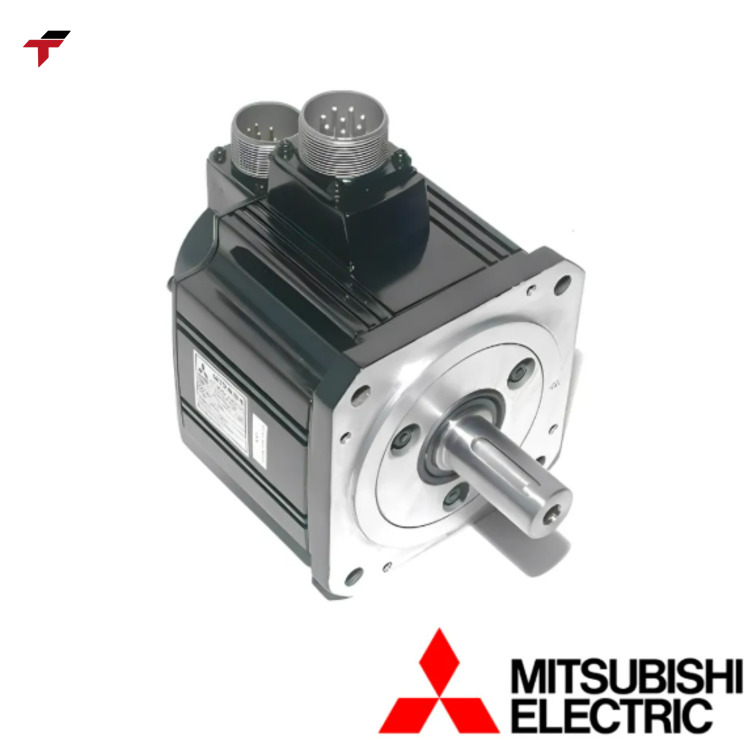
A servo motor is a rotary or linear actuator that uses closed-loop position feedback to control angular or linear position, velocity, and acceleration precisely — the defining servo motor function that separates it from a standard motor running open-loop. Servo motors fall into three main types by construction: AC servo motor, DC servo motor, and linear servo motor, each suited to different combinations of power, precision, and duty cycle. In robotics, this precise, repeatable positioning is what lets a robotic arm reach the same point in space thousands of times without drift, and what lets an autonomous vehicle hold a commanded steering angle exactly.
This guide covers how a servo motor works, the AC/DC/linear type breakdown, high-torque design, servo drive/driver/controller terminology, robotics applications, brand landscape, price factors, and repair basics.
Servo Motor Definition and Function
A servo motor is not a distinct class of motor in the way an induction motor or a stepper motor is — the term describes any motor built into a servomechanism, paired with a position sensor and a controller, and used in a closed-loop control system. That pairing is the core servo motor function: a motor alone can only be told how much power to draw, but a servo motor system can be told exactly where to go and will correct itself until it gets there.
A complete servo motor assembly typically has three functional parts: the motor itself (AC or DC), a feedback device (a potentiometer or, on industrial units, a rotary encoder), and a controller or drive that compares commanded position against feedback position and adjusts motor current accordingly. Servo motors are used in robotics, CNC machinery, and automated manufacturing — anywhere a system needs to reach and hold a specific position rather than just spin continuously. How that position feedback actually closes the loop is covered next.
How a Servo Motor Works: Closed-Loop Control
Servo motor control is built around a closed-loop feedback cycle, not open-loop rotation. The controller sends a command signal representing the desired position; the motor turns; a feedback device (potentiometer on simple servos, rotary encoder on industrial ones) reports the actual shaft position back to the controller; the controller compares desired position against actual position to generate an error signal; and the motor keeps correcting until that error signal falls to zero. This comparison loop — command in, feedback back, error corrected — is what “closed-loop” means in servo motor control, and it is the mechanism that gives a servo motor its defining accuracy advantage over an open-loop motor.
Two feedback approaches exist. Simple, low-cost servos use a resistive potentiometer for position-only sensing, combined with bang-bang control (the motor runs at full speed or stops) — a pattern common in radio-controlled model servos but rarely used in industrial motion control because of potentiometer wear and electrical noise. Industrial servo systems instead use a rotary encoder — absolute or incremental — to report shaft position (and, by extension, speed), almost always combined with a PID control algorithm that brings the motor to its commanded position quickly and precisely, with minimal overshoot.
Servo motor control signals also differ by application tier. Small hobby-style servos are commonly driven by a pulse-width-modulated (PWM) signal on a roughly 20-millisecond frame, where pulse width sets shaft angle. Industrial servo drives are commanded differently: modern industrial servo systems communicate over digital fieldbuses such as EtherCAT, CANopen, and POWERLINK, which allow a controller to coordinate motion across multiple servo axes at once — the architecture used in multi-axis robotic arms and CNC machines, not simple pulse-width angle commands. With the control loop established, how that same servo motor construction splits into AC, DC, and linear types is covered next.
Types of Servo Motor: AC vs DC vs Linear
The three main types of servo motor — AC servo motor, DC servo motor, and linear servo motor — are distinguished by the underlying motor construction paired with the same feedback-and-control architecture, not by a separate servo mechanism for each type.
AC Servo Motor
An AC servo motor uses an alternating-current motor — either an AC induction motor or, for higher-performance compact designs, a brushless AC motor with a permanent-magnet rotor — as the drive element. Servo motor AC designs are the standard choice for large industrial servo motors, typically paired with a variable frequency drive to control speed, and they dominate mid-to-large robotic arms and industrial motion axes because AC motors sustain higher continuous power output and tolerate industrial duty cycles better than small DC designs.
DC Servo Motor
What is a DC servo motor? It is a servo assembly built around a direct-current motor — most often a brushed permanent-magnet DC motor, chosen for its mechanical simplicity and low cost. Small industrial servomotors more often use electronically commutated brushless DC motors instead of brushed types, trading a small cost increase for longer service life (no brush wear) and cleaner electrical performance. DC servo motors are common in smaller robotic joints, compact positioning stages, and lower-power automation where AC infrastructure and variable frequency drives would be unnecessary overhead.
Linear Servo Motor
A linear servo motor delivers straight-line motion directly — a servomotor is broadly defined as a rotary or linear actuator, and the linear variant skips the rotary-to-linear conversion otherwise needed from a lead screw, belt, or rack-and-pinion. Linear servo motor systems pair a linear-motion motor with an external linear encoder instead of a rotary encoder, which avoids drivetrain inaccuracies (backlash, belt stretch) between the motor and the carriage it drives, at the cost of a more complex, custom-built system rather than a pre-packaged rotary unit.
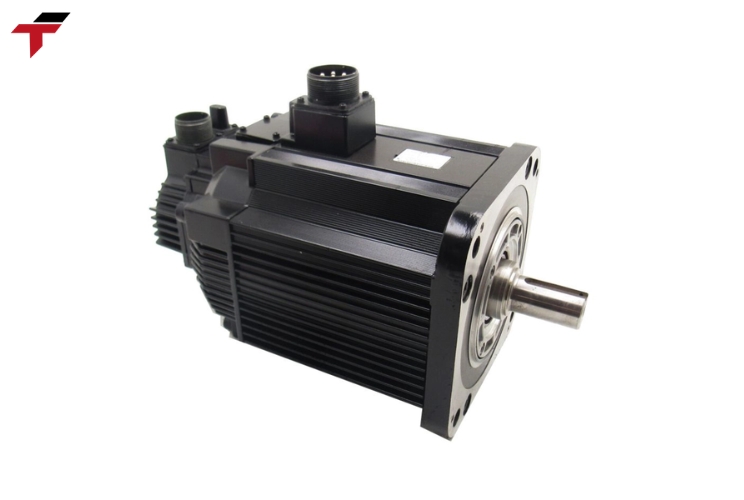
Types of Servo Motor: AC vs DC vs Linear
Servo Motor Types Compared
| Type | Motor Construction | Typical Use Case | Feedback |
| AC servo motor | AC induction or brushless AC (permanent-magnet) | Large industrial robots, high-power motion axes | Rotary encoder |
| DC servo motor | Brushed or brushless DC | Small robotic joints, compact positioning | Potentiometer (simple) or rotary encoder (industrial) |
| Linear servo motor | Linear motor + external linear encoder | Direct straight-line travel, precision stages | Linear encoder |
Choosing between these three types comes down to required power and precision. Where the load also demands very high torque at low speed, a further design factor comes into play, covered next.
Summary So Far: Servo Motor Definition and Types
In summary so far, a servo motor is a rotary or linear actuator that closes a feedback loop — command signal in, encoder or potentiometer feedback back, error signal corrected — to reach and hold a precise position, distinguishing it from a motor running open-loop. That same closed-loop architecture is built with three different motor constructions: AC servo motor (induction or brushless AC, for large industrial axes), DC servo motor (brushed or brushless DC, for smaller robotic joints), and linear servo motor (direct straight-line travel with an external linear encoder). Which type fits a given robotic or automation axis depends on required power, precision, and duty cycle. How much torque any of these three types can deliver — and what that depends on — is covered next.
High-Torque Servo Motors
A high-torque servo motor delivers strong rotational force at low shaft speed, the property that matters most in robotic joints and grippers holding or moving heavy loads without stalling. Servo motor high-torque performance comes primarily from the reduction gearing between the motor and the output shaft — the drive gears in a servo assembly step the motor’s high-speed, low-torque output down to a lower output speed with proportionally higher torque, the same relationship at work in every geared servo, from a small robotic-arm joint to an industrial positioning axis.
Beyond gearing, three factors most directly affect how much torque a servo motor delivers at a given size: the motor’s continuous power rating, the reduction ratio of its gear stage, and its thermal rating (how much current it can sustain before overheating limits torque output). For robotic applications that hold static loads for extended periods — a robotic arm holding a part mid-cycle, for example — the servo’s continuous (not just peak) torque rating is the number to check first, since brief peak-torque figures do not reflect what the motor can sustain under sustained load. How that torque and position command actually reaches the motor is a separate component from the motor itself, covered next.
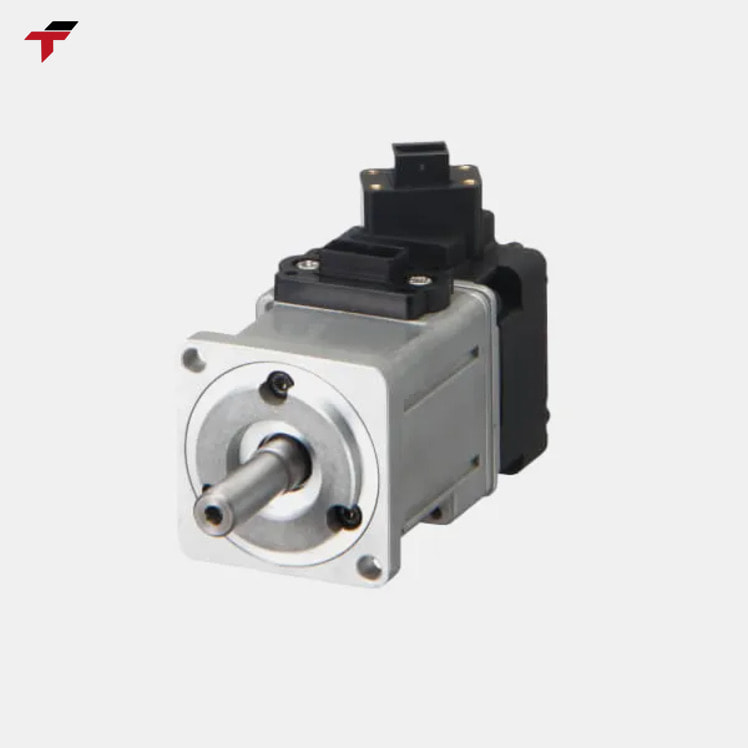
Servo Motor Definition and Types
Servo Drive vs Servo Driver vs Servo Controller
Servo drive, servo driver, and servo controller are frequently used interchangeably in industrial catalogues, but the three terms describe related, distinct parts of a servo system, and the distinction matters when specifying or troubleshooting one.
- Servo drive(also called a servo amplifier) is the power-electronics module that takes command signals and regulates the actual current, voltage, and switching delivered to the motor windings — the component doing the electrical work of turning a low-power command signal into the high-power output the motor needs. Modern industrial servo drives regulate current, velocity, and position using feedback loops, and communicate over the same industrial fieldbuses (EtherCAT, CANopen, POWERLINK) that coordinate multi-axis motion.
- Servo driveris used largely as a synonym for servo drive in most Malaysian industrial catalogues and technical documentation — the same power-electronics function, described with a different word.
- Servo controllermore precisely refers to the higher-level module or software that generates the position/velocity command and closes the outer control loop — comparing feedback against setpoint and issuing corrections — which then hands its output down to the servo drive to execute electrically. On many modern integrated servo systems, the controller function is now built into the drive itself, blurring what used to be a clearer hardware division; older or larger multi-axis systems still commonly separate a dedicated motion controller from a bank of individual servo drives, one per axis.
Manufacturers including Bosch Rexroth and Yaskawa are established names in this servo-drive category, alongside dedicated motion-control specialists — brand selection generally follows the installed controller/PLC ecosystem on a given line rather than one drive brand suiting every application equally. With drive and controller terminology settled, how the complete servo motor system is actually deployed in robotics is covered next.
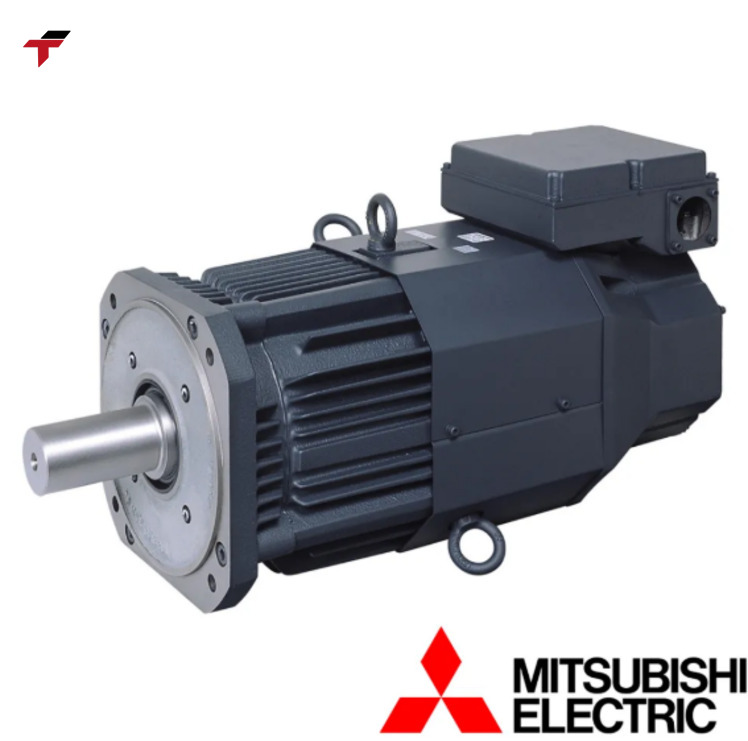
Servo Drive vs Servo Driver vs Servo Controller
Servo Motors in Robotics Applications
Servo motors are used for robotic applications that require precision positioning, and that precision requirement is what drives servo motor selection across most robotic use cases rather than raw power alone.
- Robotic arm joints and robotic welding— servo motors are mounted in every joint of a robotic welding arm, actuating movement and adding dexterity; the closed-loop position accuracy is what keeps a repeated weld path consistent across thousands of production cycles.
- Autonomous and remote-operated vehicles— servos are used in the steering systems of remote-operated vehicles, including applications such as ordnance-disposal robots, where precise, repeatable steering angle control under remote command is a safety requirement, not a convenience.
- CNC machinery and automated manufacturing— servo motors position cutting tools and material-handling axes with the repeatability that CNC tolerances demand, an application that relies on the same closed-loop mechanism covered earlier, scaled to industrial power levels.
Across all three, the common requirement is the same: near-perfect repeatability of motion, delivered by a small, powerful, programmable actuator — the combination that makes a servo motor useful in robotics specifically, as distinct from a simple fixed-speed motor. Which brand and drive family fits a given robotic or automation line is covered next.
Servo Motor Brands: Mitsubishi, Panasonic, and the Wider Market
Servo motor and servo drive brand selection in Malaysian robotics and automation projects generally follows the PLC Malaysia and HMI Malaysia ecosystem already installed on a line. Matching brands typically simplifies communication setup and reduces the number of separate spare-parts relationships a maintenance team has to manage.
Flextech Industrial’s own servo drive Malaysia range is carried from Mitsubishi and Panasonic — brands chosen to match the PLC and HMI product lines most commonly specified on Malaysian production floors Flextech supports. Yaskawa servo motor products are also well established in the regional industrial market and are named directly, alongside Bosch Rexroth, among the manufacturers that have developed dedicated servo-drive families for robotics, CNC machinery, and automated production equipment; Yaskawa is covered here as market and technical context rather than as a Flextech-carried brand. Flextech is not an authorised distributor for any servo brand it carries; parts are sourced directly from manufacturers and reputable international agents, with local warranty support provided independently of the manufacturer’s own warranty terms.
Servo Motor Brands: Mitsubishi, Panasonic, and the Wider Market
Servo Motor Price: What Affects Cost
Servo motor price varies widely by specification rather than following a single market rate, which makes a single number misleading for planning purposes. Four factors move price most directly: continuous power rating and torque output (higher-torque, higher-power units cost more); feedback type (a simple potentiometer costs far less than a precision absolute rotary encoder or linear encoder); the motor-plus-drive pairing (a bundled servo motor and matched servo drive from one manufacturer typically costs more than a bare motor, but simplifies compatibility and support); and brand and sourcing route, since parts sourced directly from manufacturers or reputable international agents — Flextech’s own sourcing model — carry different pricing than locally warehoused stock from an authorised regional distributor.
For an accurate servo motor price on a specific application, specification (power rating, torque requirement, feedback type, and drive pairing) needs to be confirmed first — contact Flextech for a quotation against a specific servo motor and drive requirement.
Servo Motor Repair and Maintenance Basics
Servo motor repair starts with isolating which of its three functional parts has failed — the motor itself, the feedback device, or the drive/controller electronics — since each fails differently and calls for a different fix. Common failure points include worn brushes on brushed DC servo motors (brushless AC and DC designs avoid this failure mode entirely), bearing wear from sustained radial or axial load, damaged or contaminated encoder optics causing erratic position feedback, and overheating in the drive electronics from sustained overload or inadequate cooling.
Before troubleshooting a suspected motor fault, confirm the feedback signal is clean and the drive is receiving a valid command — a healthy motor driven by a faulty encoder or a misconfigured drive will show the same symptoms (erratic movement, failure to reach commanded position, or continuous hunting) as an actually damaged motor. On industrial servo systems, this usually means checking the drive’s fault/alarm code first, since most industrial servo drives report a specific fault classification (overcurrent, encoder fault, overtemperature) rather than failing silently. Where a unit is out of warranty and the failure is isolated to a worn mechanical component, replacing the affected servo motor or drive as a matched pair is generally more reliable than a partial repair, given how closely the motor and its feedback device are calibrated to each other at the factory.
Frequently Asked Questions
The type breakdown, working principle, and robotics applications are covered above; these questions address terminology and sourcing points that come up most often once a specific servo motor is being specified.
What is the difference between a servo motor and a stepper motor?
A servo motor uses closed-loop position feedback to continuously correct its position, while a standard stepper motor moves in fixed steps open-loop, without feedback, relying on the controller “knowing” how many steps it has commanded rather than confirming actual position. Servo motors generally outperform stepper motors on larger systems where a powerful motor is a significant share of total system cost, while stepper motors remain the lower-cost option where their simpler open-loop control is acceptable.
Is a servo motor the same as a servo drive?
No. The servo motor is the physical actuator — the motor, feedback device, and mechanical housing. The servo drive (or driver) is the separate power-electronics module that regulates the current and voltage delivered to that motor based on commands from a controller. The two are paired components, not the same part.
Can a DC servo motor be used in the same robotic system as an AC servo motor?
Yes, within the same robot or production line, though not usually on the same axis. Smaller, lower-power joints or stages are commonly specified with DC servo motors for cost and simplicity, while higher-power axes on the same machine use AC servo motors — the type choice is made per axis, based on that axis’s power and duty-cycle requirement, not fixed for the whole system.