
Industrial Sensor Selection Guide – Malaysian Manufacturing

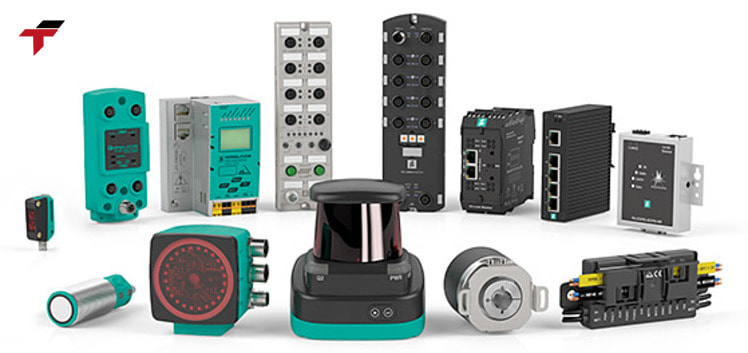
Industrial sensor selection is the process of matching a sensor’s detection technology, physical specifications, and signal output to the exact requirements of an automated system. Every sensor type – inductive, photoelectric, capacitive, ultrasonic, temperature, pressure – operates on a specific physical principle and succeeds only when deployed within its designed parameters. A sensor chosen by cost alone, without matching its detection range, target material compatibility, or IP protection rating to the operating environment, creates a failure point that no amount of maintenance recovers from cleanly. This guide applies a 5-step elimination framework used by system integrators across Malaysian manufacturing sectors – semiconductor assembly in Penang, food and beverage processing, rubber and glove production, and palm oil processing – where environmental conditions, production cycle speeds, and PLC control architectures each impose distinct sensor requirements. The selection decisions covered here span sensor technology type, environmental durability ratings, signal output compatibility, and procurement criteria directly relevant to industrial sensors Malaysia sourcing.
The 5-Step Sensor Elimination Framework
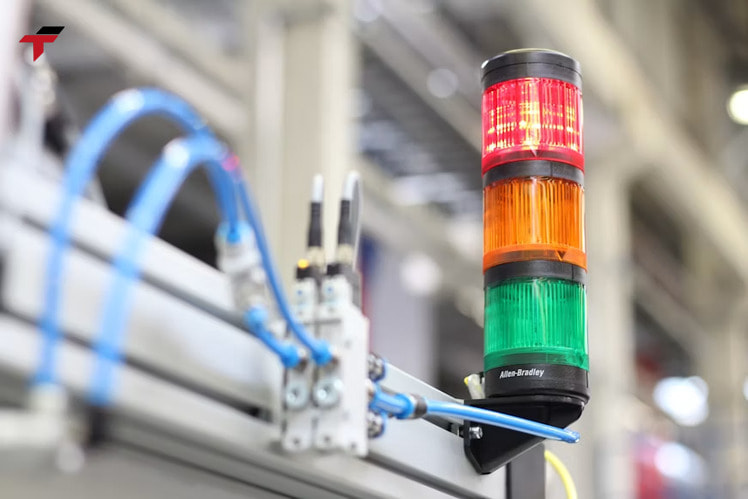
Industrial sensor selection works by elimination, not discovery. Each question removes sensor technologies that fail to meet one requirement, leaving only compatible candidates. Asking the questions in sequence – sensing type, target composition, distance, environment, signal output – prevents the common mistake of specifying a sensor that performs its measurement correctly but fails its installation.
Step 1: Define the Physical Parameter Being Measured
The measurement objective determines the sensor category before any brand or model comparison begins. Proximity detection – whether an object is present within a defined zone – draws from inductive, capacitive, photoelectric, magnetic, or ultrasonic sensor families. Process parameter measurement – temperature, pressure, flow rate, vibration – uses dedicated transducers whose operating principle is determined by the physical phenomenon, not by application preference.
Identify the physical stimulus first. Every subsequent selection step depends on this decision, and no downstream optimisation recovers a wrong category choice.
Step 2: Identify Target Material Composition
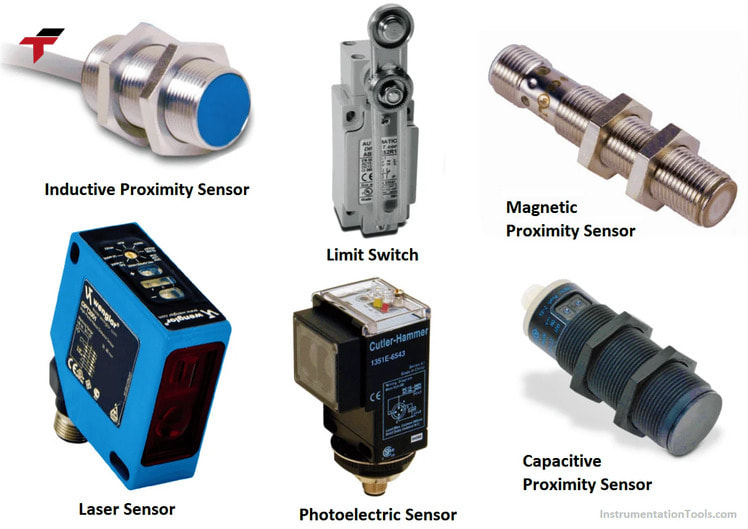
Target material eliminates sensor technologies directly. Inductive proximity sensors respond only to ferrous and non-ferrous metals – a plastic, glass, or liquid target is invisible to an inductive sensor regardless of sensing distance. Capacitive sensors detect metals, plastics, liquids, wood, and granular materials: any material with a dielectric constant distinguishable from air. Photoelectric sensors respond to surface reflectivity; ultrasonic sensors respond to acoustic impedance – both apply to most solid and liquid targets.
In Malaysian rubber and glove manufacturing, the target is typically a non-metallic film or product. Inductive sensors are eliminated from consideration at this step. In semiconductor assembly, the target is often a silicon wafer or metallic component on a PCB, where inductive sensors are viable but photoelectric sensors offer the sensing distance and accuracy that precision pick-and-place operations require.
Step 3: Confirm Sensing Distance and Measurement Range
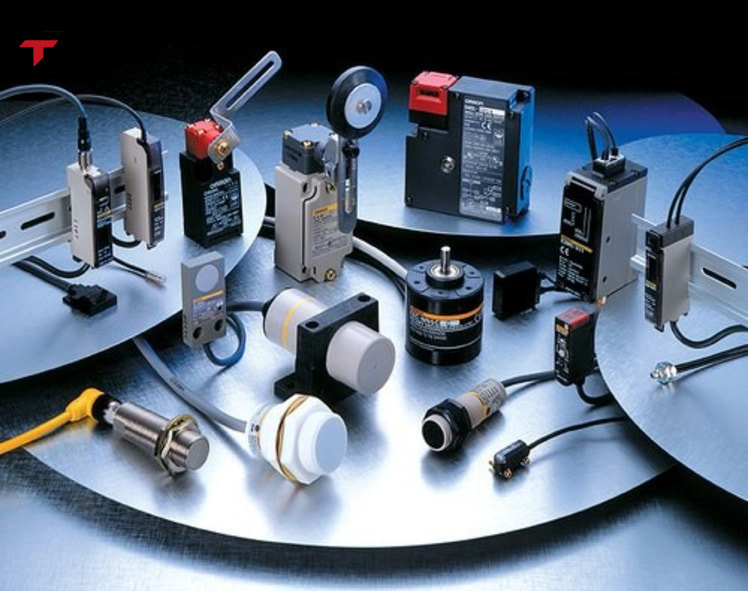
Each sensing technology covers a defined detection distance. Inductive proximity sensors operate at 1mm to approximately 50mm (0.04 to 2 inches), depending on housing diameter and target size. Photoelectric sensors in through-beam configuration detect across 10mm to over 100 metres (330 feet). Ultrasonic sensors cover 20mm to 6 metres (approximately 20 feet) in most industrial variants. Capacitive sensors typically operate at 3mm to 20mm for standard housings.
Resolution and range are paired parameters for process sensors. A temperature sensor covering –40°C to +200°C at 0.5°C resolution suits a palm oil refinery heat exchanger position. A pressure sensor with a full-scale range twice the application’s maximum operating pressure loses resolution in the normal operating window – the measurement range and the application window must align, not just overlap.
Step 3: Confirm Sensing Distance and Measurement Range
Step 4: Determine Environmental Protection Specification
IP rating (Ingress Protection), defined in IEC 60529, classifies a sensor’s resistance to solid particle ingress (first digit, 0–6) and liquid ingress (second digit, 0–9K). IP67 specifies dust-tight protection and resistance to temporary water immersion at 1 metre depth for 30 minutes. IP68 extends to continuous immersion under manufacturer-specified conditions. IP69K specifies dust-tight protection plus resistance to high-pressure, high-temperature steam washdown – the minimum requirement for sensors installed in Malaysian food and beverage production areas where CIP (clean-in-place) procedures are routine.
Three environmental factors apply beyond IP rating in Malaysian industrial facilities:
Temperature range. Semiconductor cleanrooms maintain 20–22°C (68–72°F) – well within standard sensor operating specifications. Palm oil processing exposes sensors to sustained heat in the 60–90°C range (140–194°F) during extraction and clarification stages. Sensors rated to 85°C (185°F) minimum – not the common 70°C (158°F) industrial standard – are required at these positions.
Chemical exposure. Rubber and glove manufacturing uses ammonia and sulphuric acid in compound preparation. Sensor housings in stainless steel (316L grade) or PTFE-coated variants are required for any sensor positioned near chemical process points. Standard ABS or PBT thermoplastic housings degrade within months under direct chemical exposure.
Vibration and mechanical stress. Stamping lines and compressor halls generate continuous vibration that causes sensor drift in units not specified for mechanical durability. Sensors tested to IEC 60068-2-6 vibration resistance standards maintain calibration stability in these installations. Vibration sensors installed on motors, pumps, and compressors serve a different purpose – detecting changes in machine vibration signatures that precede equipment failure, enabling maintenance intervention before an unplanned stoppage occurs.
Step 5: Match Signal Output to Control Architecture
Signal output compatibility determines whether data reaches the PLC without additional signal conditioning hardware. Three output types cover the majority of Malaysian manufacturing automation requirements:
Digital switching outputs (NPN/PNP). Proximity sensors and standard photoelectric sensors produce a binary switched output. PNP (sourcing) output is the standard in Asian manufacturing PLC configurations – Mitsubishi MELSEC, Omron SYSMAC, and Panasonic FP series, the three dominant PLC families in Malaysian factories, all use PNP sourcing inputs as the default. NPN (sinking) output suits specific European PLC architectures. Ordering the wrong output polarity for the installed PLC input module is one of the most common procurement errors on the Malaysian market.
Analog outputs (4-20mA, 0-10V). Process sensors for temperature, pressure, flow, and level produce analog signals proportional to the measured value. The 4-20mA current loop is the industrial standard for installations with long cable runs – it is inherently noise-immune and allows cable continuity monitoring, since 0mA indicates a fault condition rather than a zero measurement. The 0-10V analog output suits shorter runs where cable capacitance does not distort the signal.
Industrial communication protocols. Sensors with IO-Link, PROFIBUS, Modbus RTU, or Ethernet/IP int
The 5-Step Sensor Elimination Framework
erfaces integrate into networked control architectures and transmit diagnostics and configuration data alongside the primary measurement. IO-Link is the current entry-level digital communication standard supported by Autonics, Omron, and most sensor manufacturers supplying the Malaysian automation market.
————————————————————
Sensor Technology Map by Application
The table below identifies the most common industrial sensor types by detection principle, Malaysian manufacturing application, and product availability through Flextech Industrial.
| Sensor Type | Detection Principle | Primary Malaysian Application | Availability |
| Inductive proximity | Eddy current induction | Metal detection on conveyors, motor speed monitoring, broken belt/chain detection, part presence on metallic jigs | Autonics, Omron |
| Capacitive proximity | Dielectric constant change | Level detection in tanks, non-metallic object presence, liquid/powder level | Autonics |
| Photoelectric – through-beam | Light beam interruption | High-speed counting, presence detection on fast conveyors, equipment monitoring | Autonics, Omron |
| Photoelectric – diffuse/retro | Reflected light | Packaging, label detection, fill level confirmation, palletising | Autonics, Omron |
| Ultrasonic | Sound wave echo time | Tank level, transparent object detection, AGV collision avoidance, overhead crane positioning | Autonics |
| Temperature (thermocouple/RTD) | Thermoelectric/resistance change | Process temperature – F&B, palm oil, rubber curing | Autonics |
| Pressure | Piezoelectric / strain gauge | Hydraulic system monitoring, compressed air verification, vacuum system monitoring | Autonics |
| Vibration | Piezoelectric acceleration | Predictive maintenance on motors, pumps, compressors – early fault detection before failure | Inquiry |
| Vision | Image capture + processing | Quality inspection, defect detection – electronics, automotive, packaging lines | Inquiry |
Flow sensors are available through Flextech on inquiry. Contact the technical team for model-specific availability and lead times.
7 Procurement Criteria Beyond the Datasheet
Procurement criteria beyond the datasheet determine whether a sensor performs in a specific plant, maintained by the local maintenance team, integrated into the control system, and supported through its service life. Total cost of ownership – purchase price, installation labour, and long-term maintenance – determines the true cost of a sensor specification, not the unit price on the datasheet.
- IP rating matched to worst-case installation conditions. An IP67 sensor placed in a food processing wash-down zone without additional housing protection fails the application. Specify IP rating for the most severe environmental exposure the sensor will encounter – not average operating conditions.
- Voltage supply confirmed at the installation point. Most industrial sensors operate at 10–30VDC. Autonics sensors typically specify a 12–24VDC supply range; confirm the specific model’s supply range against the voltage available at the cabinet or terminal block, not the general system nominal voltage.
- Output polarity (NPN vs PNP) confirmed against the specific I/O module. Mitsubishi FX5U, Omron CP1E, and Panasonic FP-XH input modules all default to PNP-compatible sourcing inputs. Verify against the specific I/O module datasheet, not the general brand standard – some modules support both polarities; others do not.
- Switching frequency matched to line speed. On high-speed packaging or stamping lines exceeding 1,000 detection cycles per minute, sensor response time becomes the limiting factor. Inductive proximity sensors switch at approximately 0.1ms to 5ms per cycle depending on the model. Confirm switching frequency against the actual detection requirement for the target line speed.
- Industry certifications confirmed before specification. Food and beverage applications in Malaysia require HACCP-compatible sensor materials – stainless steel or food-grade plastic housings with IP69K ratings. Semiconductor cleanroom applications may require ESD-safe sensor housings. Manufacturers supplying Japanese or European OEMs may require CE-marked or UL-listed components on assembled machines.
- Local stock availability confirmed at the time of specification. Industrial sensor lead times from international manufacturers run 4–12 weeks for non-stocked items. A sensor specified without confirming local stock creates a project delay at the most critical point – when the machine is being built. Flextech carries local stock of Autonics and Omron sensor lines for this reason.
- Warranty terms and local service coverage confirmed. Flextech provides local warranty coverage on sensors sourced internationally. Confirm the coverage period, the conditions that constitute a valid warranty claim, and where warranty service is fulfilled before specifying sensors into machines that will be difficult to retrofit.
These seven criteria operate independently – a sensor that passes six but fails on output polarity or IP rating fails the application. Three of the seven directly determine whether a sensor works at all; the remaining four determine whether it remains supported through its service life.
7 Procurement Criteria Beyond the Datasheet
Selection Summary: The 3 Independent Parameters
Sensor technology type is determined by target material and sensing distance. Environmental protection rating is determined by the installation location – the worst-case exposure condition, not the average. Signal output type is determined by the PLC or control system architecture receiving the data. These three parameters are independent: each must be specified correctly. A sensor that detects the target correctly but outputs the wrong signal polarity for the installed PLC fails the application as completely as a sensor that cannot detect the target at all.
Sensor Selection in Malaysian Manufacturing Sectors
Semiconductor manufacturing (Penang). Wafer handling, die bonding, and PCB assembly require sensors with sub-millimetre repeatability, cleanroom-compatible housing materials, and ESD-safe construction. Fibre-optic photoelectric sensors and flush-mount inductive sensors in stainless steel housings are the standard technology. Output is typically PNP digital switching for direct connection to Omron or Mitsubishi PLC input modules.
Food and beverage processing. Fill level detection, bottle presence, label inspection, and conveyor tracking are the primary automation sensing applications. IP69K-rated sensors with stainless steel or PEEK housings are the minimum installation specification in production areas subject to washdown. Capacitive level sensors in PTFE-coated housings suit tank-level monitoring for liquid food products where metallic contact with the product is not permitted.
Rubber and glove manufacturing. Compound thickness monitoring, vulcanisation temperature measurement, and line speed tracking require sensors tolerant of chemical exposure from ammonia and sulphuric acid used in compound preparation, combined with sustained operating heat. RTD temperature sensors and pressure transmitters with chemically resistant wetted materials – stainless steel or Hastelloy – are the standard specification for positions exposed to process chemistry.
Palm oil processing. Extraction and clarification stages expose sensors to sustained temperatures in the 60–90°C range, combined with corrosive vapours. Temperature and pressure sensors rated to 85°C minimum operation, with corrosion-resistant housing materials and 4-20mA analog output, feed directly into the SCADA control systems standard in palm oil process facilities.

Sensor Selection in Malaysian Manufacturing Sectors
Frequently Asked Questions
What is the most common industrial sensor type in Malaysian manufacturing?
Inductive proximity sensors are the most widely deployed type in Malaysian discrete manufacturing – metal detection on conveyors, part presence confirmation on metallic jigs, and position verification on pneumatic actuators. For process industries including palm oil, food and beverage, and chemical processing, temperature sensors and pressure transmitters in the 4-20mA output configuration are the standard.
What are the three most important factors in industrial sensor selection?
The three factors with the broadest consensus across industrial automation suppliers are: (1) the physical parameter being measured, which determines the sensor technology category; (2) the environmental protection specification – IP rating, temperature range, and chemical exposure class – required by the installation location; and (3) signal output compatibility with the PLC or control system receiving the sensor data.
What are the six main sensor selection criteria?
Simcona and EMX Industries identify six core technical criteria: (1) the measurement goal and target; (2) target surface composition and material; (3) the physical size of the object being detected; (4) target detection speed or cycle rate; (5) the sensing distance from sensor face to target; and (6) the stability or consistency of the target’s position. These six address the technical fit between the sensor and the application before procurement factors such as cost and certification are applied.
Can a consumer-grade sensor be used in an industrial environment?
Consumer-grade sensors are not rated for the continuous operation cycles, temperature ranges, EMI environments, or mechanical stress conditions of industrial production. Industrial-grade sensors carry specifications for continuous operating hours (MTBF ratings of 50,000 hours and above are common), vibration resistance to IEC 60068-2-6, and ingress protection ratings that consumer sensors do not carry. Using consumer sensors in industrial positions creates both a performance reliability risk and a certification compliance risk for the assembled machine.
What IP rating is required for food industry sensors in Malaysia?
Food and beverage production areas subject to regular washdown require sensors rated to IP69K – the classification covering resistance to high-pressure, high-temperature steam cleaning as defined in IEC 60529. IP67 (water immersion) is insufficient for washdown environments. The sensor housing material must also be compatible with cleaning agents used on the line; stainless steel 316L or food-grade plastic are the standard specifications.
What NPN or PNP output should I order for a Mitsubishi or Omron PLC?
Mitsubishi MELSEC series (FX5U, FX3U, Q series) and Omron SYSMAC series (CP1E, CP1H, CJ2M) use PNP sourcing inputs as the standard configuration on most I/O modules. Order PNP output sensors for these platforms. Confirm against the specific I/O module part number – some Omron NX series modules accept either polarity; earlier Omron CP series modules are polarity-specific.
————————————————————
For sensor availability, technical specification review, and quotation on Autonics and Omron sensor products in Malaysia, contact Flextech Industrial Supplies.