
DirectLOGIC PLCs have long been recognized as reliable, cost-effective, and easy-to-use controllers for a wide range of industrial automation tasks. Designed to handle essential control functions with stability and precision, DirectLOGIC systems remain a popular choice for factories seeking durable and straightforward automation solutions. By understanding how DirectLOGIC works, its core components, and where it delivers the most value, manufacturers can make informed decisions when building or upgrading their control systems.
Introduction
DirectLOGIC is a family of programmable logic controllers (PLCs) developed for industrial automation applications. Designed to provide reliable, scalable, and cost-effective automation solutions, DirectLOGIC PLCs are widely used in small to medium-sized manufacturing environments.
The role of DirectLOGIC in industrial automation is to control machinery, monitor processes, and ensure precision and efficiency across various production systems. Unlike some other PLC brands, DirectLOGIC stands out for its simplicity, ease of programming, and adaptability to diverse industrial scenarios, making it a preferred choice for factories aiming for reliable automation without excessive complexity.
How DirectLOGIC Works?
DirectLOGIC PLCs operate by executing programmed control logic to manage inputs and outputs across machines and processes. Their operation can be broken down into three main aspects:
- Basic Architecture and Components: DirectLOGIC PLCs consist of a CPU module, I/O modules, communication interfaces, and power supply units. These components work together to process signals and execute control commands.
- Input/Output (I/O) Handling: The PLC receives signals from input devices, such as sensors and switches, and then processes these signals according to the programmed logic. Outputs, such as motors, actuators, or alarms, are then activated in response. Both digital and analog I/O modules are supported to handle different types of industrial signals.
- Programming and Control Logic Execution: The CPU executes the control logic stored in its memory, running programs in cycles to monitor inputs and trigger appropriate outputs. This allows real-time control of processes, maintaining precision and ensuring smooth operation.
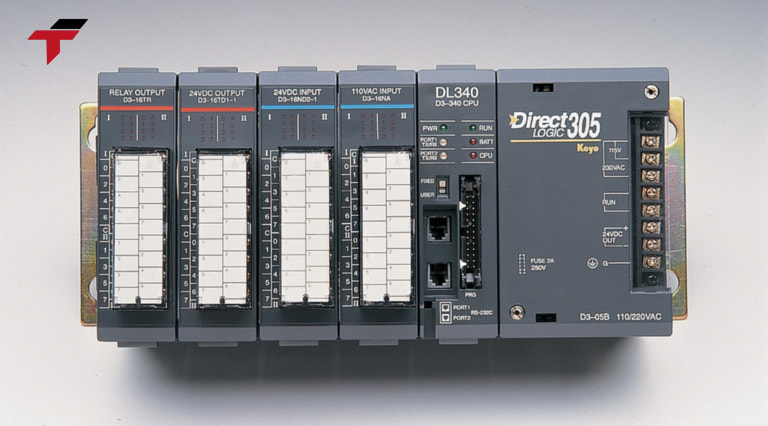
DirectLOGIC PLCs operate by executing programmed control logic to manage inputs and outputs across machines and processes.
What Are the Key Components of DirectLOGIC Systems?
Understanding the components of a DirectLOGIC system is essential for proper integration and maintenance:
- CPU Modules: The brain of the PLC, responsible for executing programs, processing data, and managing communication with I/O modules.
I/O Modules (Digital and Analog): Handle inputs from sensors and outputs to actuators. Digital I/O deals with on/off signals, while analog I/O processes varying signals like temperature or pressure. - Power Supply Units: Provide stable and reliable power to the CPU and I/O modules, ensuring consistent operation.
- Communication Modules (Ethernet, Serial, etc.): Allow PLCs to connect with other PLCs, HMIs, SCADA systems, or factory networks for monitoring and data exchange.
How Do You Program DirectLOGIC PLCs?
Programming is a key aspect of utilizing DirectLOGIC PLCs effectively:
- Supported Programming Languages: Ladder Logic is the most common language for DirectLOGIC, with support for Function Block Diagram (FBD) and other industrial programming methods.
- Software Tools (DirectSOFT): DirectSOFT is the official programming software for DirectLOGIC PLCs. It allows engineers to write, test, and simulate programs before deployment.
- Uploading, Downloading, and Troubleshooting Programs: Programs can be easily uploaded or downloaded between the PLC and computer. DirectSOFT also provides debugging tools to identify and resolve logic errors efficiently.

Programming is a key aspect of utilizing DirectLOGIC PLCs effectively
What Are the Advantages of DirectLOGIC?
DirectLOGIC PLCs offer several benefits for manufacturers looking to implement or upgrade automation systems:
- Reliability and Robustness in Industrial Environments: Designed to withstand harsh conditions, including temperature fluctuations, electrical noise, and vibration.
- Ease of Programming and Maintenance: Intuitive software and ladder logic programming make it simple for engineers and technicians to develop and modify programs.
- Scalability for Small to Medium Automation Systems: DirectLOGIC PLCs can handle everything from single-machine control to multi-machine production lines.
- Cost-Effectiveness Compared to Other PLC Brands: Provides industrial-grade functionality at a lower investment cost, making it ideal for budget-conscious operations.
Where Is DirectLOGIC Commonly Used?
DirectLOGIC PLCs are versatile and widely applied across various industries:
- Manufacturing Lines and Process Automation: Controls conveyor systems, assembly lines, and robotic operations to ensure smooth production.
- Packaging and Material Handling Systems: Manages packaging machinery, automated sorters, and warehouse conveyors efficiently.
- HVAC and Building Automation: Controls heating, ventilation, and air conditioning systems, optimizing energy use.
- Water/Wastewater Treatment Plants: Monitors pumps, valves, and treatment processes to maintain water quality and compliance.

DirectLOGIC PLCs are versatile and widely applied across various industries
What Challenges and Considerations Come with Using DirectLOGIC?
While DirectLOGIC offers many benefits, manufacturers should be aware of potential challenges:
- Compatibility with Newer Automation Technologies: Some advanced communication protocols may require additional modules or adapters.
- Limitations in Advanced Communication Protocols: While capable, DirectLOGIC may not support every modern industrial protocol natively.
- Training Requirements for Operators and Technicians: Staff need proper training to program, operate, and troubleshoot the system effectively.
- Lifecycle and Support for Legacy Systems: Older DirectLOGIC models may have limited vendor support, so planning for upgrades is important.
Conclusion
DirectLOGIC PLCs provide reliable, scalable, and cost-effective automation solutions for a wide range of industrial applications. With robust hardware, intuitive programming, and flexible I/O options, they remain a trusted choice for manufacturers seeking consistent, high-quality control over their operations.
At Flextech, we specialize in integrating DirectLOGIC and other PLC systems into industrial environments. Our team helps factories implement, optimize, and maintain automation solutions, ensuring maximum efficiency, reliability, and future-proof performance. Whether upgrading legacy systems or deploying new automation networks, Flextech is your trusted partner in industrial automation.
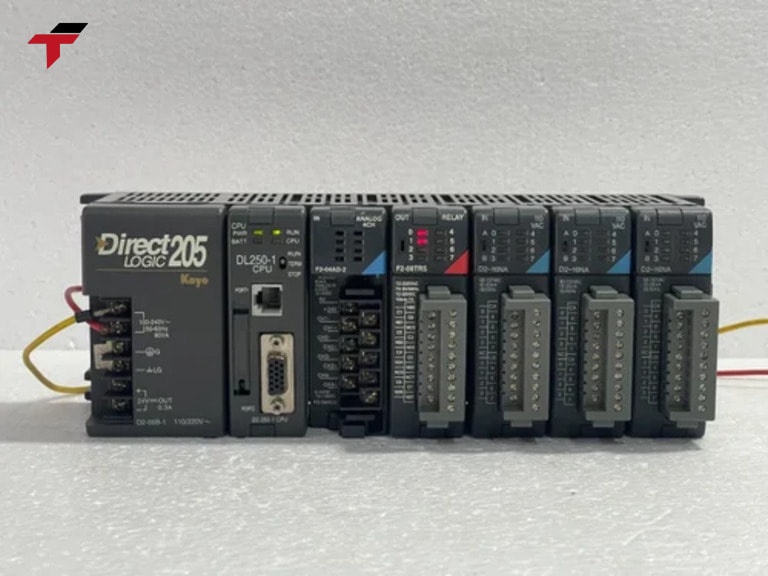
At Flextech, we specialize in integrating DirectLOGIC and other PLC systems into industrial environments.


