
A PLC (programmable logic controller) is a ruggedized digital computer that automates industrial machines and processes by reading sensor inputs, executing a stored program, and controlling outputs such as motors, valves, and conveyors. PLCs form the backbone of factory automation across industries — from automotive assembly to food processing. This guide explains how PLCs work, their key components, types available, and which brands Malaysian manufacturers rely on for dependable control systems.
What Is a PLC? Definition and How It Works
A programmable logic controller receives electrical signals from field devices — proximity sensors, push buttons, limit switches, temperature transmitters — and processes those signals through a user-written program. The PLC then sends output commands to actuators: starting a motor, opening a solenoid valve, triggering an alarm, or advancing a conveyor belt.
PLCs operate on a continuous scan cycle that repeats every few milliseconds. Each cycle follows three steps: read all inputs, execute the control program, and update all outputs. Scan times range from 1 ms on compact controllers to under 17 nanoseconds per step on high-speed models like the Keyence KV-8000. This deterministic cycle gives PLCs their reliability; the controller responds to field conditions consistently, thousands of times per second.
Before PLCs existed, factories relied on hardwired relay panels — rows of electromechanical relays wired to perform logic functions. Changing the machine’s behaviour meant physically rewiring the panel. PLCs replaced that rigid approach with software-based logic that engineers can modify, copy, and troubleshoot from a laptop. That shift made PLC systems the standard control platform in industrial automation worldwide.
PLC-based automation reduces human error, increases throughput, and provides real-time diagnostic data that maintenance teams use to prevent unplanned downtime.
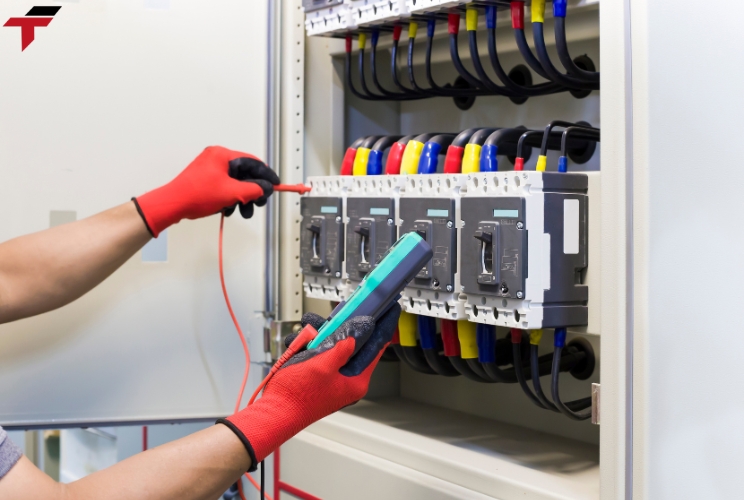
Types of PLCs
PLC hardware falls into three main categories, each suited to different application scales. Selecting the right type depends on your project’s I/O count, expansion needs, and performance requirements.
Compact (Fixed) PLCs
Compact PLCs integrate the CPU, power supply, and a fixed number of I/O points into a single housing. They are the most common PLC type for standalone machines and small production cells in Malaysian factories.
Popular compact models include the Siemens SIMATIC S7-1200 (6-14 DI, 2-10 DO, expandable via signal modules), the Mitsubishi Electric MELSEC FX5U (built-in Ethernet, high-speed counters, positioning), and the Omron SYSMAC CP2E (economy option for simple machines). Compact PLCs typically cost between RM 1,000 and RM 5,000 for the CPU module.
Modular PLCs
Modular PLCs separate the CPU, power supply, and I/O into individual modules mounted on a backplane or rack. Engineers select and combine modules to match the exact I/O configuration their application demands — then expand later by adding more modules.
Modular platforms include the Siemens S7-1500 (up to 8,192 I/O points, OPC UA built-in), the Allen-Bradley CompactLogix 5380 (up to 120,000 points via EtherNet/IP), and the Mitsubishi iQ-R Series (multi-CPU capability, CC-Link IE TSN). Modular CPUs range from RM 5,000 to RM 30,000 depending on processing power and memory.
Rack-Mounted PLCs
Rack-mounted PLCs serve large-scale process control and plant-wide automation — oil refineries, power plants, water treatment facilities. These systems occupy dedicated 19-inch racks, support thousands of I/O channels, and provide redundancy features for critical processes. In Malaysia, rack-mounted PLCs appear in palm oil refineries and petrochemical plants where continuous operation is mandatory.
| PLC Type | I/O Range | Best For | Price Range (MYR) |
| Compact | 6–128 points | Standalone machines, small lines | RM 1,000–5,000 |
| Modular | 128–8,192+ points | Medium-large production lines | RM 5,000–30,000+ |
| Rack-mounted | 1,000–120,000+ points | Plant-wide process control | RM 20,000–100,000+ |
Understanding PLC types is the first step; the next consideration is what sits inside these controllers.
Key PLC Components and Specifications
PLC hardware consists of several core components that work together to execute automation tasks. Knowing these components helps you specify the right controller for your project.
CPU (Central Processing Unit)
The CPU module is the brain of a PLC. It stores and executes the control program, manages communications, and coordinates I/O scanning. Key CPU specifications include program memory (measured in steps or kilobytes), scan time per step, and the number of supported I/O points. The Mitsubishi iQ-R series offers CPUs from 4,000 steps (R04) up to 120,000 steps (R120); Siemens S7-1500 CPUs range from the entry-level 1511 to the high-performance 1518.
I/O Modules
Input/output modules connect field devices to the PLC. Digital input modules read ON/OFF signals from sensors and switches. Digital output modules drive relays, contactors, and indicator lights. Analog input modules convert continuous signals — 4-20 mA current loops or 0-10 V voltage signals from pressure transmitters, temperature sensors, and flow meters — into digital values the CPU can process. Analog output modules send proportional signals to VFDs, control valves, and other proportional actuators.
Communication Modules
Communication modules connect PLCs to HMI panels, SCADA systems, other PLCs, and enterprise networks. The protocol depends on the brand ecosystem: Siemens PLCs use PROFINET, Allen-Bradley (Rockwell Automation) uses EtherNet/IP, Mitsubishi Electric uses CC-Link IE TSN, and Omron uses EtherCAT. Modbus TCP and Modbus RTU remain universal protocols supported across nearly all PLC brands.
Power Supply
PLC power supplies convert incoming AC mains (typically 240V AC in Malaysia) to the 24V DC required by the CPU and I/O modules. Proper power supply sizing — accounting for total module current draw plus a 20-30% reserve — prevents brownout faults that cause unexpected PLC shutdowns.
| Component | Function | Key Specification |
| CPU | Program execution, I/O coordination | Memory (steps), scan time, I/O capacity |
| Digital I/O | ON/OFF signal handling | Number of points, voltage level (24V DC) |
| Analog I/O | Proportional signal processing | Resolution (12/16-bit), signal range (4-20mA) |
| Communication | Network connectivity | Protocol (PROFINET, EtherNet/IP, CC-Link) |
| Power Supply | Voltage conversion | Output current (A), input voltage (AC/DC) |
With the right components selected, the next step is programming the PLC to perform your automation logic.
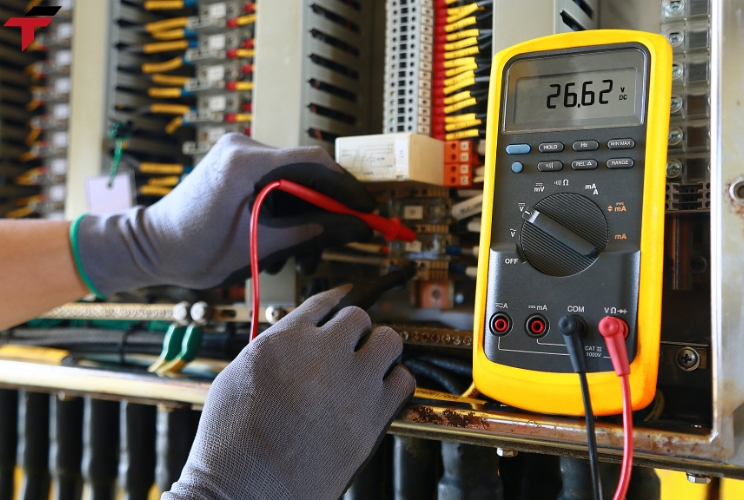
PLC Programming Languages
PLC programming follows the IEC 61131-3 international standard, which defines five languages. Most Malaysian factories use Ladder Diagram as the primary language — over 80% of installed PLC programs in the region are written in LD.
Ladder Diagram (LD) uses graphical symbols resembling electrical relay circuits. Electricians and maintenance technicians find it intuitive because it mirrors the relay logic they already understand. Every major PLC brand supports LD.
Function Block Diagram (FBD) connects reusable function blocks — timers, counters, PID controllers, math operations — in a graphical flowchart. FBD suits analog-heavy applications like process control and HVAC systems.
Structured Text (ST) is a text-based language similar to Pascal. It handles complex data processing, string manipulation, and mathematical algorithms more efficiently than graphical languages. Engineers with software development backgrounds prefer ST for advanced applications.
Sequential Function Chart (SFC) organises programs into sequential steps and transitions — ideal for batch processes, CIP (clean-in-place) sequences, and multi-stage machine cycles common in F&B and pharmaceutical production.
Each PLC brand provides its own programming software: Siemens TIA Portal, Mitsubishi GX Works3, Omron Sysmac Studio, Allen-Bradley Studio 5000, and Keyence KV STUDIO. Choosing a PLC brand often means committing to its programming environment, so team familiarity matters.
PLC programs control machines; but operators need visibility into what those machines are doing — and that is where the HMI comes in.
How to Choose the Right PLC
Selecting the right PLC for your application requires evaluating several criteria. A systematic approach prevents over-spending on features you do not need — or under-specifying and hitting capacity limits mid-project.
I/O count: Total the digital and analog inputs and outputs your application requires, then add 20-30% spare capacity for future expansion. A packaging machine with 24 sensors and 16 actuators needs a PLC supporting at least 50-55 I/O points.
Communication protocol: Match the PLC to your existing network. If your factory runs Siemens PROFINET infrastructure, a Siemens SIMATIC PLC integrates without additional gateways. Mixed-brand environments benefit from PLCs with Modbus TCP support.
Processing speed: High-speed counting, motion control, and rapid inspection applications demand fast scan times. The Keyence KV-8000 delivers 16.6 ns per step; the Mitsubishi iQ-R provides sub-millisecond scan cycles for multi-axis coordination.
Budget: Entry-level compact PLCs start from RM 1,000 (Omron CP2E). Mid-range systems (Siemens S7-1200, Mitsubishi FX5U) run RM 2,000-5,000. Advanced modular PLCs (S7-1500, CompactLogix 5380, iQ-R) range from RM 5,000 to RM 30,000+.
Ecosystem and training: Switching PLC brands introduces retraining costs. If your engineering team knows Mitsubishi GX Works, staying within the MELSEC family reduces commissioning time.
For a detailed comparison of specific PLC models, brands, and pricing in Malaysia, see our Complete Guide to Buying PLCs in Malaysia.
PLC Applications in Malaysian Industries
PLCs serve as the control backbone across every major manufacturing sector in Malaysia. The country’s National Industrial Master Plan (NIMP 2030) targets transforming 3,000 factories into smart factories — a goal that directly depends on PLC-based automation.
Automotive manufacturing — Assembly line sequencing, robotic welding cell coordination, and quality inspection stations all run on PLCs. Factories supplying Proton and Perodua in Johor and Selangor rely heavily on Allen-Bradley and Siemens controllers.
Food and beverage processing — Batch mixing, pasteurisation temperature control, packaging line coordination, and CIP sequences use PLCs paired with HMIs for recipe management. Mitsubishi and Omron PLCs are popular choices for Malaysian F&B plants operated by Nestle, F&N, and Dutch Lady.
Palm oil milling — PLCs manage steriliser pressure control, oil extraction press sequencing, and CPO storage tank level monitoring across Malaysia’s 450+ palm oil mills. Siemens S7-1500 and Allen-Bradley CompactLogix handle the process-heavy control requirements.
Semiconductor and electronics — Penang’s semiconductor hub demands high-speed PLCs for automated test equipment, pick-and-place machines, and cleanroom environmental control. Keyence and Omron controllers suit these precision applications.
The Malaysian government’s Smart Automation Grant (SAG) provides up to RM 1,000,000 in matching funds (70:30) for manufacturers investing in automation — making PLC system upgrades more accessible for SMEs.
PLCs in the Malaysian Market
PLC adoption in Malaysia continues to grow as labour costs rise (minimum wage RM 1,700/month) and manufacturers pursue Industry 4.0 readiness. The five major PLC brands available through local suppliers are Siemens SIMATIC, Mitsubishi Electric MELSEC, Omron SYSMAC, Allen-Bradley (Rockwell Automation), and Keyence KV Series.
Siemens holds the largest share in process-oriented industries. Mitsubishi dominates discrete manufacturing and has deep roots in Southeast Asian factories. Allen-Bradley serves multinational plants following North American standards. Omron and Keyence cater to high-speed, precision-focused applications in electronics and packaging.
| Brand | Entry Model | Advanced Model | Price Range (MYR) | Strength |
| Siemens | S7-1200 | S7-1500 | RM 1,500–30,000+ | Process industries, TIA Portal ecosystem |
| Mitsubishi | FX5U | iQ-R | RM 2,000–20,000 | Asia market leader, CC-Link IE TSN |
| Omron | CP2E | NJ Series | RM 1,000–20,000 | EtherCAT, motion control |
| Allen-Bradley | Micro800 | CompactLogix 5380 | RM 2,000–25,000 | MNC standard, EtherNet/IP |
| Keyence | KV Nano | KV-8000 | RM 2,000–15,000 | Fastest scan time, inspection |
Flextech Industrial Supplies stocks genuine PLC modules from all five brands at our Puchong, Selangor facility — providing competitive pricing and technical selection support to system integrators and machine builders across Malaysia. Contact Flextech for current pricing on any PLC model.
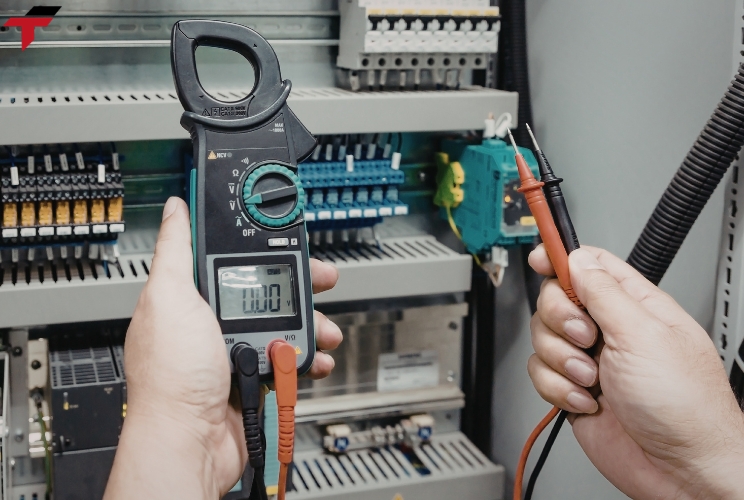
Frequently Asked Questions
Q: What is a PLC in simple terms?
A PLC (programmable logic controller) is an industrial computer that automates machines by reading sensor inputs, running a control program, and switching outputs like motors and valves. Unlike a standard PC, a PLC is built to operate reliably in harsh factory environments — withstanding vibration, dust, temperature extremes, and electrical noise.
Q: How does a PLC work step by step?
A PLC operates in a continuous scan cycle with three phases. First, it reads all input signals from sensors and switches. Second, it executes the stored program — evaluating logic, updating timers and counters, performing calculations. Third, it writes the results to output modules that control motors, valves, and indicators. This cycle repeats every 1-50 milliseconds, depending on program size and CPU speed.
Q: What is the difference between a PLC and a DCS?
A PLC (programmable logic controller) excels at discrete, fast-response control — assembly lines, packaging machines, material handling. A DCS (distributed control system) is designed for continuous process control — chemical reactors, power generation, oil refining. PLCs are modular and cost-effective for small-medium systems; DCS platforms handle thousands of analog loops across an entire plant. Many modern factories in Malaysia use PLCs for machine-level control integrated into a SCADA system for plant-wide monitoring.
Q: How much does a PLC cost in Malaysia?
PLC prices in Malaysia range from RM 1,000 for an entry-level compact controller (Omron CP2E) to over RM 30,000 for an advanced modular CPU (Siemens S7-1500). The total system cost — including I/O modules, communication modules, power supply, and programming software — typically runs 2-3 times the CPU cost. Contact Flextech Industrial for current pricing on specific models.
Q: Which PLC brand is most popular in Malaysia?
Siemens SIMATIC and Mitsubishi Electric MELSEC hold the largest market shares in Malaysian factories. Siemens dominates process industries (palm oil, chemical, water treatment), while Mitsubishi leads in discrete manufacturing (automotive, packaging, electronics). Allen-Bradley is standard in multinational plants. The right brand depends on your application, existing infrastructure, and engineering team expertise.
Q: Can a PLC work without an HMI?
A PLC can operate independently without an HMI — the control program runs on the CPU regardless of whether a display is connected. However, most industrial installations pair a PLC with an HMI panel to give operators real-time visibility into machine status, alarm management, and parameter adjustment. An HMI significantly improves troubleshooting speed and reduces operator errors.
Q: Where can I buy genuine PLCs in Malaysia?
Genuine PLC modules from Siemens, Mitsubishi, Omron, Allen-Bradley, and Keyence are available through authorised distributors and multi-brand suppliers in Malaysia. Flextech Industrial Supplies in Puchong, Selangor stocks PLC CPUs, I/O modules, communication modules, and accessories from all five brands — with competitive pricing and technical selection support. Browse our PLC product catalogue or request a quote for your specific model requirements.
Conclusion
A PLC is the core controller that brings industrial automation to life — converting sensor data into precise machine actions through programmable logic. Whether you are automating a single packaging machine or an entire production line, selecting the right PLC type, brand, and specifications determines your system’s reliability and long-term expandability.
Malaysian manufacturers benefit from multiple PLC brands available locally, government incentives like the Smart Automation Grant, and growing demand for Industry 4.0 readiness under NIMP 2030.
Get a Quote from Flextech Industrial — contact our team for PLC pricing, model selection guidance, and fast delivery across Malaysia.

