
Industrial sensors are electronic devices that detect physical conditions — object presence, proximity, pressure, temperature, light intensity, distance — and convert those conditions into electrical signals that PLCs and other controllers use to make automated decisions. Sensors serve as the eyes and ears of every automated factory system, providing the real-time data that drives machine operations. This guide explains the major sensor types, their detection principles, key specifications, and which brands Malaysian manufacturers use.
What Are Industrial Sensors? Definition and Role
Industrial sensors detect changes in the physical environment and produce an electrical output signal — either a discrete ON/OFF switch signal or a proportional analog signal — that a PLC reads through its input modules. Without sensors, a PLC has no awareness of the physical world: it cannot know whether a part is present on a conveyor, whether a tank is full, or whether a motor bearing is overheating.
Sensors form the input layer of every automation system. A typical production line uses dozens to hundreds of sensors: proximity sensors confirm part presence at each station, photoelectric sensors count products on conveyors, pressure sensors monitor hydraulic systems, and temperature sensors ensure process conditions stay within specification.
The sensor’s output signal connects to a PLC digital or analog input module. Digital sensors produce ON/OFF signals using NPN (sinking) or PNP (sourcing) transistor outputs — the choice depends on your PLC brand’s input convention. Analog sensors produce proportional signals — typically 4-20 mA current loops or 0-10 V voltage — that map to a measurement value (pressure in bar, temperature in degrees, distance in millimetres). IO-Link digital communication is a newer interface that transmits sensor data, diagnostics, and configuration over a standard 3-wire connection.
Sensor reliability directly impacts production uptime. A failed proximity sensor can halt an entire assembly line; a drifting temperature sensor can produce out-of-spec product. Selecting the right sensor type, rating, and brand for your application is a critical engineering decision.
Types of Industrial Sensors
Industrial sensors divide into categories based on their detection principle. Each type suits specific applications and target materials.
Inductive Proximity Sensors
Inductive proximity sensors detect metal objects without physical contact by generating a high-frequency electromagnetic field from the sensor face. When a metal target enters the field, eddy currents change the oscillation amplitude, triggering the sensor output. Detection ranges span 1 mm to 40 mm depending on sensor size and target material. Ferrous metals (steel, iron) provide the longest detection range; non-ferrous metals (aluminium, copper, brass) reduce the range by 30-60%.
Inductive sensors are the most commonly installed sensor type in Malaysian factories — used for part presence detection, end-of-stroke confirmation, metal object counting, and machine homing.
Photoelectric Sensors
Photoelectric sensors use light (visible red, infrared, or laser) to detect objects at longer ranges than proximity sensors. Three configurations serve different applications.
Diffuse (reflective) sensors emit light and detect the reflection from the target itself. Range: 10 mm to 2 metres. No reflector needed — simplest installation.
Retro-reflective sensors emit light to a reflector mounted opposite the sensor; an object passing between the sensor and reflector breaks the beam. Range: 0.1 to 15 metres. Used for conveyor product detection and entry/exit sensing.
Through-beam sensors use a separate emitter and receiver. The emitter projects a beam to the receiver; an object interrupting the beam triggers the output. Range: 0.1 to 60 metres — the longest detection range of any sensor type. Used for large object detection and safety light curtains.
Pressure Sensors
Pressure sensors measure fluid or gas pressure and produce a proportional analog output (4-20 mA or 0-10 V). Industrial pressure sensors cover ranges from vacuum to 600 bar, serving hydraulic system monitoring, pneumatic pressure verification, and process control in chemical and F&B plants. Response times are typically under 1 millisecond, enabling real-time pressure monitoring.
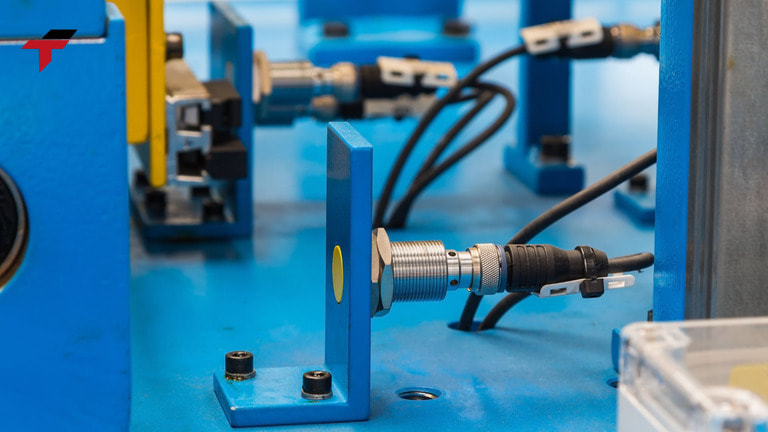
Type suits specific applications and target materials
Temperature Sensors
Temperature measurement in industrial automation uses two primary technologies. RTD (Resistance Temperature Detector) sensors — typically Pt100 or Pt1000 — measure temperature through resistance change in a platinum element. RTDs cover -200°C to 850°C with high accuracy (±0.1°C possible). Thermocouples generate a voltage proportional to temperature difference, covering -200°C to 1,800°C — suited for high-temperature applications like furnaces, kilns, and palm oil processing equipment.
Fiber Optic Sensors
Fiber optic sensors transmit light through a thin flexible fiber cable to detect very small objects in tight spaces. The sensing head can be as small as 1 mm diameter, reaching into confined areas where standard sensors cannot fit. Detection range: 1 mm to 500 mm. Fiber optic sensors are essential in semiconductor manufacturing and electronics assembly — applications concentrated in Malaysia’s Penang electronics hub.
| Sensor Type | Detection Principle | Range | Target Material | Price (MYR) |
| Inductive Proximity | Electromagnetic field | 1–40 mm | Metal only | RM 50–1,000 |
| Photoelectric (Diffuse) | Light reflection | 10 mm–2 m | Any opaque object | RM 100–1,500 |
| Photoelectric (Through-beam) | Light interruption | 0.1–60 m | Any opaque object | RM 200–2,000 |
| Pressure | Diaphragm/piezo | 0–600 bar | Fluids, gases | RM 200–3,000 |
| Temperature (RTD) | Resistance change | -200–850°C | Process temperature | RM 100–1,500 |
| Temperature (Thermocouple) | Voltage generation | -200–1,800°C | High temperature | RM 50–1,000 |
| Fiber Optic | Light via fiber cable | 1–500 mm | Small/precise targets | RM 150–2,500 |
Each sensor type connects to the PLC through specific output signals; understanding sensor output specifications ensures correct wiring and reliable operation.
Key Sensor Specifications
Selecting the right sensor requires evaluating specifications beyond detection type. These parameters determine whether a sensor performs reliably in your specific application environment.
Detection range / sensing distance — The maximum distance at which the sensor reliably detects the target. Always apply a derating factor: install the sensor at 70-80% of the rated range to account for temperature drift, contamination, and target material variations.
Output type — Digital sensors use NPN (sinking) or PNP (sourcing) transistor outputs. NPN outputs are standard with Mitsubishi and Omron PLCs (common in Asia). PNP outputs are standard with Siemens and Allen-Bradley PLCs (European/American convention). Wiring a PNP sensor to an NPN input causes malfunction — always verify compatibility before installation.
IP rating — The sensor’s protection against dust and water. IP65 (dust-tight, water jet) suits standard industrial environments. IP67 (temporary immersion) handles F&B washdown areas and outdoor applications. IP69K (high-pressure steam jet) is required for heavy washdown environments in dairy and meat processing. Malaysian factories processing palm oil, rubber, and food products frequently need IP67 or higher sensors.
Response time — How quickly the sensor reacts to a target entering or leaving the detection zone. Standard proximity sensors respond in under 1 ms. High-speed photoelectric sensors achieve sub-0.1 ms response for counting applications on fast conveyors.
IO-Link capability — IO-Link is a point-to-point digital communication standard that provides sensor data, diagnostics, and remote parameter adjustment through a standard 3-wire cable. IO-Link sensors report their health status to the PLC, enabling predictive maintenance — a key component of Industry 4.0 systems gaining traction in Malaysian smart factory initiatives.
Sensor specifications determine hardware selection; the next consideration is matching sensor brand and model to your PLC ecosystem and application requirements.
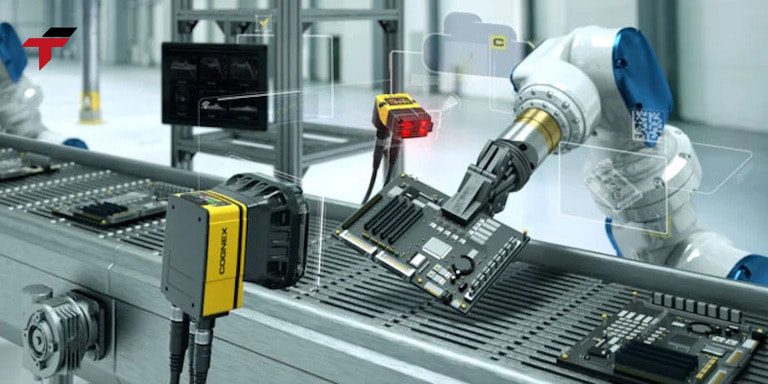
Key Sensor Specifications
How to Choose the Right Industrial Sensor
Sensor selection follows a sequence: identify what you need to detect, determine the environmental conditions, match the output to your PLC, and select the brand that fits your budget and performance needs.
Step 1 — Define the detection task. Are you detecting object presence (proximity or photoelectric), measuring a process variable (pressure or temperature), or inspecting quality (vision or laser)?
Step 2 — Identify target material. Metal targets allow inductive sensors — the most robust and cost-effective option. Non-metal targets (plastic, cardboard, glass, liquid) require capacitive, photoelectric, or ultrasonic sensors.
Step 3 — Assess the environment. Dusty, oily, or wet environments narrow your options. Photoelectric sensors can false-trigger from dust buildup on the lens; inductive sensors are immune to dust and oil contamination. Washdown areas demand IP67 or IP69K ratings.
Step 4 — Match the PLC input. Verify the sensor output type (NPN/PNP for digital, 4-20mA/0-10V for analog) against your PLC input module specifications.
Step 5 — Budget appropriately. Keyence sensors deliver premium precision at RM 200–3,000 per unit. Omron sensors offer strong general-purpose performance at RM 100–2,000. Autonics provides the most cost-effective option at RM 50–500 per sensor.
For a comprehensive sensor comparison with brand-specific model recommendations, see our Industrial Sensor Buying Guide.
Sensor Applications in Malaysian Industries
Industrial sensors support every automated process across Malaysia’s manufacturing sectors. The sensor type and specification vary by industry, but the function remains the same: providing real-time physical data to the control system.
Food and beverage — Proximity sensors detect cans and bottles on filling lines. Photoelectric sensors count packaged products. Pressure sensors monitor CIP cleaning systems. Temperature sensors control pasteurisation and cooking processes. All sensors in F&B applications need IP67 or higher ratings for washdown compatibility.
Palm oil processing — Temperature sensors (thermocouples) monitor steriliser conditions exceeding 140°C. Pressure sensors track steam and hydraulic systems. Level sensors measure crude palm oil in storage tanks across Malaysia’s 450+ mills.
Semiconductor manufacturing — Keyence laser sensors and fiber optic sensors handle micro-object detection in die bonding and wire bonding equipment. Sub-millimetre accuracy and high-speed response are mandatory in Penang’s electronics factories.
Automotive assembly — Inductive proximity sensors verify part presence at every assembly station. Through-beam photoelectric sensors detect vehicle bodies on overhead conveyors. Pressure sensors monitor hydraulic press forces in stamping operations.
Malaysia’s NIMP 2030 smart factory targets drive demand for IO-Link enabled sensors that provide data for Industry 4.0 analytics and predictive maintenance systems.
Sensor Brands in the Malaysian Market
Three sensor brands dominate the Malaysian industrial automation market, each positioned for different application tiers.
Keyence — Premium Japanese brand with the widest range of precision detection products. The EX Series inductive sensors, PR/PZ Series photoelectric sensors, and FU Series fiber optic sensors deliver industry-leading accuracy. Keyence provides direct application engineering support in Malaysia. Price range: RM 200–3,000 per sensor. Best for high-precision, semiconductor, and quality inspection applications.
Omron — The world’s largest industrial sensor manufacturer. The E2E Series inductive sensors are the most widely installed proximity sensors in Malaysian factories. E3Z/E3S photoelectric sensors and E8F pressure sensors cover general-purpose applications reliably. Price range: RM 100–2,000. Best for general automation, F&B, packaging.
Autonics — South Korean brand offering strong value for cost-conscious applications. PR/PRDL proximity sensors, BYD/BEN photoelectric sensors, and PSAN pressure sensors provide solid performance at the lowest price point. Price range: RM 50–500. Best for simple machines, counters, and budget-sensitive projects.
| Brand | Position | Proximity | Photoelectric | Pressure | Price Range (MYR) |
| Keyence | Premium | EX Series | PR/PZ Series | AP-C40 | RM 200–3,000 |
| Omron | General | E2E Series | E3Z/E3S Series | E8F/E8P | RM 100–2,000 |
| Autonics | Value | PR/PRDL | BYD/BEN | PSA/PSAN | RM 50–500 |
Flextech Industrial Supplies stocks genuine sensors from Keyence, Omron, and Autonics — with technical guidance for sensor selection and fast delivery across Malaysia.
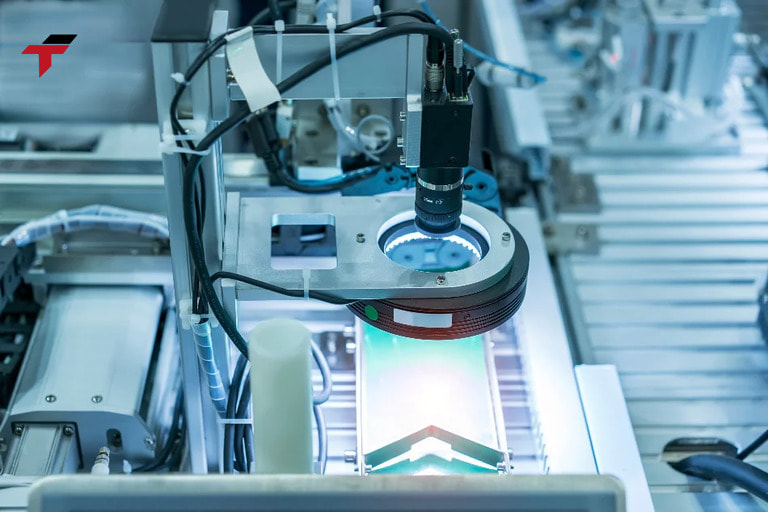
Sensor Brands in the Malaysian Market
Frequently Asked Questions
Q: What are the most common industrial sensors?
The most common industrial sensors are inductive proximity sensors (metal object detection), photoelectric sensors (object counting and presence detection), pressure sensors (hydraulic and pneumatic monitoring), and temperature sensors (process temperature control). Inductive proximity sensors account for the highest installed volume in manufacturing due to their durability, reliability, and low cost.
Q: What is the difference between NPN and PNP sensor outputs?
NPN (sinking) and PNP (sourcing) describe the transistor output configuration of digital sensors. NPN sensors switch the ground side of the circuit — standard with Mitsubishi and Omron PLCs. PNP sensors switch the positive side — standard with Siemens and Allen-Bradley PLCs. Using the wrong output type causes the PLC input to not register the sensor signal. Always verify your PLC input specification before purchasing sensors.
Q: How do I choose between a proximity sensor and a photoelectric sensor?
Use an inductive proximity sensor when detecting metal objects at short range (up to 40 mm) — it is more robust, resistant to contamination, and lower cost. Use a photoelectric sensor when detecting non-metal objects, when detection range exceeds 40 mm, or when you need to detect objects across a gap (through-beam). Photoelectric sensors require a clean optical path; inductive sensors work through oil, dust, and water spray.
Q: What IP rating do I need for sensors in a food factory?
Food and beverage environments require minimum IP67 (dust-tight, temporary water immersion) for sensors exposed to washdown cleaning. Areas subject to high-pressure steam cleaning (dairy, meat processing) need IP69K rated sensors. Standard IP65 sensors survive light splash but fail under direct water jet cleaning common in Malaysian F&B factories.
Q: How much do industrial sensors cost in Malaysia?
Industrial sensor prices in Malaysia range from RM 50 for a basic Autonics proximity sensor to RM 3,000 for a precision Keyence laser sensor. The most commonly purchased sensors — standard inductive proximity and photoelectric types — cost RM 100–500 per unit from Omron or Autonics. Keyence premium sensors command higher prices but deliver superior accuracy and application support. Contact Flextech Industrial for current pricing.
Q: What is IO-Link and why does it matter for sensors?
IO-Link is a standardised digital communication interface (IEC 61131-9) that transmits sensor data, diagnostic information, and parameter settings over a standard 3-wire sensor cable. IO-Link sensors report their health status, signal quality, and contamination level to the PLC — enabling predictive maintenance and remote configuration. IO-Link is a key enabler of Industry 4.0 smart factory initiatives targeted by Malaysia’s NIMP 2030 plan.
Conclusion
Industrial sensors provide the real-time physical data that automation systems need to operate — detecting objects, measuring process variables, and feeding information to PLCs that control your machines. Selecting the right sensor type, output configuration, IP rating, and brand ensures reliable detection and minimal production disruptions.
Malaysian factories across F&B, palm oil, electronics, and automotive sectors depend on sensors from Keyence, Omron, and Autonics to keep automated lines running accurately.
Get a Quote from Flextech Industrial — contact our team for sensor selection guidance, pricing, and delivery across Malaysia.
