
As industries move toward smarter, more connected production, reliable communication at the field level becomes essential. Advanced Physical Layer (APL) brings high-speed Ethernet, long-distance transmission, and intrinsic safety to field devices—all over a single two-wire line. It’s a practical foundation for real-time monitoring and IIoT, and Flextech is ready to support manufacturers with quality APL-compatible components and solutions.
What Is Advanced Physical Layer (APL)?
Advanced Physical Layer (APL) is a next-generation industrial communication standard based on Ethernet, enabling high-speed data transmission and power delivery over just two wires. APL is specifically engineered for factories and hazardous industrial environments (Ex zones), where long-distance communication, high reliability, and the ability to connect large numbers of field devices are essential.
The Role of APL in Industrial Communication
APL acts as a bridge between field-level devices and control systems by:
- Extending Ethernet all the way down to sensors, valves, and transmitters.
- Reducing latency and increasing data speed compared to analog or legacy protocols.
- Supporting real-time data acquisition for IIoT and smart manufacturing.
- Enhancing remote monitoring and control capabilities across production lines.
With APL, factories can transition from isolated measurement systems to a fully connected, intelligent automation network.

The Role of APL in Industrial Communication
How Does APL Work?
To understand how APL operates, we can break its communication and connection process into four key steps.
Step 1: Ethernet-Based Data Transmission
APL is built on Ethernet technology, enabling:
- Data rates up to 10 Mbps
- Direct integration with OT/IT networks
- Real-time communication with control systems
Lead-in: By leveraging Ethernet rather than reinventing a new protocol, APL extends the same communication backbone used in automation systems down to field devices, ensuring seamless network consistency.
Step 2: Two-Wire Structure for Both Data and Power
APL operates over a two-wire (single-pair) connection that:
- Continuously transmits digital data
- Delivers DC power to field devices on the same pair
Lead-in: Combining power and data on a single line reduces cabling costs, simplifies installation, and is ideal for industrial sites with limited space or complex layouts.
Step 3: Long-Distance Transmission with Stable Performance
APL supports distances of:
- Up to 1,000 meters for trunk lines
- Up to 200 meters for spur connections to field devices
Lead-in: This long-reach capability makes APL suitable for oil & gas, chemical plants, and water treatment facilities, where field devices are often far from control rooms.
Step 4: Hierarchical Connection Between Field Devices and Control Systems
A typical APL network includes:
- Field devices (sensors, transmitters, actuators)
- APL field switches / power switches
- Industrial Ethernet backbone
- PLC/DCS or SCADA systems
Lead-in: This layered architecture enables thousands of devices to feed structured, real-time data into central control platforms, paving the way for smarter supervision and automation.
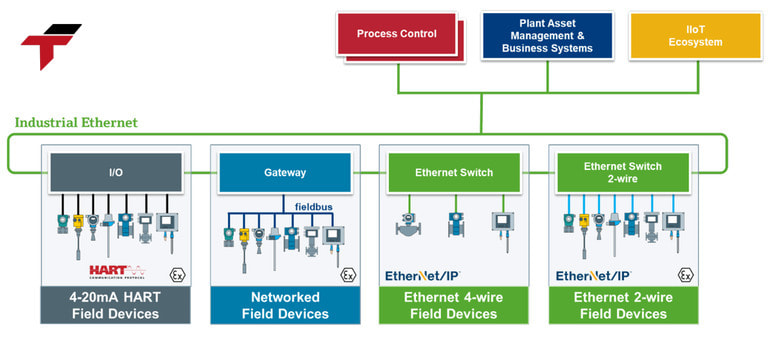
To understand how APL operates, we can break its communication and connection process into four key steps
Why use Advanced Physical Layer Technology in manufacturing systems?
Advanced Physical Layer (APL) is not only an advanced technology but also brings outstanding values to the industry. As factories and businesses move towards intelligent automation and process optimization, APL becomes the key to unlocking great potential.
Below are 6 specific benefits that APL brings to modern industry.
- Meet the needs of complex systems: APL provides significantly higher bandwidth and faster data transmission speeds than older technologies such as CAN or LIN. This allows for the rapid and efficient transmission of large amounts of data from complex sensors such as high-resolution cameras, radar, and lidar.
- Cost savings: APL can transmit data over longer distances with fewer wires than older technologies. This reduces material costs, vehicle weight, and assembly complexity.
- Good anti-interference ability: This technology uses advanced noise reduction techniques to ensure data integrity and minimize the risk of transmission errors.
- Increased performance and reliability: Ensures accurate and fast data transmission, even in difficult environmental conditions.
- Easy to upgrade: APL systems can be easily upgraded when needed, without changing the entire system structure.
- Support for IIoT and Smart Manufacturing: By bringing Ethernet down to the field level, APL unlocks large-scale, real-time data collection from sensors and actuators.
What are the applications of Advanced Physical Layer Technology?
Thanks to its easy integration with industrial communication protocols and its superior speed, security, and fault tolerance, APL has been widely applied in many fields.
- Manufacturing Plants & Automated Production Lines: APL enables seamless communication between field devices and control systems, boosting efficiency in : assembly lines, packaging systems, and discrete manufacturing environments.
- Chemical, Oil & Gas, and Hazardous Areas: With intrinsic safety and long-distance capability, APL is ideal for explosive or high-risk environments—offshore platforms, petrochemical plants, refineries, and storage terminals.
- Water & Wastewater Treatment: Large processing facilities benefit from APL’s ability to connect remote sensors and valves spread across wide areas, supporting centralized monitoring and precise process control.
- Power & Energy Sector: APL supports power generation and distribution systems, enabling real-time data acquisition for turbines, substations, boilers, and renewable energy assets.
- Field Instruments (Sensors, Valves, Measurement Devices): Devices such as pressure transmitters, flow meters, temperature sensors, and control valves can connect directly via APL, gaining high-speed data and power through a single connection.

Manufacturing Plants & Automated Production Lines
What are the considerations when using Advanced Physical Layer Technology?
Although Advanced Physical Layer Technology (APL) brings many outstanding benefits in industrial connectivity and automation, to maximize the effectiveness of this technology, it is necessary to pay attention to some important factors during deployment and operation.
- Ensure device compatibility: Make sure that devices support the Ethernet-APL standard to avoid connection problems. If necessary, upgrade old devices to synchronize with APL technology.
- Design the appropriate network system: Use cables and connectors that comply with the Ethernet-APL standard to ensure stable data transmission, especially in harsh industrial environments.
- Meet safety and security requirements: Choose devices with good electrical isolation to ensure safety when operating in hazardous areas. Use security measures such as firewalls, data encryption, and access control to avoid the risk of cyber attacks.
- Regular maintenance and inspection: Ensure that all cable connections and equipment in the APL system are in good working order, with no signs of wear or physical damage.
- Choose a reliable supplier: Choose equipment and solutions from reputable suppliers, ensuring quality and good after-sales service. You can refer to Flextech for the best choice.
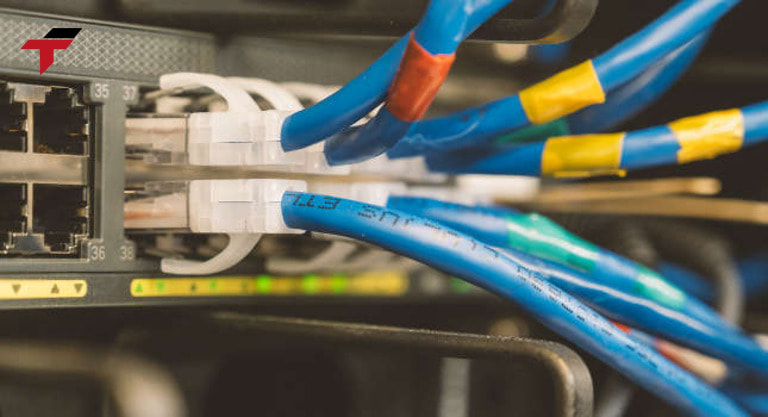
It is necessary to pay attention to some important factors during deployment and operation
Conclusion
Advanced Physical Layer (APL) is redefining industrial communication by combining high-speed Ethernet, long-distance capability, intrinsic safety, and seamless integration with modern automation platforms.
As a trusted supplier of industrial automation components and solutions, Flextech supports businesses in adopting next-generation technologies like APL. From cables and switches to field devices and control system integration, Flextech provides reliable products, technical guidance, and responsive support to help manufacturers build smarter, safer, and more connected operations.


